How can climate change impact flood risks for the Himalayan floodplain, which is a globally known flood region? This is what a recent study published in Scientific Reports hopes to address as a team of researchers investigated how to fill knowledge gaps regarding the impact of climate change on the future of Himalayan flooding. This study has the potential to help researchers, climate scientists, legislators, and the public better understand future climate change scenarios, specifically regarding the world’s most vulnerable flood regions.
For the study, the researchers used a series of computer models to conduct and simulate a first-time examination into potential future flooding in the Karnali River in Nepal and China. This was accomplished through hydrological and statistical models combined with statistical calculations with the goal of ascertaining regional climate projections between now and 2099.
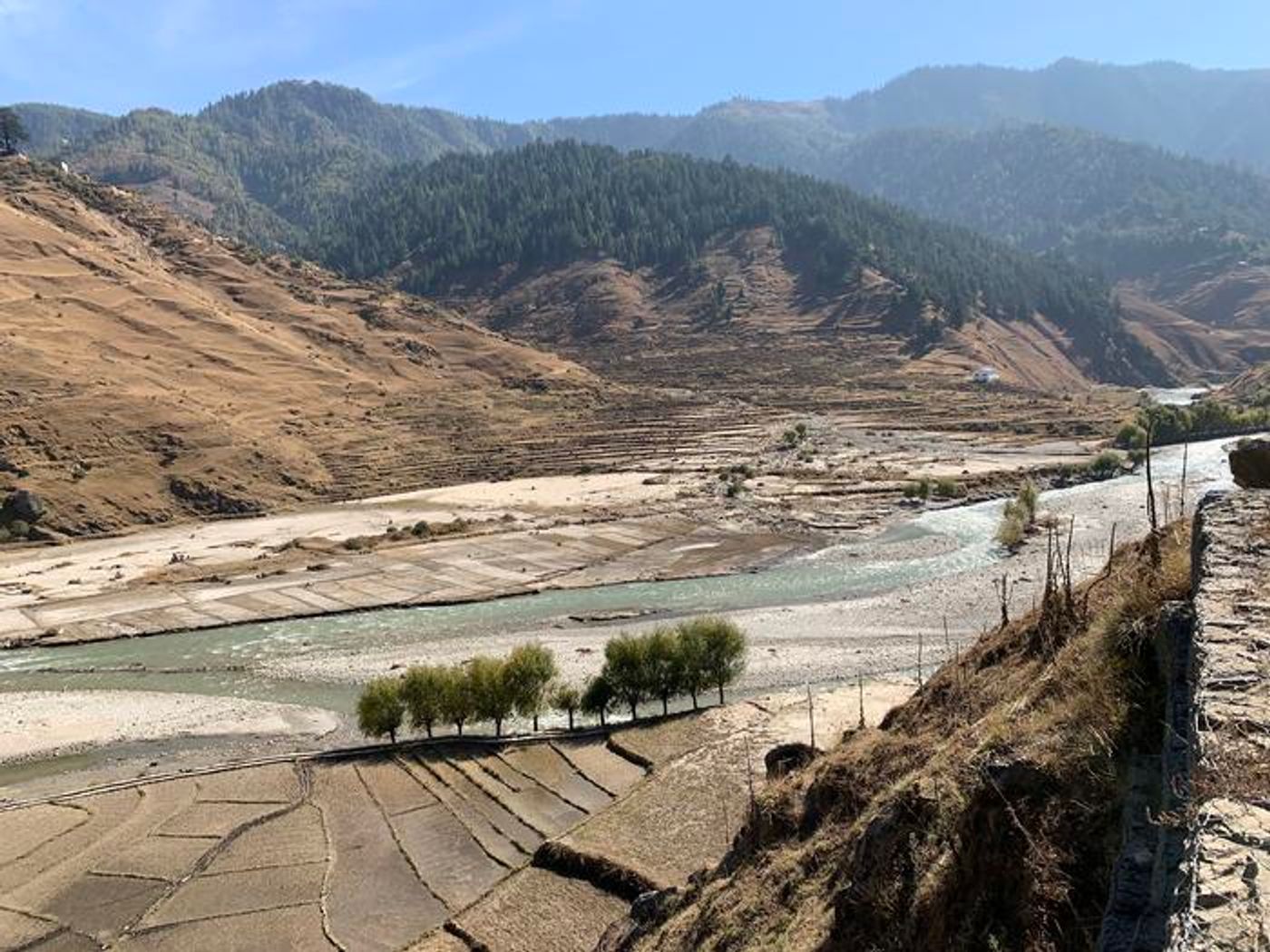
Image of the Karnali River. (Credit: Gunjan Silwal)
In the end, the simulations projected regional extreme flooding could increase between 73 and 84 percent before 2099, along with the chance of extreme flooding occurring within a year increasing from 1 percent to between 22 and 26 percent between 2020 and 2059. Examples of human and economic tolls for extreme flooding include September 2024 floods that killed 236 people, displaced 8,400, and caused losses equal to 1% of Nepal’s GDP. By 2050, damages are expected to rise to 2.2% of annual GDP.
“The densely populated Central Himalayan foreland is prone to flooding, and our findings show that the intensity of extreme floods is only going to get worse across the coming century as greenhouse gas emissions increase,” said Dr. Ivo Pink, who is a postdoctoral research associate at Durham University and lead author of the study. “Floods with a 1% chance of happening within a year could occur once every five to 10 years at the end of the century.”
What new insight into climate change and the Himalayan floodplain will researchers make in the coming years and decades? Only time will tell, and this is why we science!
As always, keep doing science & keep looking up!
Sources: Scientific Reports, EurekAlert!