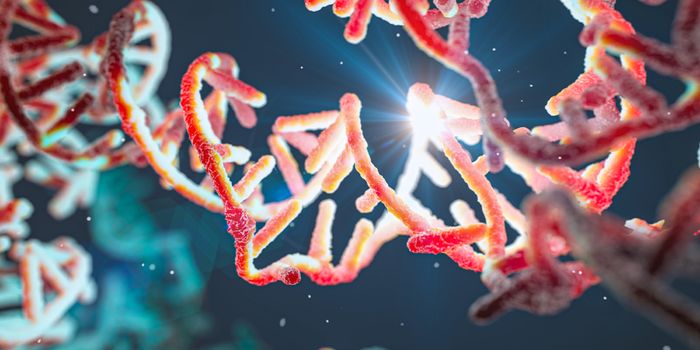
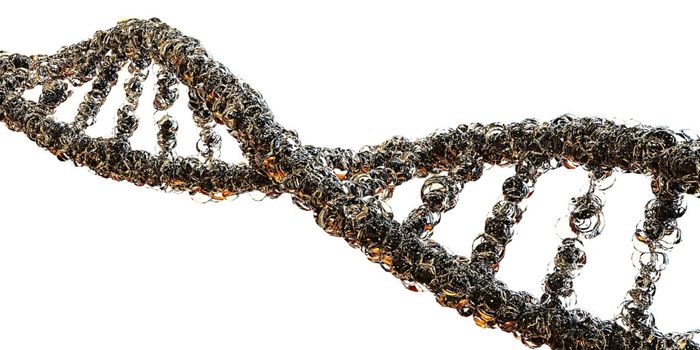
The human genome has to be carefully organized so it will fit inside of the nuclei of cells, while also remaining accessible to the cellular machinery that works to express the right genes at the right times. Gene expression must be tightly regulated to ensure that cells and tissues perform the proper functions. Scientists have been working to decipher and map this complex system of folds and loops to learn more about how the physical structure of DNA adds a layer of regulation to gene activity. This work, which was reported in Nature, may also provide new insights into diseases that could arise when DNA is not properly organized.
In this study, researchers used cutting edge genetic techniques to study DNA in human embryonic stem cells, and cells known as fibroblasts. They created three-dimensional (3D) maps of DNA structures, and analyzed how they shifted, folded, and interacted as cells went about their normal processes and cycles of division.
"Understanding how the genome folds and reorganizes in three dimensions is essential to understanding how cells function," said co-corresponding study author Feng Yue, a Professor at Northwestern University. "These maps give us an unprecedented view of how genome structure helps regulate gene activity in space and time."
As DNA is compacted, it is looped around proteins called histones, forming a structure that looks like beads on a string. Together, this DNA-protein complex is known as chromatin.
This research determined that there are over 140,000 chromatin loops in the cells they studied, which have an influence on gene activity. The scientists also classified various chromosomal domains, and located their positions in the nuclei of cells. The study produced high-resolution 3D maps of DNA in individual cells, to reveal the arrangement of genes, and how they interact with other genes or regulatory sequences nearby.
These investigators also found that the 3D structure of DNA can vary from one cell to another, and the differences between those DNA structures are closely linked to cellular processes like gene activity and DNA replication.
The researchers also created analytical tools that analyze a genetic sequences to predict how that DNA folds. This tool might help scientists learn more about how changes in sequences may affect genome structure, and contribute to disease, simply by using computational models.
"Since the majority of variants associated with human diseases are located in the non-coding regions of the genome, it is critical to understand how these variants influence essential gene expression and contribute to disease," Yue said. "The 3D genome organization provides a powerful framework for predicting which genes are likely to be affected by these pathogenic variants.”
Non-coding regions have typically been challenging to sequence and study, so this effort may advance research in that area significantly.
"Having observed 3D genome alterations across cancers, including leukemia and brain tumors, our next aim is to explore how these structures can be precisely targeted and modulated using drugs such as epigenetic inhibitors," Yue added.
Experienced research scientist and technical expert with authorships on over 30 peer-reviewed publications, traveler to over 70 countries, published photographer and internationally-exhibited painter, volunteer trained in disaster-response, CPR and DV counseling.