What new insights about the Sun has NASA’s PUNCH (Polarimeter to Unify the Corona and Heliosphere) mission revealed to the scientific community? This is what a recent media roundtable at the American Geophysical Union (AGU) 2025 Meeting hopes to address as a team of researchers announced recent PUNCH discoveries about our Sun, and specifically space weather. These findings hold the potential to help scientists better understand space weather and the steps that can be taken to predict it.
Along with the recent findings including observations of the Sun’s solar wind, PUNCH—which consists of several smaller satellites who combine their imaging power to collect greater data—has also observed several coronal mass ejections (CMEs) that frequently hit Earth as part of the Sun’s space weather. Additionally, PUNCH has also observed several comets, including Comet SWAN from August 25 to October 2, along with Comet Lemmon, which made a close pass to Earth on October 21. Finally, PUNCH also observed another comet that’s made headlines in recent months.
“The NASA Small Explorer’s mission had a bird’s-eye view of the CME in early November that lit up skies across the nation with colorful aurora,” said Dr. Craig DeForest, who is a heliophysicist at the Southwest Research Institute, the Principal Investigator of the PUNCH mission, and who led the discussion at AGU 2025. “And we’ve discovered some incredible bonus science that PUNCH performs, tracking comets and other objects. We were able to track the third identified interstellar comet 3I/ATLAS as it traveled through the inner solar system while bright sunlight rendered it invisible to other telescopes and space assets.”
As noted, one of PUNCH’s primary mission objectives is studying space weather, which consists of charged particles that could put astronauts in danger, damage orbiting satellites, and electronic ground stations on Earth. Better understanding space weather could help scientists develop more advanced tracking and prediction methods, thus mitigating the risk to vital assets, both in space and on Earth.
What new insight into space weather will PUNCH make in the coming years and decades? Only time will tell, and this is why we science!
As always, keep doing science & keep looking up!
Sources: AGU 2025, EurekAlert!
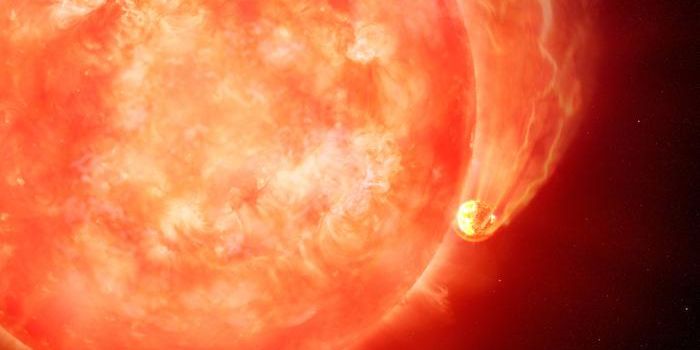
Featured Illustration Credit: NASA’s Goddard Space Flight Center/Mary Pat Hrybyk-Keith