
PhD Candidate, Carnegie Mellon University, Neuroscience Institute
BIOGRAPHY
MAR 04, 2026 5:30 AM PST
Connections, Cutoffs and Coincidences: Increasing Throughput and Reliability in Barcoded Rabies Connectome Inference using Computational Analysis
Presented at:
Neuroscience Virtual Event Series 2026
Abstract
Advances in viral barcoding techniques offer an unprecedented opportunity to obtain connectomes at scale through infection tracing with snRNASeq. However, standard methods for analyzing this new modality relies on hard thresholds that discard a large fraction of observations and inferable synapses. Synapses are then often inferred based on individual barcodes unique to a single spreader cell, which can lead to false positives due to coincidences in primary or secondary co-infections, particularly in dual-helper protocols with non-uniform barcode libraries. We discuss how noise & signal looks like in the data, analyze how they impact interpretation of results with standard analysis methods, and propose a computational method using graph set transformers that allow use of 100% of the observations, including ambient droplets, increasing both throughput and reliability of inferred synapses.
Learning Objectives:
1. Describe the experimental principles of viral barcoding with snRNASeq and how it can be utilized to trace infection paths for connectome mapping.
2. Differentiate between true biological signal and technical noise to identify causes of false positives & negatives in standard threshold-based analysis.
3. Contrast proposed computational methods against traditional analysis techniques in terms of data utilization, throughput, and the reliability of inferred synapses.
You May Also Like
JAN 29, 2026 | 8:00 AM

Modern laboratories are under constant pressure to deliver results faster, more accurately, and with unwavering compliance. Organizations that harness next-generation LIMS capabilities gain...
FEB 17, 2026 | 3:00 PM

Alors que les soins de santé continuent d'évoluer vers des modèles accessibles et centrés sur le patient, les pharmacies de détail apparaissent comme d...
FEB 18, 2026 | 8:00 AM

With advancing food allergy research and emerging therapies, new allergy testing requirements arise. In this context, Basophil Activation Testing (BAT) has emerged as an essential component...
FEB 18, 2026 | 1:00 PM

Energy-efficient filtration solutions that reduce hidden chemical exposure from benchtop work and lab equipment to improve overall laboratory safety...
FEB 19, 2026 | 8:00 AM
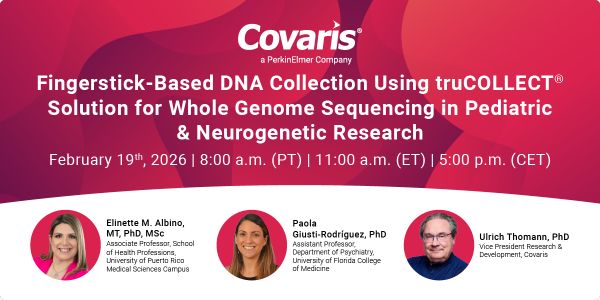
The collection of high-quality genomic DNA remains a major barrier in pediatric and neurodevelopmental research, particularly among children with autism spectrum disorder (ASD) and other neu...
FEB 23, 2026 | 11:00 AM

The timing of the biological onset of multiple sclerosis (MS) is unclear. We used high-throughput discovery proteomics and samples from presymptomatic patients with MS and matched healthy co...
Loading Comments...