
Snr. Scientist & Content Marketing Specialist @ CloudLIMS
BIOGRAPHY
MAR 18, 2026 5:30 AM PDT
Future-Proofing Your Lab: Why LIMS is Essential for the AI Era
Presented at:
Laboratory Automation Virtual Event Series 2026
Speaker
Abstract
Artificial intelligence (AI) is transforming laboratory operations through predictive analytics, automated quality control, and intelligent decision support. Yet many laboratories are not prepared to adopt AI due to fragmented data, inconsistent workflows, poor metadata quality, limited traceability and lack of automation. As AI adoption accelerates in 2026 and beyond, laboratories must first address a critical prerequisite: ensuring their data is structured, reliable, and AI-ready.
This presentation explores the role of a modern Laboratory Information Management System (LIMS) as the foundational infrastructure for AI-driven laboratory transformation. Attendees will learn why AI initiatives frequently fail in the absence of standardized, contextualized, and traceable data, and how a LIMS provides the operational framework needed to support machine learning, automation, and advanced analytics.
Using practical laboratory scenarios, the talk highlights how LIMS platforms enable data integrity, data interoperability, workflow automation, and regulatory compliance while generating structured, context-rich datasets suitable for AI applications. The talk also offers a pragmatic roadmap for preparing laboratory operations for AI-driven automation and downstream data analysis for a faster and more informed decision-making process.
Who should attend? Laboratory managers, researchers, quality professionals, and automation leaders.
Learning Objectives:
1. Identify data and workflow limitations that hinder successful AI adoption in laboratories.
2. Explain how a modern LIMS enables AI readiness through data standardization, traceability, and system integration.
3. Evaluate practical steps laboratories can take to future-proof operations for AI-driven automation and analytics.
You May Also Like
FEB 17, 2026 | 8:00 AM

In cell therapy applications, commonly employed cell purification platforms for large-scale isolation of immune or stem cells separate cells based on a single cell surface antigen. Enrichmen...
FEB 18, 2026 | 8:00 AM

With advancing food allergy research and emerging therapies, new allergy testing requirements arise. In this context, Basophil Activation Testing (BAT) has emerged as an essential component...
FEB 18, 2026 | 1:00 PM

Energy-efficient filtration solutions that reduce hidden chemical exposure from benchtop work and lab equipment to improve overall laboratory safety...
FEB 19, 2026 | 7:00 AM
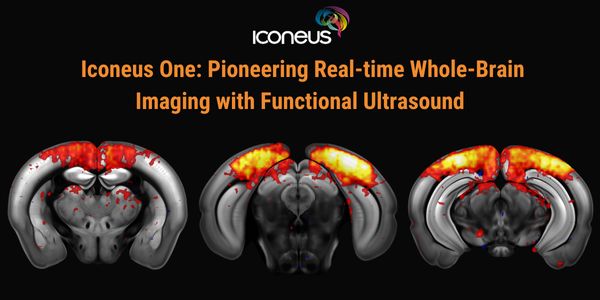
Discover how Iconeus One, the premier functional ultrasound (fUS) system for neuroscientists, is transforming brain function studies. Based on ultrafast plane-wave sonography, Iconeus One of...
FEB 19, 2026 | 8:00 AM
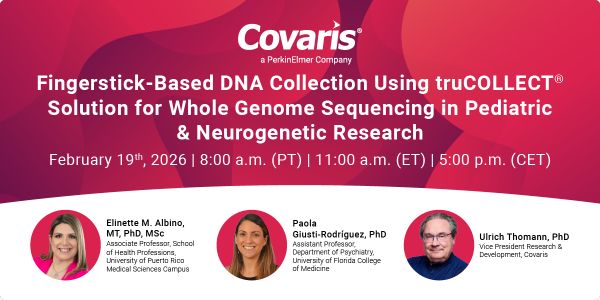
The collection of high-quality genomic DNA remains a major barrier in pediatric and neurodevelopmental research, particularly among children with autism spectrum disorder (ASD) and other neu...
FEB 23, 2026 | 9:00 AM
C.E. CREDITS

Explore decentralized liquid biopsy with SOPHiA GENETICS and MSK-ACCESS®, expanding access, improving outcomes, and accelerating precision oncology....
Loading Comments...