WEBINARS
Our webinars allow users to learn from experts and earn continuing education credits on industry topics, progress in research, services available, and more.
Show More
-
SEP 19, 2023 | 8:00 AM
 In vitro ADME and drug-drug interaction (DDI) investigations are early activities in the drug development process that are critical for framing downstream decision making. Understanding the...
 -
SEP 19, 2023 | 8:00 AM
Success stories in the field of cell therapies are making headlines on a daily basis. These achievements involve complex manufacturing processes in which cytokines play a key role. Choosing...
-
SEP 14, 2023 | 8:30 PM
Wastewater-based surveillance is valuable as it allows for the detection of pathogens before symptomatic cases are identified. In Korea, wastewater surveillance has been implemented, and the...
-
SEP 14, 2023 | 11:00 AM
In the United States, over 40,000 transplantations are performed annually. Ensuring post-transplant success requires diligent monitoring of infectious diseases that are associated with a wid...
-
SEPTEMBER 14, 2023 2:00 PM ET
Millions of people around the world are sickened or killed due to food or waterborne pathogens. The efficiency of sample processing, testing, analyst......
-
SEP 14, 2023 | 10:00 AM
In this webinar, Victoria Quiett of Thermo Fisher Scientific will dive into a comprehensive look at key components of running Pharmacogenomics (PGx) in your lab. The webinar will discuss the...
-
SEP 14, 2023 | 9:00 AM
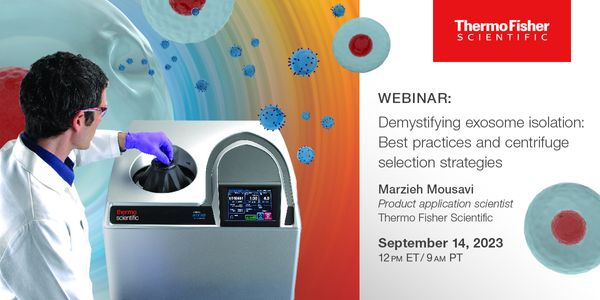
Small extracellular vesicles (EVs) and Exosomes released by cells, have gained significant interest in biomedical research due to their potential applications in diagnostics and therapeutics...
-
SEP 14, 2023 | 9:00 AM
Clinical laboratories generate most of the objective data on which diagnostic, preventive, and therapeutic decisions are made. By considering the current availability of information analytic...




SEP 14, 2023 | 8:00 AM
Flow cytometry plays a crucial role in the rapidly growing field of cell therapy, this method is used to identify different types of cells throughout the manufacturing process, from initial...
SEP 13, 2023 | 11:35 AM

Meet all of your Day 2 speakers and have them answer your questions live!...
SEP 13, 2023 | 10:45 AM

Recent developments in mass spectrometry-based single-cell proteomics (SCP) have resulted in dramatically improved sensitivity, yet the relatively low measurement throughput remains a limita...
SEP 13, 2023 | 10:00 AM
Liquid biopsy is an emerging area of clinical research, particularly in the context of cancer. As a minimally invasive complementary or alternative approach to tissue biopsies, liquid biopsi...
SEP 13, 2023 | 9:50 AM

Quantitative mass spectrometry-based proteomic experiments are designed to answer increasingly complex questions. For example, we may want to characterize changes in protein abundance in bio...