Cells carry out specialized functions throughout the body and each cell type functions distinctly from other cell types. Some cellular functions include transporting nutrients throughout the body and producing energy. One specialized cell is muscle cells which function to create a force that moves parts of the body. Another example are bone cells, whose functions include protecting internal organs from damage and storing minerals such as calcium.
Actin cytoskeleton is essential for eukaryotic cells. To exert its countless cellular functions, actin undergoes dynamic remodeling orchestrated by the large number of actin-interacting fact...
Microtubule plus-end tracking proteins (+TIPs) play key roles in the regulation of microtubule dynamics in vivo. These proteins bind to and regulate microtubule “plus‐ends”, whic...
Cells in their natural environment are surrounded by a complex extracellular matrix that provides structure and functional cues to the surrounding cells. Hydrogels can be used to approximate...
The ongoing COVID-19 pandemic has elevated the need for reliable, cost-effective means for widespread virus detection. This webinar will explore two distinct approaches for isolating viral R...
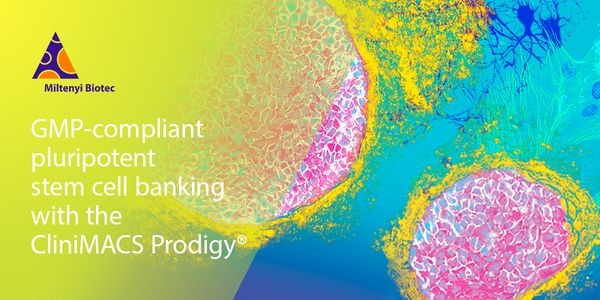
Date: September 09, 2021 Time: 8:00am (PDT), 11:00am (EDT) Human pluripotent stem cells (PSCs) hold great potentials in regenerative therapies. In this webinar, Chao will first present the c...
Ribonucleic acid (RNA) has a breathtaking variety of biological functions, which far exceeds its classical role as a carrier of genetic information. The repertoire of this versatile molecule...
Self-amplifying RNA replicons are promising candidates for next generation vaccines against human coronaviruses with pandemic potential. Self-amplification of RNAs in host cells generates mo...
For centuries, humans have become infected with endemic circulating Coronaviruses (hCoV), typically repeatedly throughout life. To understand how these respiratory infections establish CD4 T...
Innate and adaptive immunity mechanisms provide antiviral protection in mammals. In this talk, I shall present recent findings from my lab and collaborators revealing a distinct form of mamm...
The host antiviral innate immune response involves activation of multiple signaling pathways that result in the production of type I interferons (IFN-I) and inflammatory cytokines, which tog...
Nagy is a Professor in the Department of Plant Pathology, University of Kentucky. Dr. Nagy studies the functions of host proteins and lipids in viral RNA replication. The Nagy lab is using a...
Date: July 07, 2021 Time: 8:00am (PDT), 11:00am (EDT) The DNA damage response is extremely crucial in maintaining genomic integrity. Failure to repair damaged DNA can result in the propagati...
Date: August 26, 2021 Time: 8:00am (PDT), 11:00am (EDT) My translational research program focuses on approaches to enhance the natural killer (NK) cell response to cancer, with an emphasis o...
In 1910, Harrison published the first report of frog embryonic sympathetic ganglia grown in hanging drops of lymph for a few days, where single neurons extended nerve fibers with complex gro...
The increasing burden of neurological disorders as our population ages, together with the high personal and societal costs of mental and substance use disorders, underscores the need for new...
The misfolding of intrinsically disordered proteins (IDPs) such as tau and α-synuclein (αSyn) has been associated with the on-set and progression of Alzheimer’s (AD) and Pa...
We will show how to combine large scale neural recordings and mechanistic neural network models to advance our conceptual understanding of how neural circuits mediate cognitive functions lik...
Multiscale modeling has arisen as a focus of computational systems biology, with the realization that genome, proteome, connectome, etceteromes, will only become comprehensible once placed i...
Learning Objectives: 1. Delineate the goals of studies of brain, computation and behavior and how they can be integrated. 2. Describe how neuromodulators such as oxytocin transform circuits...
Alzheimer’s and Parkinson’s diseases (AD, PD) are the two most common neurodegenerative disorders. Despite their debilitating effects and increasing prevalence in society, no cur...
Adolescence is a critical period for the developing brain, and binge drinking during this neuromaturation can result in enduring abnormal brain function and behavior. Repeated adolescent bin...
Parkinson’s disease (PD) is the second most common neurodegenerative disorder with multiple motor and non-motor symptoms. PD is characterized by the presence on proteinaceous neuronal...
Date: August 24, 2021 Time: 11:00am (PDT), 1:00pm (EDT) Electron-based dissociation mechanisms have shown great promise for advanced characterization of biomolecules. However, routine adopti...
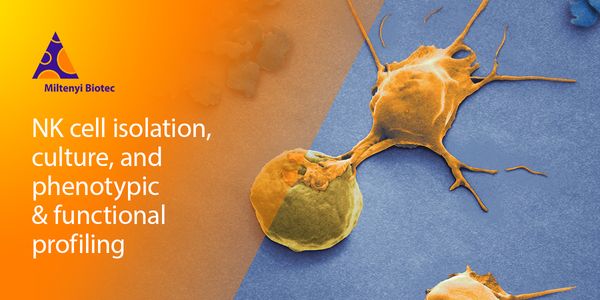
Date: August 18, 2021 Time: 8:00am (PDT), 11:00am (EDT) Discover the tools to phenotype your NK cells and to perform functional analyses such as cellular cytotoxicity assays. From NK cell is...
Actin cytoskeleton is essential for eukaryotic cells. To exert its countless cellular functions, actin undergoes dynamic remodeling orchestrated by the large number of actin-interacting fact...
Microtubule plus-end tracking proteins (+TIPs) play key roles in the regulation of microtubule dynamics in vivo. These proteins bind to and regulate microtubule “plus‐ends”, whic...
Cells in their natural environment are surrounded by a complex extracellular matrix that provides structure and functional cues to the surrounding cells. Hydrogels can be used to approximate...
The ongoing COVID-19 pandemic has elevated the need for reliable, cost-effective means for widespread virus detection. This webinar will explore two distinct approaches for isolating viral R...
Date: September 09, 2021 Time: 8:00am (PDT), 11:00am (EDT) Human pluripotent stem cells (PSCs) hold great potentials in regenerative therapies. In this webinar, Chao will first present the c...
Ribonucleic acid (RNA) has a breathtaking variety of biological functions, which far exceeds its classical role as a carrier of genetic information. The repertoire of this versatile molecule...
Self-amplifying RNA replicons are promising candidates for next generation vaccines against human coronaviruses with pandemic potential. Self-amplification of RNAs in host cells generates mo...
For centuries, humans have become infected with endemic circulating Coronaviruses (hCoV), typically repeatedly throughout life. To understand how these respiratory infections establish CD4 T...
Innate and adaptive immunity mechanisms provide antiviral protection in mammals. In this talk, I shall present recent findings from my lab and collaborators revealing a distinct form of mamm...
The host antiviral innate immune response involves activation of multiple signaling pathways that result in the production of type I interferons (IFN-I) and inflammatory cytokines, which tog...
Nagy is a Professor in the Department of Plant Pathology, University of Kentucky. Dr. Nagy studies the functions of host proteins and lipids in viral RNA replication. The Nagy lab is using a...
Date: July 07, 2021 Time: 8:00am (PDT), 11:00am (EDT) The DNA damage response is extremely crucial in maintaining genomic integrity. Failure to repair damaged DNA can result in the propagati...
Date: August 26, 2021 Time: 8:00am (PDT), 11:00am (EDT) My translational research program focuses on approaches to enhance the natural killer (NK) cell response to cancer, with an emphasis o...
In 1910, Harrison published the first report of frog embryonic sympathetic ganglia grown in hanging drops of lymph for a few days, where single neurons extended nerve fibers with complex gro...
The increasing burden of neurological disorders as our population ages, together with the high personal and societal costs of mental and substance use disorders, underscores the need for new...
The misfolding of intrinsically disordered proteins (IDPs) such as tau and α-synuclein (αSyn) has been associated with the on-set and progression of Alzheimer’s (AD) and Pa...
We will show how to combine large scale neural recordings and mechanistic neural network models to advance our conceptual understanding of how neural circuits mediate cognitive functions lik...
Multiscale modeling has arisen as a focus of computational systems biology, with the realization that genome, proteome, connectome, etceteromes, will only become comprehensible once placed i...
Learning Objectives: 1. Delineate the goals of studies of brain, computation and behavior and how they can be integrated. 2. Describe how neuromodulators such as oxytocin transform circuits...
Alzheimer’s and Parkinson’s diseases (AD, PD) are the two most common neurodegenerative disorders. Despite their debilitating effects and increasing prevalence in society, no cur...
Adolescence is a critical period for the developing brain, and binge drinking during this neuromaturation can result in enduring abnormal brain function and behavior. Repeated adolescent bin...
Parkinson’s disease (PD) is the second most common neurodegenerative disorder with multiple motor and non-motor symptoms. PD is characterized by the presence on proteinaceous neuronal...
Date: August 24, 2021 Time: 11:00am (PDT), 1:00pm (EDT) Electron-based dissociation mechanisms have shown great promise for advanced characterization of biomolecules. However, routine adopti...
Date: August 18, 2021 Time: 8:00am (PDT), 11:00am (EDT) Discover the tools to phenotype your NK cells and to perform functional analyses such as cellular cytotoxicity assays. From NK cell is...
Opens in a new windowOpens an external siteOpens an external site in a new window
 Follow