
Associate Professor, Duke University
BIOGRAPHY
MAR 04, 2026 5:30 AM PST
Learning a Widespread Electrical Brain Network for Anxiety Across Contexts
Presented at:
Neuroscience Virtual Event Series 2026
Speaker
Abstract
In rodents, anxiety is characterized by heightened vigilance during low-threat and uncertain situations. Though activity in the frontal cortex and limbic system is fundamental to supporting this internal state, the underlying network architecture that integrates activity across brain regions to encode anxiety across animals and paradigms remains unclear. In this talk, I will describe how parallel electrical recordings from distributed brain regions in freely behaving mice, combined with modern machine-learning methods, can be used to identify a multi-region electrical network that encodes anxiety that is robust and reliable to data perturbations. The network is composed of circuits widely implicated in anxiety behavior, it generalizes across many behavioral contexts that induce anxiety, and it fails to encode multiple behavioral contexts that do not. Strikingly, the activity of this network is also principally altered in two mouse models of depression. Thus, we establish a network-level process whereby the brain encodes anxiety in health and disease. Together, these results illustrate how data-driven modeling of large-scale neural dynamics can uncover interpretable brain-state representations that bridge circuits, behavior, and disease.
Learning Objectives:
1. Describe how machine-learning models can be used to identify latent, distributed brain networks from multiregion electrophysiological recordings.
2. Discuss how network-level representations of internal state can inform translational models of mood and anxiety disorders.
3. Explain how generalization across behavioral paradigms can be tested and validated for neural state representations.
You May Also Like
FEB 17, 2026 | 8:00 AM

In cell therapy applications, commonly employed cell purification platforms for large-scale isolation of immune or stem cells separate cells based on a single cell surface antigen. Enrichmen...
FEB 18, 2026 | 8:00 AM

With advancing food allergy research and emerging therapies, new allergy testing requirements arise. In this context, Basophil Activation Testing (BAT) has emerged as an essential component...
FEB 18, 2026 | 1:00 PM

Energy-efficient filtration solutions that reduce hidden chemical exposure from benchtop work and lab equipment to improve overall laboratory safety...
FEB 19, 2026 | 7:00 AM
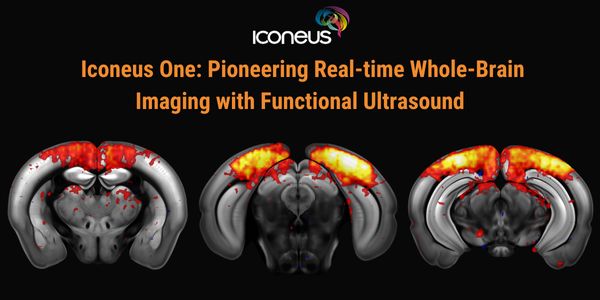
Discover how Iconeus One, the premier functional ultrasound (fUS) system for neuroscientists, is transforming brain function studies. Based on ultrafast plane-wave sonography, Iconeus One of...
FEB 19, 2026 | 8:00 AM

The collection of high-quality genomic DNA remains a major barrier in pediatric and neurodevelopmental research, particularly among children with autism spectrum disorder (ASD) and other neu...
FEB 23, 2026 | 9:00 AM
C.E. CREDITS

Explore decentralized liquid biopsy with SOPHiA GENETICS and MSK-ACCESS®, expanding access, improving outcomes, and accelerating precision oncology....
Loading Comments...