
Health Program Specialist, National Institute of Neurological Disorders and Stroke
BIOGRAPHY
MAR 04, 2026 5:30 AM PST
NIH BRAIN Initiative Connectivity across Scales (CONNECTS): The Past, Present, and Future of Brain-wide Connectivity Mapping
Presented at:
Neuroscience Virtual Event Series 2026
Speakers
-

Kari Johnson, PhD
Program Director, National Institute of Neurological Disorders and StrokeBIOGRAPHY

Abstract
The NIH BRAIN Initiative Connectivity across Scales (BRAIN CONNECTS) program is a coordinated effort aimed at developing the research capacity and technical capabilities to generate wiring diagrams that can span entire brains across multiple scales. A central goal of BRAIN CONNECTS is to enable generation of comprehensive wiring diagrams that allow scientists to identify conserved wiring principles, test new hypotheses about how brain circuits process information and produce behavior, and develop new approaches for precise diagnosis and targeted therapies for neurological and psychiatric disorders. This talk will address current challenges to brain-wide connectivity mapping and highlight recent milestones towards producing large scale reconstructions of synaptic connectivity in Drosophila, mouse, and human brains. We will provide an overview of technology development that is currently supported through the BRAIN CONNECTS program, including electron microscopy and optical techniques for comprehensive nanoscale reconstruction of neurons and their synapses, nucleotide barcoding techniques that allow dense mapping of single neuron projection patterns across species, and multimodal imaging of primate brains to map long-range axonal projections at high resolution. We will also describe integrated efforts to build pipelines, models, and infrastructure for scalable data processing, analysis, integration across modalities, and dissemination.
Learning Objectives:
1. Identify recent advances that demonstrate feasibility of generating brain-wide wiring diagrams.
2. Describe current challenges to scaling connectivity mapping to full brains.
3. Compare approaches to connectivity mapping at various scales.
You May Also Like
FEB 17, 2026 | 8:00 AM

In cell therapy applications, commonly employed cell purification platforms for large-scale isolation of immune or stem cells separate cells based on a single cell surface antigen. Enrichmen...
FEB 18, 2026 | 8:00 AM

With advancing food allergy research and emerging therapies, new allergy testing requirements arise. In this context, Basophil Activation Testing (BAT) has emerged as an essential component...
FEB 18, 2026 | 1:00 PM

Energy-efficient filtration solutions that reduce hidden chemical exposure from benchtop work and lab equipment to improve overall laboratory safety...
FEB 19, 2026 | 7:00 AM
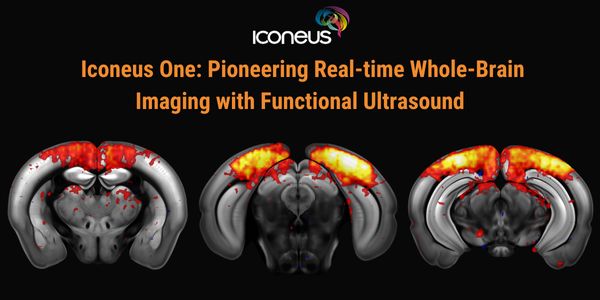
Discover how Iconeus One, the premier functional ultrasound (fUS) system for neuroscientists, is transforming brain function studies. Based on ultrafast plane-wave sonography, Iconeus One of...
FEB 19, 2026 | 8:00 AM

The collection of high-quality genomic DNA remains a major barrier in pediatric and neurodevelopmental research, particularly among children with autism spectrum disorder (ASD) and other neu...
FEB 23, 2026 | 9:00 AM
C.E. CREDITS

Explore decentralized liquid biopsy with SOPHiA GENETICS and MSK-ACCESS®, expanding access, improving outcomes, and accelerating precision oncology....
Loading Comments...