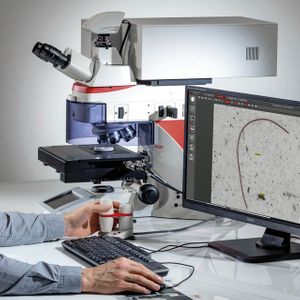
Our webinars allow users to learn from experts and earn continuing education credits on industry topics, progress in research, services available, and more.
Emerging data from several expansive clinical trials indicates that common chronic vascular risk factors such as diabetes, hypertension, obesity, and age increase the risk of stroke and deme...
In 1910, Harrison published the first report of frog embryonic sympathetic ganglia grown in hanging drops of lymph for a few days, where single neurons extended nerve fibers with complex gro...
The increasing burden of neurological disorders as our population ages, together with the high personal and societal costs of mental and substance use disorders, underscores the need for new...
Date: August 25, 2021 Time: 9:00am PDT During this interactive webinar you can ask questions, get answers, and engage with Taiana De Oliveira from AstraZeneca, Steven Litster, Brian Skjerven...
Date: August 25, 2021 Time: 8:00am (PDT), 11:00am (EDT) Heterologous protein production is an indispensable tool in biotechnology and biopharma for manufacturing enzymes, protein therapeutic...
The misfolding of intrinsically disordered proteins (IDPs) such as tau and α-synuclein (αSyn) has been associated with the on-set and progression of Alzheimer’s (AD) and Pa...
Adolescence is a critical period for the developing brain, and binge drinking during this neuromaturation can result in enduring abnormal brain function and behavior. Repeated adolescent bin...
Learning Objectives: 1. Delineate the goals of studies of brain, computation and behavior and how they can be integrated. 2. Describe how neuromodulators such as oxytocin transform circuits...
Learning Objections: 1. To learn a new approach to understanding brain function by creating networks to perform tasks using machine learning. 2. To learn how how to probe these networks to d...
We will show how to combine large scale neural recordings and mechanistic neural network models to advance our conceptual understanding of how neural circuits mediate cognitive functions lik...
Understanding how populations of neurons work together to represent stimuli, build percepts, and generate complex behaviors, is a fundamental challenge in neuroscience. To establish a link b...
Learning Objectives: 1. Explore the neuroinvasive potential of SARS-CoV-2 2. Learn about possible consequences of neuroinvasion of SARS-CoV-2 3. Identify neuroimmune responses against SARS-C...
Ataxia Telangiectasia, also known as A-T, is a devastating neuropediatric and genetic disorder for which there is no cure. Patients suffer from immune deficiency, cancer predisposition, and...
Several age-related neurodegenerative disorders are characterized by the deposition of aberrantly folded proteins. The histopathological hallmark of synucleinopathies is the deposition of ɑ-...
Parkinson’s disease (PD) is the second most common neurodegenerative disorder with multiple motor and non-motor symptoms. PD is characterized by the presence on proteinaceous neuronal...
Over 40 tandem repeats undergo expansion events that lead to neurological disease. This number is likely an underestimate as many repeats are difficult to amplify using existing short read s...
Recent advances in machine learning have shown that deep neural networks (DNNs) can provide powerful and flexible models of neural sensory processing. In the auditory system, standard linear...
Alzheimer’s and Parkinson’s diseases (AD, PD) are the two most common neurodegenerative disorders. Despite their debilitating effects and increasing prevalence in society, no cur...
Cortical circuits often receive multiple inputs from upstream populations with non-overlapping stimulus tuning. Both the feedforward and recurrent architectures of the receiving cortical lay...
Threshold-linear networks (TLNs) display a wide variety of nonlinear dynamics including multistability, limit cycles, quasiperiodic attractors, and chaos. Over the past few years, we have de...
Targeted stimulation of the brain has the potential to treat mental illnesses but designing an appropriate protocol requires a multitude of choices. I will describe an approach to help desig...
The intrinsic activity of the brain is organized into networks and motifs that vary over time. To understand how coordinated macroscale patterns of intrinsic activity flow across the brain&r...
Complex behaviors are often driven by an internal model, which integrates sensory information over time and facilitates long-term planning to reach subjective goals. {\color{rev}A fundamenta...
Drawing from the latest research and intervention practices, this presentation will address overcoming burn-out, compassion fatigue and vicarious trauma generally, and specifically as relate...
One role of theory is in guiding future experiments: What should we aim to measure? Which experimental results should we be surprised about? I will argue here that simple random networks mod...
Multiscale modeling has arisen as a focus of computational systems biology, with the realization that genome, proteome, connectome, etceteromes, will only become comprehensible once placed i...
Date: August 24, 2021 Time: 11:00am (PDT), 1:00pm (EDT) Electron-based dissociation mechanisms have shown great promise for advanced characterization of biomolecules. However, routine adopti...

 Emerging data from several expansive clinical trials indicates that common chronic vascular risk factors such as diabetes, hypertension, obesity, and age increase the risk of stroke and deme...