Stay informed on developments in cancer and oncology diagnosis, prevention and treatment through these curated webinars. As the race toward a cure for cancer continues, advances in cancer research are constantly revealed as innovation in the field of oncology progresses.
Successful cancer patient advocacy has many components. Patients and survivors are in the best position to tell their stories and advocate for better care and treatment. However, with few su...
One of the central tenets of biology is that our genetics—our genotype—influences the physical characteristics we manifest—our phenotype. But with more than 25,000 human ge...
Breast cancer is the number one cause of cancer in women. Although many risk factors for breast cancer have been identified, only some are modifiable. Since 2004, incidence rates have been r...
Circulating proteins found in biofluids represent ideal biomarkers for early disease detection and can be collected non-invasively. Detection from biofluids, however, is challenging as highl...
Gene regulatory networks are representations of the relationship between transcription factors and their target genes. By modeling gene regulatory networks, it is possible to identify change...
Genomic analysis of cancer cells revealed comprehensive mechanism of tumorigenesis in human patients. Among the abnormalities discovered so far, CNVs accounted for a great portion of all the...
Precision medicine is transforming cancer care, with next-generation sequencing (NGS) enabling the simultaneous analysis of multiple genomic alterations with therapeutic implications. Howeve...
Cancer neoantigens arise from protein-altering somatic mutations in tumor and rank among the most promising next-generation immuno-oncology agents when used in combination with immune checkp...
COSMIC is the world’s largest and most comprehensive somatic mutations resource. COSMIC’s contents are manually curated by PhD-level experts from high-quality scientific literatu...
There are known outcome disparities between Black and White patients with pancreatic neuroendocrine tumors (pNETs). Multiple retrospective series have found that Black patients have more adv...
In real-world evidence (RWE), temporal shifts in clinical knowledge and practice need to be adjusted for treatment effect assessment. We use electronic health records (EHR) data to 1) assess...
In the ever-evolving landscape of cancer therapy, immune checkpoint inhibitors have emerged as promising avenues for therapeutic antibody development. Our presentation will share GenScript&#...
Antibody-based cancer therapies have clear advantages over chemotherapeutic drugs thanks to their high specificity and low risk of side effects. However, it can be difficult to identify targ...
Solute carriers include numerous uptake transporters that serve as major regulators of drug absorption, disposition, and clearance. Indeed, drug interactions or genetic variation that alter...
Chimeric antigen receptor (CAR) T cell therapy has emerged as a novel therapeutic option for cancer patients in recent years. Despite its success, this approach faces acknowledged limitation...
Cancer is the #1 cause of death by disease in children. Over the last few decades, the survival rates for children with cancer have improved. These gains have been made by brilliant dedicate...
Rapid screening and speed of scale-up in protein therapeutics are critical factors in today’s immuno-oncology workflow. The ability to swiftly develop novel therapies often depends on...
Prostate cancer (PCa) affects one in nine men and is the most diagnosed solid tumor cancer among men in the United States. The introduction of the prostate-specific antigen (PSA) biomarker b...
Conventional imaging studies such as ultrasound, computed tomography, and magnetic resonance imaging are increasingly detecting small renal masses, which are interpreted by radiologists as h...
This webinar will highlight how circular RNA overcomes key challenges in in vivo CAR-T therapy, with case examples from YXgene’s circRNA platform. In vivo CAR-T therapy is emerging as...
The tumor-associated microbiota is an inherent component of the tumor microenvironment across various human cancer types1. Although members of tumor-associated microbiomes can be identified...
The elegant and well-orchestrated molecular players responsible for normal neurodevelopment harbor the capacity for detrimental repercussions if mis-expressed at the wrong time, or in the wr...
The recognition of mRNA molecules as a transformative class of therapeutic drugs has soared, particularly with the development of COVID 19 mRNA vaccines. The cancer treatment landscape is si...
Chimeric antigen receptor (CAR) T-cell therapy shows significant potential in treating various human cancers. Unfortunately, researchers have faced difficulty in adapting this therapy to tar...
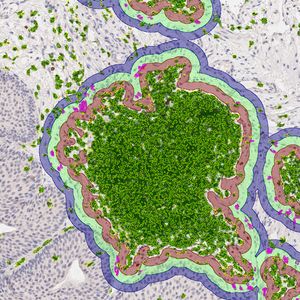
The increasing quantity and quality of spatially resolved omics data provide a unique opportunity to explore the complex molecular mechanisms that take place in biological systems. However,...
Reliable expression of recombinant proteins in human, CHO, or insect cells is essential for many aspects of biomedical research and drug development, but is often hampered by low expression...
 Successful cancer patient advocacy has many components. Patients and survivors are in the best position to tell their stories and advocate for better care and treatment. However, with few su...

































![Anti-PRAME antibody [EPR20330]](https://d3bkbkx82g74b8.cloudfront.net/eyJidWNrZXQiOiJsYWJyb290cy1pbWFnZXMiLCJrZXkiOiJjb21wYW55X3Byb2R1Y3RfcHJvZmlsZV9pbWFnZV9mMzEwNTY4MGY1NmVmZjU3ZjZhMWRkZTU2M2Q4YjBmODZjMDJkNDE4XzMwMDA3MTg1ODEyLmpwZyIsImVkaXRzIjp7InRvRm9ybWF0IjoianBnIiwicmVzaXplIjp7IndpZHRoIjozMDAsImhlaWdodCI6MzAwLCJmaXQiOiJjb3ZlciIsInBvc2l0aW9uIjoiY2VudGVyIiwiYmFja2dyb3VuZCI6IiNmZmYifSwiZmxhdHRlbiI6eyJiYWNrZ3JvdW5kIjoiI2ZmZiJ9fX0=)