Cells carry out specialized functions throughout the body and each cell type functions distinctly from other cell types. Some cellular functions include transporting nutrients throughout the body and producing energy. One specialized cell is muscle cells which function to create a force that moves parts of the body. Another example are bone cells, whose functions include protecting internal organs from damage and storing minerals such as calcium.
CRISPR-based genome editing has accelerated biological research and holds great potential for studying and treating human diseases. The CRISPR-Cas9 system requires a Cas9 nuclease and a guid...
Genome Engineering allows the easy manipulation of genomes down to the nucleotide level. Targeted deep sequencing enables the detection and quantification of low-frequency editing events. Ho...
Combinatorial inhibition of effector and feedback pathways is a promising treatment strategy for KRAS mutant cancers. However, the particular pathways that should be targeted to optimize the...
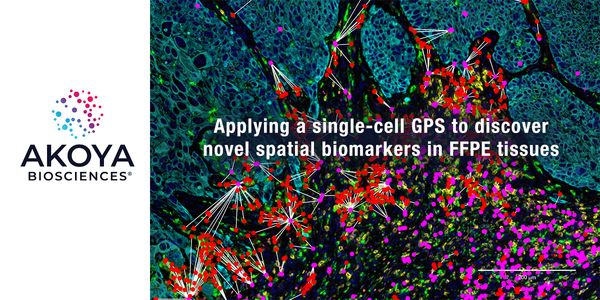
Date: September 28, 2020 Time: 5:00pm (PDT), 8:00am (HKT), 9:00am (JST) Although there have been dramatic advances in the field of single-cell sequencing, current methods cannot be applied t...
Intestinal organoids are self-organizing, 3D structures derived from either pluripotent stem cells or from primary tissues with the abiltiy to recapitulate some of the spatial architecture a...
Speaker TBD 10:30–10:50 am PDT Exploring the immune tumor microenvironment of hepatocellular carcinoma with Imaging Mass Cytometry™ 10:50 am–11:10 am PDT Presented By: Won...
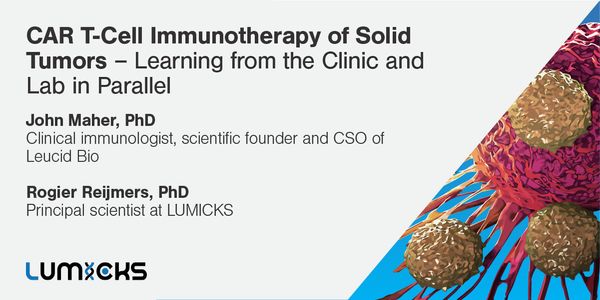
Date: Time: Over the last couple of years, it has become apparent that affinity-tuned CAR T cells display enhanced expansion and prolonged persistence in patients and that this strategy can...
Extracellular vesicles (EV) from many cell types have demonstrated therapeutic potential against many different diseases. Inhibiting progress in this area is the capability to produce EVs in...
Chronic kidney disease (CKD) is a global health threat, affecting over 10% of the world population, including an estimated 37 million Americans. Importantly, glomerular diseases account for...
The extracellular matrix (ECM) is a three-dimensional structure that provides physical support for tissues/organs and biochemical/biomechanical cues for tissue morphogenesis, differentiation...
Chronic kidney disease (CKD) is a major public health threat, affecting 11-15% of the U.S. population alone. Currently, there are no effective therapies to cure CKD. Drug therapies are not p...
Learning Objectives: 1. Understand methods of isolating and enriching exosomes along with their pros/cons of the different techniques 2. What do we mean when we talk about subtyping, and wha...
There are an urgent need for antivirals to treat the newly emerged SARS-CoV-2. We set out to develop cell-based screens to repurpose existing drugs for use against SARS-CoV-2. Our goal was t...
Therapeutic antibody can provide key protection or lifesaving treatment for those who haven't been or can’t be vaccinated, or when vaccines don’t “take". We galvan...
In less than nine months, the Severe Acute Respiratory Syndrome Coronavirus 2 (SARS-CoV-2) has killed hundreds of thousands of people, including >23,000 in New York City (NYC) alone. The...
The Allen Institute for Cell Science is generating a state space of stem cell signatures. The goal is to understand cell organization, identify cell states, and elucidate how cells transitio...
Immunotherapy such as immune checkpoint inhibitor antibodies have revolutionized the treatments for hard-to-treat cancers, with durable responses observed in clinics. However, the overall re...
Abnormal cellular metabolism is a hallmark of many diseases, yet there is an absence of quantitative methods to dynamically image metabolism with cellular-level resolution. Optical metabolic...
The inner nuclear membrane of eukaryotic cells defines many aspects of gene expression and chromatin organization. It is also therapeutically important as several diseases, termed “lam...
Enigmatic and often vilified, viruses are now known to play important and possibly indispensable roles in the biology and ecology of cellular organisms. Evidence of viral impacts are everywh...
The selective pressure placed on the resident microbiota by local changes in the host environment – DNA damage, chronic inflammation, metabolic shifts, barrier damage, reduced immunosu...
Asthma is an increasing health concern affecting more than 25 million individuals in the United States and more than 300 million individuals worldwide. In some cases, sensitization or exposu...
Over the past five years there has been an explosion of research the deep learning field. Companies like Google, Facebook, and OpenAI have created neural networks that are significantly more...
CRISPR-based genome editing has accelerated biological research and holds great potential for studying and treating human diseases. The CRISPR-Cas9 system requires a Cas9 nuclease and a guid...
Genome Engineering allows the easy manipulation of genomes down to the nucleotide level. Targeted deep sequencing enables the detection and quantification of low-frequency editing events. Ho...
Combinatorial inhibition of effector and feedback pathways is a promising treatment strategy for KRAS mutant cancers. However, the particular pathways that should be targeted to optimize the...
Date: September 28, 2020 Time: 5:00pm (PDT), 8:00am (HKT), 9:00am (JST) Although there have been dramatic advances in the field of single-cell sequencing, current methods cannot be applied t...
Intestinal organoids are self-organizing, 3D structures derived from either pluripotent stem cells or from primary tissues with the abiltiy to recapitulate some of the spatial architecture a...
Speaker TBD 10:30–10:50 am PDT Exploring the immune tumor microenvironment of hepatocellular carcinoma with Imaging Mass Cytometry™ 10:50 am–11:10 am PDT Presented By: Won...
Date: Time: Over the last couple of years, it has become apparent that affinity-tuned CAR T cells display enhanced expansion and prolonged persistence in patients and that this strategy can...
Extracellular vesicles (EV) from many cell types have demonstrated therapeutic potential against many different diseases. Inhibiting progress in this area is the capability to produce EVs in...
Chronic kidney disease (CKD) is a global health threat, affecting over 10% of the world population, including an estimated 37 million Americans. Importantly, glomerular diseases account for...
The extracellular matrix (ECM) is a three-dimensional structure that provides physical support for tissues/organs and biochemical/biomechanical cues for tissue morphogenesis, differentiation...
Chronic kidney disease (CKD) is a major public health threat, affecting 11-15% of the U.S. population alone. Currently, there are no effective therapies to cure CKD. Drug therapies are not p...
Learning Objectives: 1. Understand methods of isolating and enriching exosomes along with their pros/cons of the different techniques 2. What do we mean when we talk about subtyping, and wha...
There are an urgent need for antivirals to treat the newly emerged SARS-CoV-2. We set out to develop cell-based screens to repurpose existing drugs for use against SARS-CoV-2. Our goal was t...
Therapeutic antibody can provide key protection or lifesaving treatment for those who haven't been or can’t be vaccinated, or when vaccines don’t “take". We galvan...
In less than nine months, the Severe Acute Respiratory Syndrome Coronavirus 2 (SARS-CoV-2) has killed hundreds of thousands of people, including >23,000 in New York City (NYC) alone. The...
The Allen Institute for Cell Science is generating a state space of stem cell signatures. The goal is to understand cell organization, identify cell states, and elucidate how cells transitio...
Immunotherapy such as immune checkpoint inhibitor antibodies have revolutionized the treatments for hard-to-treat cancers, with durable responses observed in clinics. However, the overall re...
Abnormal cellular metabolism is a hallmark of many diseases, yet there is an absence of quantitative methods to dynamically image metabolism with cellular-level resolution. Optical metabolic...
The inner nuclear membrane of eukaryotic cells defines many aspects of gene expression and chromatin organization. It is also therapeutically important as several diseases, termed “lam...
Enigmatic and often vilified, viruses are now known to play important and possibly indispensable roles in the biology and ecology of cellular organisms. Evidence of viral impacts are everywh...
The selective pressure placed on the resident microbiota by local changes in the host environment – DNA damage, chronic inflammation, metabolic shifts, barrier damage, reduced immunosu...
Asthma is an increasing health concern affecting more than 25 million individuals in the United States and more than 300 million individuals worldwide. In some cases, sensitization or exposu...
Over the past five years there has been an explosion of research the deep learning field. Companies like Google, Facebook, and OpenAI have created neural networks that are significantly more...
Opens in a new windowOpens an external siteOpens an external site in a new window
 Follow