 Follow
Disease surveillance
Disease surveillance is a methodology in where epidemiologists monitor the spread of a specific disease in order to understand how it progresses. The goals of disease surveillance are to predict, observe, and minimize the harm caused by diseases which present as outbreaks, epidemics, or pandemics.

JUN 02, 2022 | 8:00 AM
Infectious diseases present a great challenge to global health and its economy. The 2020 SARS- CoV-2 pandemic highlighted the importance of rapid identification, characterization and surveil...
APR 20, 2022 | 5:30 AM

Esophageal adenocarcinoma [EAC] is the fastest growing in incidence cancer in the US over the last 25 years, while also having a 5 year survival of less than 20%. Barrett’s Esophagus [...
APR 19, 2022 | 12:00 PM
C.E. CREDITS

Loop-mediated isothermal amplification (LAMP) uses a stand-displacing DNA polymerase and four to six primers to rapidly amplify DNA at a single temperature. By eliminating temperature cyclin...
APR 19, 2022 | 6:00 AM

Pathogen detection and surveillance have become a high priority in both healthcare and environmental settings for the safety of patients and the general public. The COVID-19 pandemic highlig...
MAR 23, 2022 | 11:55 PM

Recent reports on the consumption of delta-8 Tetrahydrocannabinol (THC) have led to a qualmish riddle. Delta-8 THC is an isomer of delta-9 THC, that some believe is legal to synthesize under...
JAN 25, 2022 | 9:00 AM
Date: January 25, 2022 Time: 8:00am (CET) 9:00AM (SAST) Globally, in 2020, 38 million people were living with HIV with an additional 1.5 million newly i...
DEC 09, 2021 | 11:00 AM
Date: December 09, 2021 Time: 11:00am (PDT), 2:00pm (EDT) The burden of antimicrobial resistance (AMR) has been acknowledged worldwide by leading health institutes. Besides the need for new...
DEC 01, 2021 | 12:00 PM
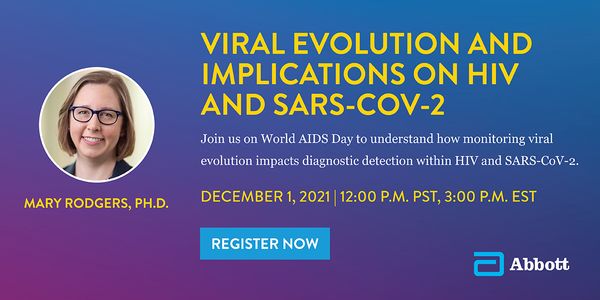
Date: December 1, 2021 Time: 12:00pm (PST), 3:00pm (EST) Explore the adaptability of your KingFisher instrument. Discover all the ways your Thermo Scientific™ KingFisher™ system...
NOV 30, 2021 | 7:00 AM
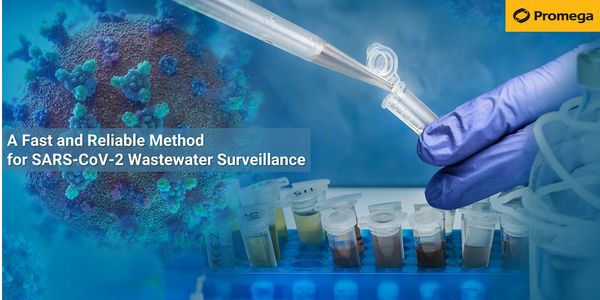
Date: November 30, 2021 Time: 7:00am (PDT), 10:00am (EDT) Wastewater Surveillance programs for SARS-CoV-2 are being implemented by health authorities globally. Many laboratories are currentl...
NOV 03, 2021 | 12:00 PM

Stimulants are the drivers of the fourth wave of the US drug overdose epidemic. Although most national attention and resources have been targeted at combating opioid use due to the surge of...
OCT 28, 2021 | 9:00 AM

Date: October 28, 2021 Time: 9:00am (PDT), 12:00pm (EDT) Loop-mediated isothermal amplification (LAMP) uses a stand-displacing DNA polymerase and four to six primers to rapidly amplify DNA a...
OCT 13, 2021 | 1:30 PM

This presentation “SARS-CoV-2 Related Workflow and Solutions: Detection and Genotyping” will focus on strategies for the testing and detection of SARS-CoV-2, including multiplexe...
SEP 23, 2021 | 8:00 AM
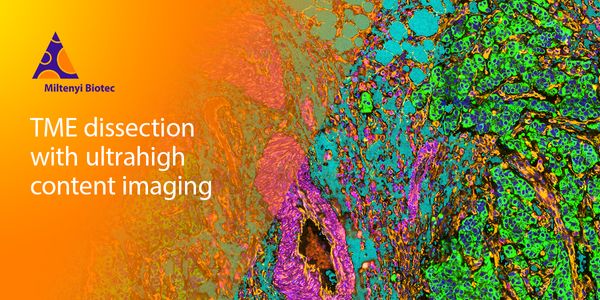
Date: September 23, 2021 Time: 8:00am (PDT), 11:00am (EDT) The tumor microenvironment (TME) comprises complex cellular and structural features. The processes and interactions within the TME...
SEP 09, 2021 | 12:00 AM

Health economists are great at calculating a value-based price for diagnostic tests. Given the unexpected supply and demand for SARS-CoV-2 tests during the pandemic, efficient allocation of...