Gene mutations describe a change in the DNA sequence that makes up a gene. There are many kinds of gene mutations which have been characterized by scientists. The main categories of mutations are germline mutations, which occur in the gametes (haploid male or female reproductive cells), and somatic mutations, occur in all other cell types. Chromosomal alterations are mutations that change the structure of chromosomes in a variety of ways such as deletion, duplication, insertion, translocation, or inversion of a section of the chromosome. Point mutations include a single nucleotide change within the DNA and these mutations can be classified as silent (the mutation codes for the same amino acid so the change has no effect), missense (the mutation codes for an alternative amino acid), and nonsense (the mutation codes for a premature stop codon). Frameshift mutations occur when the addition or deletion of nucleotide(s) alter the reading frame of the sequence altering all subsequent amino acid coding.
-
While a decade ago the prognosis of lung cancer patients was very disappointing, nowadays a substantial evolution is driven by targeted treatments and immuno-oncology. With extended, scaled...
The clinical interpretation of genetic testing results remains one of the most significant hurdles in effectively applying genomics in modern medicine. Errors in variant interpretation, whet...
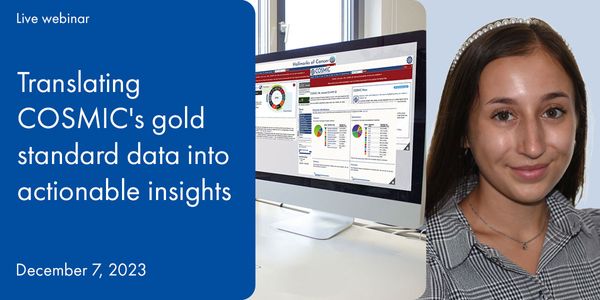
As the vast landscape of genetic oncology continues to expand, the ability to understand and utilize the full potential of this rich data becomes increasingly challenging. As a result, resea...
Across various stages of the clinical oncology workflow, from panel design to genomic testing and molecular tumor boards, the identification and validation of actionable genomic alterations...
Genetically modified cell models accelerate the development of safe and effective therapeutics, making them indispensable in the quest for new drugs. Through manipulation of cell line geneti...
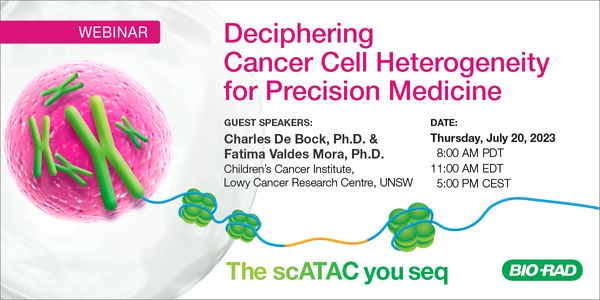
Single-cell ATAC-seq (Assay for Transposase-Accessible Chromatin using sequencing, scATAC-seq) is a relatively new and powerful technique that allows researchers to identify open chromatin r...
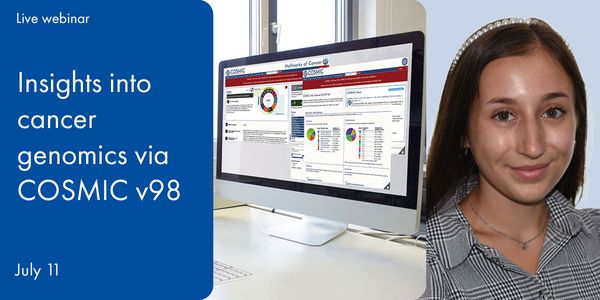
Our understanding of cancer mechanisms, genetics and complexities continues to expand rapidly. Without a streamlined, standardized and easy to understand organizational system to keep track...
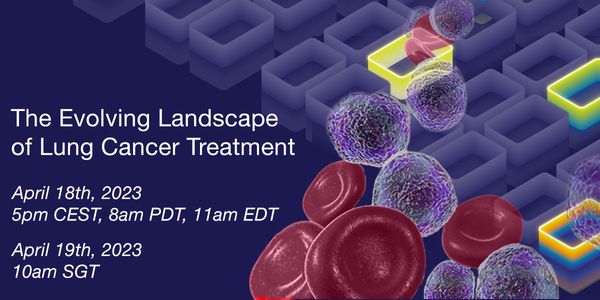
Date: April 18, 2023 Time: 8:00am (PDT), 11:00am (EDT), 5:00pm (CEST) Whilst a decade ago the prognosis of lung cancer patients has been very disappointing, nowadays a substantial evolutio...
Date: April 11, 2023 Time: 8:00am (PDT), 11:00am (EDT), 5:00pm (CEST) Duchenne muscular dystrophy is caused by mutations in the dystrophin encoding DMD gene that disrupt the reading frame. M...
In this study, we evaluated the concordance of targeted sequencing results between paired ctDNA and tumor samples from early breast cancers scheduled for curative surgery with or without adj...
In this study, we evaluated the concordance of targeted sequencing results between paired ctDNA and tumor samples from early breast cancers scheduled for curative surgery with or without adj...
Date: March 23, 2023 Time: 8:00am (PDT), 11:00am (EDT), 8:00pm (CEST) Across clinical oncology applications, from molecular testing to cancer research the ability to identify potentially act...
Date: March 01, 2023 Time: 8:00am (PST), 11:00am (EST), 5:00pm (CET) Characterizing metastasis remains key for understanding and eradicating cancer. The study of circulating tumor cells (CTC...
Have you ever tried to access the genomic profiles of cell lines before using them in your preclinical experiments just to come up empty-handed? Maybe you’ve scoured public databases f...
 Follow