Does the Earth-sized TRAPPIST-1e have the conditions for supporting life as we know it, specifically an appropriate atmosphere? This is what several studies published in The Astrophysical Journal Letters hopes to address as a team of scientists investigated the potential for TRAPPIST-1e to possess an atmosphere while throwing caution to the wind regarding the findings. This study has the potential to help scientists better understand the potential habitability of not only planets within the TRAPPIST-1 system, but also other exoplanetary systems throughout the universe.
For the first and second study, the researchers used NASA’s James Webb Space Telescope to observe the atmosphere of TRAPPIST-1e, which is located approximately 40 light-years from Earth. The TRAPPIST-1 system has long been targeted by the scientific community due to the system containing seven known Earth-sized worlds. The unique aspect about the TRAPPIST-1 system is its M-dwarf star, which is both smaller and cooler than our Sun, but also means its lifetime is far greater than our Sun, strengthening the possibility of finding habitable planets orbiting them.
After analyzing the data, the first paper attempted to reduce the parent star’s activity that might be interfering with observations and conclude that TRAPPIST-1e does not have a hydrogen atmosphere. The second paper concludes with the possibility of TRAPPIST-1e having a nitrogen atmosphere with traces of carbon dioxide and methane, while a third paper stresses that further studies are required for a complete analysis and determination of TRAPPIST-1e’s atmospheric characteristics.
"Based on our most recent work, we suggest that the previously reported tentative hint of an atmosphere is more likely to be 'noise' from the host star," said Dr. Sukrit Ranjan, who is an assistant professor in the University of Arizona’s Lunar & Planetary Laboratory and lead author of the third paper. "However, this does not mean that TRAPPIST-1e does not have an atmosphere – we just need more data."
What new insight into TRAPPIST-1e will researchers make in the coming years and decades? Only time will tell, and this is why we science!
As always, keep doing science & keep looking up!
Sources: The Astrophysical Journal Letters, The Astrophysical Journal Letters (1), The Astrophysical Journal Letters (2), EurekAlert!
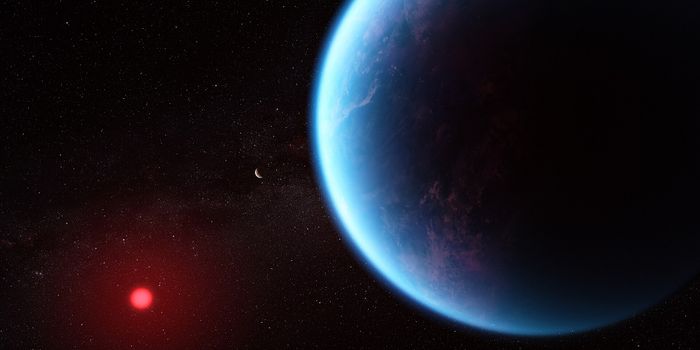
Featured Illustration Credit: NASA, ESA, CSA, STScI, Joseph Olmsted (STScI)