Did the ingredients for life as we know it exist in the early solar system? This is what a recent study published in the Proceedings of the National Academy of Sciences hopes to address as a team of researchers investigated new evidence for how amino acids, the known building blocks of life, ended up in the asteroid Bennu, which is estimated to have formed during the early days of the solar system billions of years ago. This study has the potential to help scientists better understand the early solar system, how life might have formed on Earth, and potentially elsewhere.
For the study, the researchers analyzed samples of asteroid Bennu that were retrieved and returned to Earth by NASA’s OSIRIS-REx mission in September 2023. The goal of the study was to ascertain the origins of the amino acids that had previously been identified in Bennu samples, which could help scientists gain insights into the origins of life in the early solar system. To accomplish this, the researchers used novel methods for measuring the amount of amino acids while comparing these findings to the carbonaceous meteorite Murchison.
In the end, the researchers discovered that glycine, one of the simplest amino acid molecules, with Bennu was formed in early ices in the early solar system while the glycine found in Murchison was formed in a protoplanetary body, which formed later in the history of the solar system. Additionally, the researchers found that certain aspects of the protein-building amino acid, glutamic acid, found in the Bennu samples, experienced significant changes during its formation and evolution.
“Our results flip the script on how we have typically thought amino acids formed in asteroids,” said Dr. Allison Baczynski, who is an assistant research professor of geosciences at Penn State University and lead author of the study. “It now looks like there are many conditions where these building blocks of life can form, not just when there’s warm liquid water. Our analysis showed that there's much more diversity in the pathways and conditions in which these amino acids can be formed.”
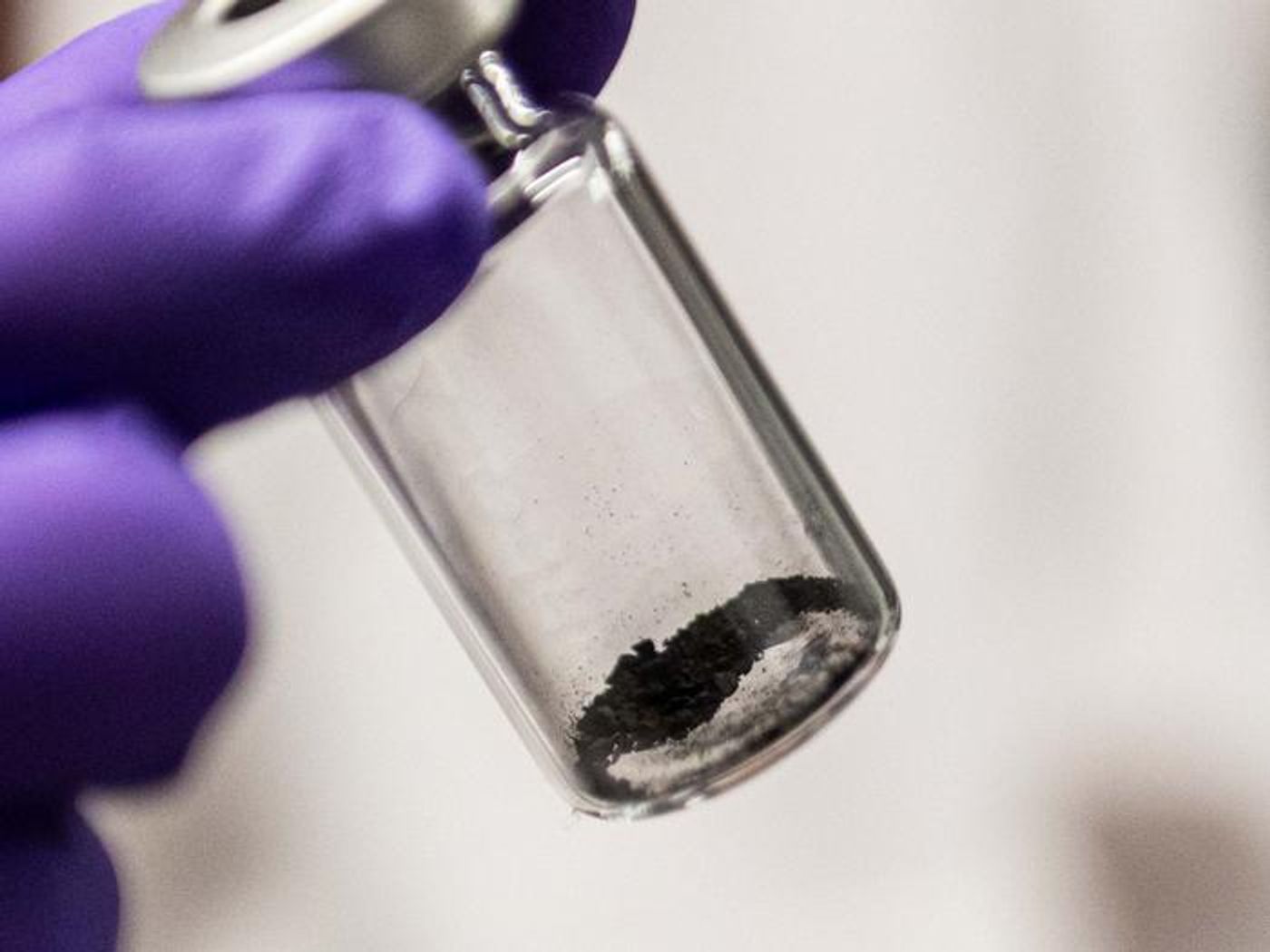
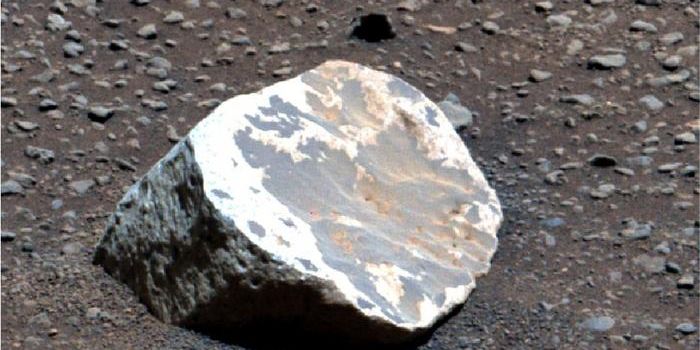
Asteroid Bennu samples. (Credit: Jaydyn Isiminger / Penn State)
What new insight into asteroid Bennu samples and amino acids will researchers make in the coming years and decades? Only time will tell, and this is why we science!
As always, keep doing science & keep looking up!
Sources: Proceedings of the National Academy of Sciences, EurekAlert!