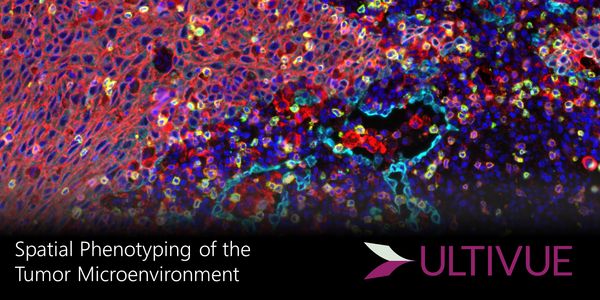
Tumors and the immune response interact in various ways. Tumors try to suppress the immune response in an effort to promote their growth and survival. The anti-tumor immune response, on the other hand, identifies tumor cells and kills them. Both tumors and the immune response elicit various mechanisms to combat the actions of the other.
Hypoxia is pervasive across human cancer and its association with poor outcomes and aggressive malignant phenotypes has been increasingly appreciated. Previously, we and others described how...
Learning Objectives: 1. Understand how the outcome of PD-1 blockade is a summation of increased Teffector activity and increased Treg suppressive activity 2. Explain how PD-1 blockade leads...
Learning Objectives: 1. Learn about why Luminex’s xMAP bead-based technology is the gold-standard in multiplexing, including how xMAP emerged as the leading multiplexing platform for l...
This webinar will highlight the research solutions that Miltenyi Biotec has to offer for those investigating the roles of Tregs, NK cells, and Macrophages in the context of the tumor microen...
Immune checkpoint therapy (ICT) is a front-line treatment for lung cancer; however, low mutational burden and ‘non-T cell inflamed’ signatures predict poor responses to ICT in ~5...
Learning Objectives: 1. Define the impact of PD-L1 expressed on non-tumor, non-hematopoietic cells in T cell-mediated tumor control 2. Reveal the contribution of IFNg signaling in dermal lym...
Learning Objectives: 1. Define “universal CARs” and describe their mechanism of action. 2. Explain current challenges in CAR T cell therapy. 3. Describe potential benefits and ch...
Despite the promising results with current approved immunotherapies, all patients do not have the same level of response, and recent efforts have focused on understanding and avoiding immuno...
Chimeric antigen receptor (CAR) T cells have demonstrated significant success in treating relapsed or treatment-refractory hematologic malignancies in the clinic, inducing remissions in 70-9...
Prostate cancers are considered immunologically ‘cold’ tumors given the very few patients who respond to checkpoint inhibitor therapy (CPI). Recently, enrichment of interferon st...
Ovarian cancer is a deadly disease which is usually diagnosed in advanced stages. Our goal is to develop vaccines to prevent relapse. Natural Th17 T cells protect against recurrence followin...
Rhabdomyosarcoma (RMS) is a soft tissue cancer commonly arising in muscle and is the most common soft tissue cancer in children. Patients with metastatic RMS have a poor prognosis that has n...
Progress developing immune-based treatments to treat the highly lethal pancreatic ductal adenocarcinoma (PDA) has lagged behind other cancer types. This may be due, in part, to a fibroinflam...
Date: May 26, 2021 Time: 9:00am (PDT), 12:00pm (EDT) Immunotherapy has transformed the treatment of metastatic and recurrent solid tumors but is challenged in that only a minority of patie...
Proximity Ligation Assay (PLA), is a powerful technique for demonstrating the presence of 2 unique targets in direct proximity of each other in tissue sections. It allows visualization of in...
Engineered cell therapy is an emerging field of science to target and treat cancer. Current strategies include utilizing immune cells such as T cells, NK cells and Macrophages or other cells...
Over a year into the COVID-19 pandemic, key vulnerable populations in the United States and across the world lack access to effective vaccines. IDRI has developed technology that addresses s...
DATE: April 08, 2021 TIME: 08:00am PDT Multi-omics involves the use of different data modalities to study multiple “omes”, such as the genome, transcriptome, epigenome, and/or t...
Cell therapies, including chimeric antigen receptor (CAR) T-cell therapy, are emerging as promising treatments, especially for hematological malignancies. However, many challenges remain in...
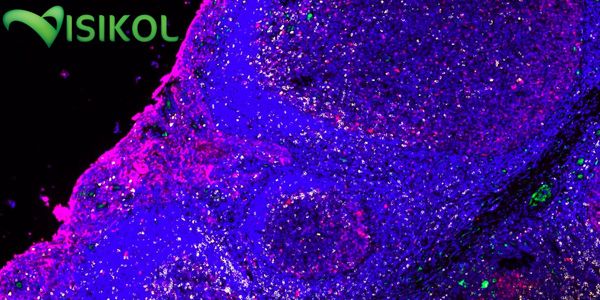
Date: March 25, 2021 Time: 8:00am (PDT), 11:00am (EDT) Visikol is a biotechnology company focused on advanced imaging, digital pathology and 3D cell culture assays that has developed a un...
Date: March 23, 2021 Time: 9:00am (PST), 12:00pm (EST) The chromatin regulators CBP and p300 maintain gene expression programs through lysine acetylation of chromatin and transcriptional reg...
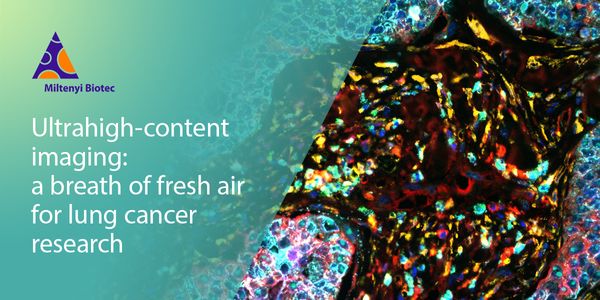
Date: March 09, 2021 Time: 8:00am (PST), 11:00am (EST) Lung cancer is one of the three most common types of cancer. Representing 85% of all lung cancers...
With an introduction by Sarah Warren, the Senior Director of Translational Science, this webinar will open by providing a brief technology overview of NanoString Technologies. Dr. Warren wil...
Hypoxia is pervasive across human cancer and its association with poor outcomes and aggressive malignant phenotypes has been increasingly appreciated. Previously, we and others described how...
Learning Objectives: 1. Understand how the outcome of PD-1 blockade is a summation of increased Teffector activity and increased Treg suppressive activity 2. Explain how PD-1 blockade leads...
Learning Objectives: 1. Learn about why Luminex’s xMAP bead-based technology is the gold-standard in multiplexing, including how xMAP emerged as the leading multiplexing platform for l...
This webinar will highlight the research solutions that Miltenyi Biotec has to offer for those investigating the roles of Tregs, NK cells, and Macrophages in the context of the tumor microen...
Immune checkpoint therapy (ICT) is a front-line treatment for lung cancer; however, low mutational burden and ‘non-T cell inflamed’ signatures predict poor responses to ICT in ~5...
Learning Objectives: 1. Define the impact of PD-L1 expressed on non-tumor, non-hematopoietic cells in T cell-mediated tumor control 2. Reveal the contribution of IFNg signaling in dermal lym...
Learning Objectives: 1. Define “universal CARs” and describe their mechanism of action. 2. Explain current challenges in CAR T cell therapy. 3. Describe potential benefits and ch...
Despite the promising results with current approved immunotherapies, all patients do not have the same level of response, and recent efforts have focused on understanding and avoiding immuno...
Chimeric antigen receptor (CAR) T cells have demonstrated significant success in treating relapsed or treatment-refractory hematologic malignancies in the clinic, inducing remissions in 70-9...
Prostate cancers are considered immunologically ‘cold’ tumors given the very few patients who respond to checkpoint inhibitor therapy (CPI). Recently, enrichment of interferon st...
Ovarian cancer is a deadly disease which is usually diagnosed in advanced stages. Our goal is to develop vaccines to prevent relapse. Natural Th17 T cells protect against recurrence followin...
Rhabdomyosarcoma (RMS) is a soft tissue cancer commonly arising in muscle and is the most common soft tissue cancer in children. Patients with metastatic RMS have a poor prognosis that has n...
Progress developing immune-based treatments to treat the highly lethal pancreatic ductal adenocarcinoma (PDA) has lagged behind other cancer types. This may be due, in part, to a fibroinflam...
Date: May 26, 2021 Time: 9:00am (PDT), 12:00pm (EDT) Immunotherapy has transformed the treatment of metastatic and recurrent solid tumors but is challenged in that only a minority of patie...
Proximity Ligation Assay (PLA), is a powerful technique for demonstrating the presence of 2 unique targets in direct proximity of each other in tissue sections. It allows visualization of in...
Engineered cell therapy is an emerging field of science to target and treat cancer. Current strategies include utilizing immune cells such as T cells, NK cells and Macrophages or other cells...
Over a year into the COVID-19 pandemic, key vulnerable populations in the United States and across the world lack access to effective vaccines. IDRI has developed technology that addresses s...
DATE: April 08, 2021 TIME: 08:00am PDT Multi-omics involves the use of different data modalities to study multiple “omes”, such as the genome, transcriptome, epigenome, and/or t...
Cell therapies, including chimeric antigen receptor (CAR) T-cell therapy, are emerging as promising treatments, especially for hematological malignancies. However, many challenges remain in...
Date: March 25, 2021 Time: 8:00am (PDT), 11:00am (EDT) Visikol is a biotechnology company focused on advanced imaging, digital pathology and 3D cell culture assays that has developed a un...
Date: March 23, 2021 Time: 9:00am (PST), 12:00pm (EST) The chromatin regulators CBP and p300 maintain gene expression programs through lysine acetylation of chromatin and transcriptional reg...
Date: March 09, 2021 Time: 8:00am (PST), 11:00am (EST) Lung cancer is one of the three most common types of cancer. Representing 85% of all lung cancers...
With an introduction by Sarah Warren, the Senior Director of Translational Science, this webinar will open by providing a brief technology overview of NanoString Technologies. Dr. Warren wil...
Opens in a new windowOpens an external siteOpens an external site in a new window

 Follow