 Follow
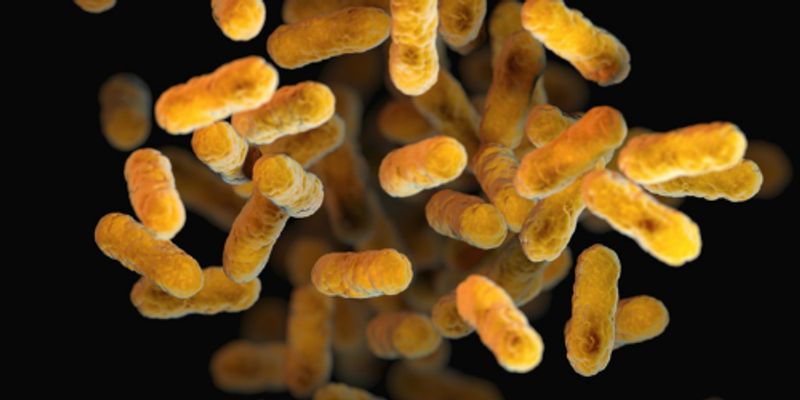
Escherichia coli
Escherichia coli, or E. coli is a rod-shaped bacteria that is commonly found in the gut of warm-blooded organisms. While most E. coli strains are part of the natural flora, some can cause infections and disease in their hosts.

On Demand

In this talk, I will introduce two new tools that we developed based on CRISPR-enabled gene regulation in bacteria, and one method based on P1 phagemid-enabled delivery of Cas9 nuclease. Fir...
OCT 12, 2022 | 9:00 AM

Date: October 12, 2022 Time: 9:00am (PDT), 12:00pm (EDT), 6:00pm (CEST) The microbiome of every food product is incredibly diverse and can include everything from innocuous background flora...
FEB 10, 2021 | 12:00 AM

Organoids are emerging tools to study homeostatic function and disease of human organs. This technology has now for the first time been extended to reptiles by establishing cultures of the s...
JAN 26, 2021 | 8:00 AM

Date: January 26, 2021 Time: 9:00am (PST), 12:00pm (EST) Over the past years, CRISPR/Cas genome editing has quickly become the method of choice for genetic manipulation, owing to its ease-of...
JAN 31, 2019 | 7:30 AM

Prodrugs are harmless in their native state, as they are not targeted by human enzymes. But they can be converted into highly toxic compounds (the “drug”) by viral or bacterial en...
SEP 13, 2018 | 1:30 PM

The soil microbiome can produce, resist, or degrade antibiotics and even catabolize them. Resistance genes are widely distributed in the soil and may act as a reservoir for pathogen antibioti...
MAR 15, 2018 | 10:30 AM

Machine learning approaches to pattern discovery in protein-protein interaction networks of Huntington’s disease brain and model organisms are revealing novel connections of the disease...
MAY 22, 2017 | 8:00 AM

DATE: May 22, 2017TIME: 8:00AM PDT, 11:00AM ETCrohn's disease (CD) results from a complex interplay between host genetic factors and endogenous microbial communities. In the current...