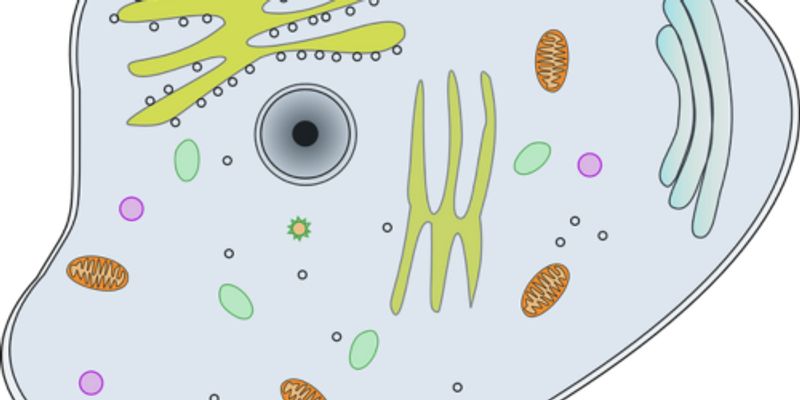
Cellular analysis is used to evaluate and measure cell number, state, health, and the viabiity, proliferation, and toxicity of a given cell. It provides lots of information in basic laboratory research, drug discovery and development, and within clinical applications.
There is an expanding list of therapeutically relevant biomarkers for non-small cell lung cancer (NSCLC), and molecular profiling at diagnosis is paramount. Tissue attrition in scaling tradi...
There are many obstacles to overcome when analyzing Heavy Metals in Cannabis by ICPMS. Cannabis matrices can be difficult to prepare and analyze due to the complex components of products tha...
While circulating cell-free DNA (ccfDNA) and to some extend CTCs from blood are routinely used as analyte in liquid biopsy cancer research applications, circulating cell-free RNA (ccfRNA) ha...
Multiplex detection of oncogenic mutations using LNA-based assays on the QIAcuity digital PCR system Digital PCR (dPCR) enables specific and sensitive detection of genetic alterations in onc...
Martin highlights various factors impacting molecular analysis from FFPE samples and key challenges and considerations while working with this precious yet challenging sample type. Learning...
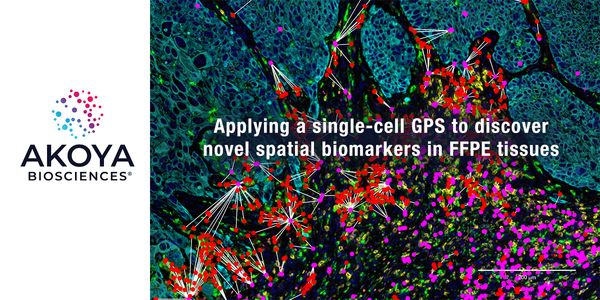
Immunohistochemistry (IHC) is used to determine spatial relationships where we can identify the localization of target proteins in specific regions and cells of a tissue. IHC has been the go...
Date: October 8, 2020 Time: 9:00am (PTD), 12:00pm (EDT), 5:00pm (GMT) Small DNA viruses require both host DNA replication and repair factors for their replication. The host cell replication...
Individuals of under-represented minority ancestry are at disproportional risk for higher incidence and mortality rates for particular cancers. The unequal burden of cancer in certain racial...
DATE: October 8, 2020 TIME: 7:00am PDT, 10:00am EDT, 4:00pm CEST How often do you pipette in your cell culture lab every day? Usually, we do it so often that we tend stop thinking about ho...
Every patient is different and so is every tumor! The term “personalized oncology” today is largely associated with sequencing approaches. Current publications proof more and mor...
Changes in transcriptional regulation are thought to be one of the key drivers of carcinogenesis. Although next-generation sequencer revolutionized transcriptome analysis, there are limitati...
Background: Healthcare access (HCA) encompasses five important dimensions: Affordability, Availability, Accessibility, Accommodation and Acceptability. Published studies of cancer typically...
Join Branden Hopkinson, Product Marketing Manager at Visiopharm, who will talk about using AI classifiers to find patterns in your images and which artificial intelligence method will work b...
DATE: October 6, 2020 TIME: 10:00am (PDT) The enumeration and analysis of blood cells with automated haematology analysers have significantly improved in recent years due to advances in cell...
CRISPR-based genome editing has accelerated biological research and holds great potential for studying and treating human diseases. The CRISPR-Cas9 system requires a Cas9 nuclease and a guid...
Genome Engineering allows the easy manipulation of genomes down to the nucleotide level. Targeted deep sequencing enables the detection and quantification of low-frequency editing events. Ho...
Genome editing with an expanded CRISPR-Cas tool set increases the opportunity to make intentional, targeted changes in the genome. Furthermore, improved specificity of genome editing and abi...
The adenosine analogue remdesivir has emerged as a front-line antiviral treatment for SARS-CoV-2, with preliminary evidence that it reduces the duration and severity of illness. Prior clinic...
Date: September 28, 2020 Time: 5:00pm (PDT), 8:00am (HKT), 9:00am (JST) Although there have been dramatic advances in the field of single-cell sequencing, current methods cannot be applied t...
New insights on the pathogenesis of COVID-19 7:00–7:30 pm PDT Presented By: Olaf Rötzschke, PhD The SIgN Mass Cytometry Platform (MCP) was originally established by Evan Newell, P...
Intro to high-dimensional data analysis 3:00–3:30 pm PDT Presented By: El-ad David Amir, PhD FAUST: A new interpretable machine learning approach for automated gating 3:30–4:00 p...
There is an expanding list of therapeutically relevant biomarkers for non-small cell lung cancer (NSCLC), and molecular profiling at diagnosis is paramount. Tissue attrition in scaling tradi...
There are many obstacles to overcome when analyzing Heavy Metals in Cannabis by ICPMS. Cannabis matrices can be difficult to prepare and analyze due to the complex components of products tha...
While circulating cell-free DNA (ccfDNA) and to some extend CTCs from blood are routinely used as analyte in liquid biopsy cancer research applications, circulating cell-free RNA (ccfRNA) ha...
Multiplex detection of oncogenic mutations using LNA-based assays on the QIAcuity digital PCR system Digital PCR (dPCR) enables specific and sensitive detection of genetic alterations in onc...
Martin highlights various factors impacting molecular analysis from FFPE samples and key challenges and considerations while working with this precious yet challenging sample type. Learning...
Immunohistochemistry (IHC) is used to determine spatial relationships where we can identify the localization of target proteins in specific regions and cells of a tissue. IHC has been the go...
Date: October 8, 2020 Time: 9:00am (PTD), 12:00pm (EDT), 5:00pm (GMT) Small DNA viruses require both host DNA replication and repair factors for their replication. The host cell replication...
Individuals of under-represented minority ancestry are at disproportional risk for higher incidence and mortality rates for particular cancers. The unequal burden of cancer in certain racial...
DATE: October 8, 2020 TIME: 7:00am PDT, 10:00am EDT, 4:00pm CEST How often do you pipette in your cell culture lab every day? Usually, we do it so often that we tend stop thinking about ho...
Every patient is different and so is every tumor! The term “personalized oncology” today is largely associated with sequencing approaches. Current publications proof more and mor...
Changes in transcriptional regulation are thought to be one of the key drivers of carcinogenesis. Although next-generation sequencer revolutionized transcriptome analysis, there are limitati...
Background: Healthcare access (HCA) encompasses five important dimensions: Affordability, Availability, Accessibility, Accommodation and Acceptability. Published studies of cancer typically...
Join Branden Hopkinson, Product Marketing Manager at Visiopharm, who will talk about using AI classifiers to find patterns in your images and which artificial intelligence method will work b...
DATE: October 6, 2020 TIME: 10:00am (PDT) The enumeration and analysis of blood cells with automated haematology analysers have significantly improved in recent years due to advances in cell...
CRISPR-based genome editing has accelerated biological research and holds great potential for studying and treating human diseases. The CRISPR-Cas9 system requires a Cas9 nuclease and a guid...
Genome Engineering allows the easy manipulation of genomes down to the nucleotide level. Targeted deep sequencing enables the detection and quantification of low-frequency editing events. Ho...
Genome editing with an expanded CRISPR-Cas tool set increases the opportunity to make intentional, targeted changes in the genome. Furthermore, improved specificity of genome editing and abi...
The adenosine analogue remdesivir has emerged as a front-line antiviral treatment for SARS-CoV-2, with preliminary evidence that it reduces the duration and severity of illness. Prior clinic...
Date: September 28, 2020 Time: 5:00pm (PDT), 8:00am (HKT), 9:00am (JST) Although there have been dramatic advances in the field of single-cell sequencing, current methods cannot be applied t...
New insights on the pathogenesis of COVID-19 7:00–7:30 pm PDT Presented By: Olaf Rötzschke, PhD The SIgN Mass Cytometry Platform (MCP) was originally established by Evan Newell, P...
Intro to high-dimensional data analysis 3:00–3:30 pm PDT Presented By: El-ad David Amir, PhD FAUST: A new interpretable machine learning approach for automated gating 3:30–4:00 p...
 Follow