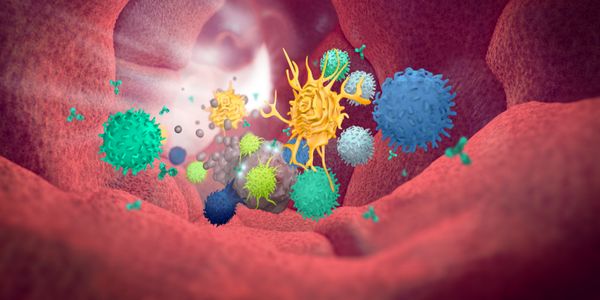
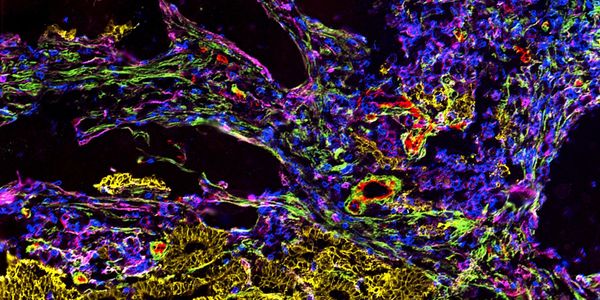
Tumors and the immune response interact in various ways. Tumors try to suppress the immune response in an effort to promote their growth and survival. The anti-tumor immune response, on the other hand, identifies tumor cells and kills them. Both tumors and the immune response elicit various mechanisms to combat the actions of the other.
A central goal in single-cell cancer research is to identify phenotypically distinct cells that have prognostic significance for patients. This need is acute in brain tumor glioblastoma, whe...
Date: Time: Over the last couple of years, it has become apparent that affinity-tuned CAR T cells display enhanced expansion and prolonged persistence in patients and that this strategy can...
Single-cell mass cytometry identifies mechanisms of resistance to immunotherapy in AML 6:30–7:00 am PDT Presented By: Shelley Herbrich, PhD Understanding CD19 negative relapse followin...
I will present our new computer vision algorithm, ST-Net, which can computationally synthesize spatially resolved transcriptomics directly from H&E histology images (He et al. Nature Bio...
GeoMx Digital Spatial Profiling Technology! The GeoMx Digital Spatial Profiler (DSP) is a novel platform developed by NanoString. This leading digital technology offers multiplexed measureme...
Immunotherapy such as immune checkpoint inhibitor antibodies have revolutionized the treatments for hard-to-treat cancers, with durable responses observed in clinics. However, the overall re...
Abnormal cellular metabolism is a hallmark of many diseases, yet there is an absence of quantitative methods to dynamically image metabolism with cellular-level resolution. Optical metabolic...
The recent development of highly multiplexed methods for imaging tissues from patients and mouse models promises to fundamentally advance research in tissue biology and disease. These new te...
Date: September 16, 2020 Time: 9:00am PTD, 12:00pm EDT Harnessing the power of the host immune system to treat diseases has been transformational in patient care. Physiologically relevant ce...
DATE: September 15, 2020 TIME: 08:00am PT Tumorigenesis and cancer progression are affected by the tumor immune microenvironment (TIME). The TIME not only influences the efficiency of existi...
The recent outbreak of SARS-CoV-2 underscores the need for understanding the evolutionary processes that drive the emergence and adaptation of zoonotic viruses in humans. Here, we show that...
DATE: September 1, 2020 TIME: 8:00am PT, 11:00am ET Nearly half of all cancer patients are eligible to receive treatment with immune checkpoint inhibitors (ICI). Thus, preventing, identifyin...
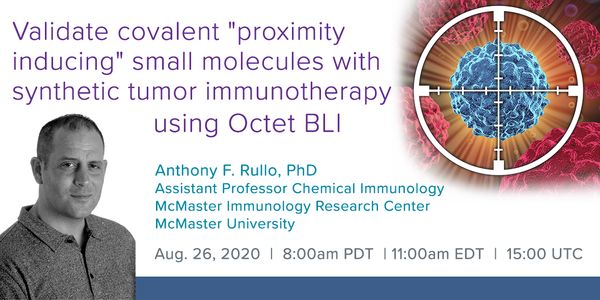
DATE: August 26, 2020 TIME: 8:00 am PDT The host immune "recognition" of cancer forms the basis of modern tumor immmunotherapy, a highly targeted treatment option with the demonstr...
Over the last decade the cancer research field has seen a number of advances aimed at increasing the efficacy of treatments, reducing toxic side effects, and decreasing attrition rates of dr...
With the recent successes of immunotherapies, a fresh breeze of optimism in the fight against cancer has reinvigorated the industry. Perhaps the greatest legacy will be the realization of th...
The major function of mitochondria in cellular homeostasis has been the generation of ATP through oxidative phosphorylation. However, we have previously demonstrated that mitochondria can se...
Coordination of immune cell metabolic programs with cell fate and state is a fundamental determinant of immune responses. Emerging evidence highlights that the interplay between immune signa...
Metabolic reprogramming is critical for governing proper T cell immune responses, including activation, production of effector molecule, migration and differentiation. The metabolic stress T...
Immune escape mechanisms such as the induction/recruitment of immunosuppressive cells and the increased expression of various immunosuppressive molecules including PD-1/PD-1 ligands are esse...
DATE: July 07, 2020 TIME: 9:00 am PDT The widely used TNM staging system is poorly predictive of response to adjuvant chemotherapy in Stage II and III colon cancer. As a result, there is ove...
In line with the role of T cells as critical mediators of the adaptive immune response, recombinational and junctional diversity of the T cell receptor makes each T cell almost entirely uniq...
Multiplex immunophenotyping technologies are indispensable for a deeper understanding of biological systems. Until recently, high-dimensional cellular analyses implied the loss of tissue con...
Brain malignancies can either originate from within the CNS (gliomas) or invade from other locations in the body (metastases). A highly immunosuppressive tumor microenvironment (TME) influen...
A central goal in single-cell cancer research is to identify phenotypically distinct cells that have prognostic significance for patients. This need is acute in brain tumor glioblastoma, whe...
Date: Time: Over the last couple of years, it has become apparent that affinity-tuned CAR T cells display enhanced expansion and prolonged persistence in patients and that this strategy can...
Single-cell mass cytometry identifies mechanisms of resistance to immunotherapy in AML 6:30–7:00 am PDT Presented By: Shelley Herbrich, PhD Understanding CD19 negative relapse followin...
I will present our new computer vision algorithm, ST-Net, which can computationally synthesize spatially resolved transcriptomics directly from H&E histology images (He et al. Nature Bio...
GeoMx Digital Spatial Profiling Technology! The GeoMx Digital Spatial Profiler (DSP) is a novel platform developed by NanoString. This leading digital technology offers multiplexed measureme...
Immunotherapy such as immune checkpoint inhibitor antibodies have revolutionized the treatments for hard-to-treat cancers, with durable responses observed in clinics. However, the overall re...
Abnormal cellular metabolism is a hallmark of many diseases, yet there is an absence of quantitative methods to dynamically image metabolism with cellular-level resolution. Optical metabolic...
The recent development of highly multiplexed methods for imaging tissues from patients and mouse models promises to fundamentally advance research in tissue biology and disease. These new te...
Date: September 16, 2020 Time: 9:00am PTD, 12:00pm EDT Harnessing the power of the host immune system to treat diseases has been transformational in patient care. Physiologically relevant ce...
DATE: September 15, 2020 TIME: 08:00am PT Tumorigenesis and cancer progression are affected by the tumor immune microenvironment (TIME). The TIME not only influences the efficiency of existi...
The recent outbreak of SARS-CoV-2 underscores the need for understanding the evolutionary processes that drive the emergence and adaptation of zoonotic viruses in humans. Here, we show that...
DATE: September 1, 2020 TIME: 8:00am PT, 11:00am ET Nearly half of all cancer patients are eligible to receive treatment with immune checkpoint inhibitors (ICI). Thus, preventing, identifyin...
DATE: August 26, 2020 TIME: 8:00 am PDT The host immune "recognition" of cancer forms the basis of modern tumor immmunotherapy, a highly targeted treatment option with the demonstr...
Over the last decade the cancer research field has seen a number of advances aimed at increasing the efficacy of treatments, reducing toxic side effects, and decreasing attrition rates of dr...
With the recent successes of immunotherapies, a fresh breeze of optimism in the fight against cancer has reinvigorated the industry. Perhaps the greatest legacy will be the realization of th...
The major function of mitochondria in cellular homeostasis has been the generation of ATP through oxidative phosphorylation. However, we have previously demonstrated that mitochondria can se...
Coordination of immune cell metabolic programs with cell fate and state is a fundamental determinant of immune responses. Emerging evidence highlights that the interplay between immune signa...
Metabolic reprogramming is critical for governing proper T cell immune responses, including activation, production of effector molecule, migration and differentiation. The metabolic stress T...
Immune escape mechanisms such as the induction/recruitment of immunosuppressive cells and the increased expression of various immunosuppressive molecules including PD-1/PD-1 ligands are esse...
DATE: July 07, 2020 TIME: 9:00 am PDT The widely used TNM staging system is poorly predictive of response to adjuvant chemotherapy in Stage II and III colon cancer. As a result, there is ove...
In line with the role of T cells as critical mediators of the adaptive immune response, recombinational and junctional diversity of the T cell receptor makes each T cell almost entirely uniq...
Multiplex immunophenotyping technologies are indispensable for a deeper understanding of biological systems. Until recently, high-dimensional cellular analyses implied the loss of tissue con...
Brain malignancies can either originate from within the CNS (gliomas) or invade from other locations in the body (metastases). A highly immunosuppressive tumor microenvironment (TME) influen...
Opens in a new windowOpens an external siteOpens an external site in a new window

 Follow