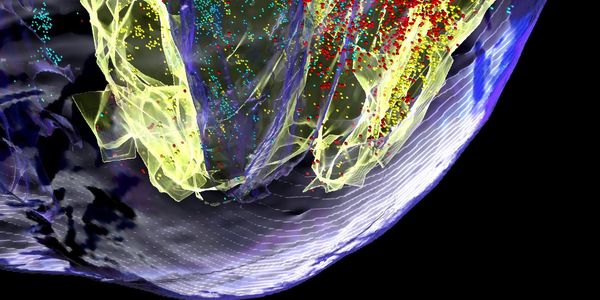
Tumors and the immune response interact in various ways. Tumors try to suppress the immune response in an effort to promote their growth and survival. The anti-tumor immune response, on the other hand, identifies tumor cells and kills them. Both tumors and the immune response elicit various mechanisms to combat the actions of the other.

Microsatellite instability (MSI) is a hypermutation phenotype that results from impaired DNA mismatch repair (MMR). The presence of high levels of MSI (MSI-H) is potentially predictive of Ly...
DATE: June 30, 2020 TIME: 10:00 am PDT, 1:00 pm EDT COVID-19 is a highly pathogenic disease caused by severe acute respiratory syndrome coronavirus 2 (SARS-CoV-2). We have assembled a panel...
DATE: June 30, 2020 TIME: 9:00am PDT, 12:00pm EDT QC laboratories perform a critical role in demonstrating pharmaceutical products are consistently manufactured, safe, potent, and pure. At t...
DATE: June 26, 2020 TIME: 8:00am PT Structural variants (SVs) are an important source of genetic variation in the human genome and they are involved in a multitude of human diseases as well...
Understanding the complex interplay between a pathogen and the host response is important to developing effective vaccines and therapeutics. The nCounter® Analysis System and GeoMx®...
The RNAscope in situ hybridization technology allows high sensitivity, specificity and spatial resolution providing pivotal single-cell gene expression information to gain better insights in...
While providing indispensable insight into immune processes, the live cell imaging of immune cells poses unique challenges due to their non-adherent nature. Suspension cells such as immune c...
Gene manipulation studies in primary human immune cells can answer important biological questions within a clinically relevant cellular context. In this webinar we explore the use of several...
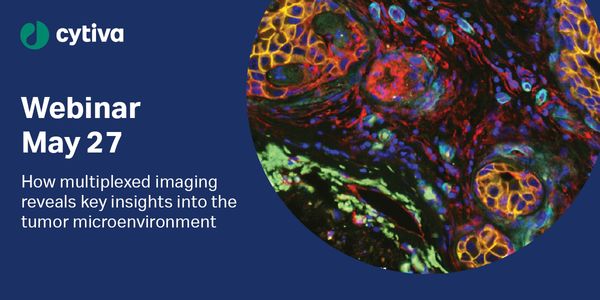
Multiplexed immunofluorescent imaging sheds new light on cancer and other complex conditions. This imaging technique offers a deeper understanding of cells and their surroundings by providin...
A key step in the clinical production of CAR T cells is the expansion of engineered T cells. To generate enough cells for viable adoptive cell therapy, cells must be robustly stimulated, whi...
Immune checkpoint blockade has revolutionized the treatment for patients with cancer. Great efforts remain to better understand resistant mechanisms to treatment as well as means to improve...
Cancer cells can acquire immune resistance resulting in a loss of immunosurveillance. Tumor cells can upregulate PDL-1 which binds to PD-1. This complex inhibits CD8 Tumor Infiltrating cells...
Cancer initiation and virulence depends on mechanisms to evade host immunosurveillance and suppression of early invasion and growth. Distinct phenotypes of the immune infiltrates in and arou...
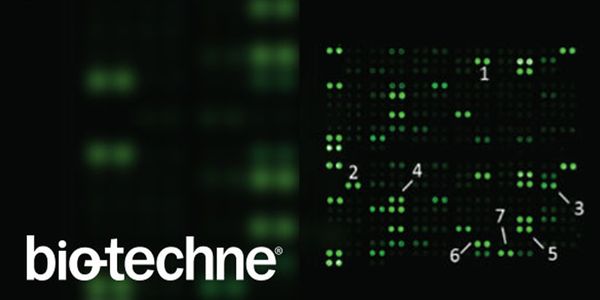
Cancer vaccines are increasingly being developed and tested as a cancer treatment and prevention strategy. Designing cancer vaccines is complicated by a number factors including choice of an...
Dr. Koenitzer will present an overview of her current research in immune suppression. After a brief introduction to the MILLIPLEX® multiplex immunoassay portfolio, Dr. Koenitzer will dis...
Immune checkpoint therapies targeting the CTLA-4 and PD-(L)1 pathways have been largely clinically disappointing for patients with prostate cancer. This can be attributed to the highly immun...
Programmed death-1 (PD-1) inhibits T and B cell function upon ligand binding. PD-1 blockade revolutionized cancer treatment, and while numerous patients respond, some develop autoimmune-like...
Learning Objectives: 1. Define applications of approved and experimental (multiplexing IF) biomarker assessment in Immuno-Oncology 2. Define bottlenecks and areas of improvement to current t...
B cells have recently come into vogue as important contributors to the anti-tumor immune response in cancer patients. Specifically, B cells and the immune structures in which they reside (te...
1. Identify 3 barriers to immune cell response to cancer 2. List 3 approaches to overcome immunosuppressive barriers to bolster the immune response to cancer 3. Explain how fusion proteins c...
DATE: May 28, 2020 TIME: 9:00am PDT High-resolution imaging of sentinel lymph nodes (SLN) is gaining significance to specify staging and to determine patients requiring adjuvant treatment. C...
DATE: May 27, 2020 TIME: 8:00am PT, 11:00am ET Multiplexed immunofluorescent imaging sheds new light on cancer and other complex conditions. This imaging technique offers a deeper understand...
Background: Acute myeloid leukemia (AML) is a molecularly and clinically heterogeneous hematological malignancy. Despite recent advancements in the treatment of AML, approximately 50% of pat...
Background: Despite the immunogenicity and safety profile of dendritic cell (DC) vaccines, the importance of vaccine-induced antigen-specific T cell responses is unclear across clinical tria...
Microsatellite instability (MSI) is a hypermutation phenotype that results from impaired DNA mismatch repair (MMR). The presence of high levels of MSI (MSI-H) is potentially predictive of Ly...
DATE: June 30, 2020 TIME: 10:00 am PDT, 1:00 pm EDT COVID-19 is a highly pathogenic disease caused by severe acute respiratory syndrome coronavirus 2 (SARS-CoV-2). We have assembled a panel...
DATE: June 30, 2020 TIME: 9:00am PDT, 12:00pm EDT QC laboratories perform a critical role in demonstrating pharmaceutical products are consistently manufactured, safe, potent, and pure. At t...
DATE: June 26, 2020 TIME: 8:00am PT Structural variants (SVs) are an important source of genetic variation in the human genome and they are involved in a multitude of human diseases as well...
Understanding the complex interplay between a pathogen and the host response is important to developing effective vaccines and therapeutics. The nCounter® Analysis System and GeoMx®...
The RNAscope in situ hybridization technology allows high sensitivity, specificity and spatial resolution providing pivotal single-cell gene expression information to gain better insights in...
While providing indispensable insight into immune processes, the live cell imaging of immune cells poses unique challenges due to their non-adherent nature. Suspension cells such as immune c...
Gene manipulation studies in primary human immune cells can answer important biological questions within a clinically relevant cellular context. In this webinar we explore the use of several...
Multiplexed immunofluorescent imaging sheds new light on cancer and other complex conditions. This imaging technique offers a deeper understanding of cells and their surroundings by providin...
A key step in the clinical production of CAR T cells is the expansion of engineered T cells. To generate enough cells for viable adoptive cell therapy, cells must be robustly stimulated, whi...
Immune checkpoint blockade has revolutionized the treatment for patients with cancer. Great efforts remain to better understand resistant mechanisms to treatment as well as means to improve...
Cancer cells can acquire immune resistance resulting in a loss of immunosurveillance. Tumor cells can upregulate PDL-1 which binds to PD-1. This complex inhibits CD8 Tumor Infiltrating cells...
Cancer initiation and virulence depends on mechanisms to evade host immunosurveillance and suppression of early invasion and growth. Distinct phenotypes of the immune infiltrates in and arou...

Cancer vaccines are increasingly being developed and tested as a cancer treatment and prevention strategy. Designing cancer vaccines is complicated by a number factors including choice of an...
Dr. Koenitzer will present an overview of her current research in immune suppression. After a brief introduction to the MILLIPLEX® multiplex immunoassay portfolio, Dr. Koenitzer will dis...
Immune checkpoint therapies targeting the CTLA-4 and PD-(L)1 pathways have been largely clinically disappointing for patients with prostate cancer. This can be attributed to the highly immun...
Programmed death-1 (PD-1) inhibits T and B cell function upon ligand binding. PD-1 blockade revolutionized cancer treatment, and while numerous patients respond, some develop autoimmune-like...
Learning Objectives: 1. Define applications of approved and experimental (multiplexing IF) biomarker assessment in Immuno-Oncology 2. Define bottlenecks and areas of improvement to current t...
B cells have recently come into vogue as important contributors to the anti-tumor immune response in cancer patients. Specifically, B cells and the immune structures in which they reside (te...
1. Identify 3 barriers to immune cell response to cancer 2. List 3 approaches to overcome immunosuppressive barriers to bolster the immune response to cancer 3. Explain how fusion proteins c...
DATE: May 28, 2020 TIME: 9:00am PDT High-resolution imaging of sentinel lymph nodes (SLN) is gaining significance to specify staging and to determine patients requiring adjuvant treatment. C...
DATE: May 27, 2020 TIME: 8:00am PT, 11:00am ET Multiplexed immunofluorescent imaging sheds new light on cancer and other complex conditions. This imaging technique offers a deeper understand...
Background: Acute myeloid leukemia (AML) is a molecularly and clinically heterogeneous hematological malignancy. Despite recent advancements in the treatment of AML, approximately 50% of pat...
Background: Despite the immunogenicity and safety profile of dendritic cell (DC) vaccines, the importance of vaccine-induced antigen-specific T cell responses is unclear across clinical tria...
Opens in a new windowOpens an external siteOpens an external site in a new window