Our webinars allow users to learn from experts and earn continuing education credits on industry topics, progress in research, services available, and more.
Informed consent (IC) is a fundamental aspect of ethical clinical research, safeguarding the rights and well-being of participants. It empowers participants with comprehensive information ab...
Adjuvant discovery is largely devoted toward the development of vaccines meant to elicit prophylactic humoral immunity. While useful against infectious diseases, this mode of adaptive immuni...
Characterization of rare cells remains a major challenge for the evaluation and understanding of key biological systems, such as circulating tumor cells (CTCs) from liquid biopsy, stem cells...
Explainable AI (XAI) aims at helping you understand and interpret predictions made by AI techniques and tools. Recently, there has been a growing interest in XAI as many users want explanati...
Inflammatory myopathies are a group of rare diseases that are characterized by progressive muscle weakness due to chronic skeletal muscle inflammation. Classification of these rare diseases...
Infection with human immunodeficiency virus (HIV)-1 compromises the immune system and causes in about half of the affected individuals neurological and neurocognitive complication categorize...
Short oligonucleotides are an emerging platform for the development of biopharmaceuticals to treat various diseases, including those that are inaccessible to small molecule- and protein-base...
Purpose: Group B Streptococcus (GBS) is a Gram positive coccus which is part of the normal microbiota of the GI and GU tracts. However GBS is also a major cause of septicaemia and meningitis...
The Irvine CubeSat STEM Program (ICSP) is a collaboration between Irvine Public Schools Foundation, and Irvine and Tustin Unified school districts that provides teams of students from all si...
Substance use disorder (SUD) remains a highly stigmatized medical condition in the US. One of the most effective methods of treatment for SUD, specifically for opioid use disorder and alcoho...
CRISPR/Cas gene editing technology has rapidly evolved over the last decade. Its versatility extends from creating targeted research-use disease models in cells and animals, to high-throughp...
Recurrently emerging SARS-CoV-2 variants of concern (VOC) present increasingly sophisticated immune escape strategies that fuel global infection rates, as exemplified by the raging B.1.1.529...
RNA plays important and diverse roles in biology, but molecular tools to manipulate and measure RNA are limited. We demonstrate that RNA-targeting CRISPR effector Cas13 and novel RNA targeti...
Short tandem repeats (STRs) are gold-standard genetic loci used for source attribution of evidentiary material in legal matters. Their power lies in their high heterozygosity and large allel...
With the ever-increasing demand for antibody and protein-based therapeutics, a flexible purification platform that can handle low to high sample volumes and expression levels is critical for...
Checkpoint blockade therapy for cancer has had tremendous impact on clinical outcomes, yet only a subset of patients respond. Recent studies show that response to checkpoint blockade does not...
Pharmacogenomics has emerged as an early use case of precision medicine. Delivering this new clinical data to clinicians in a ready to use format can be challenging. This talk wil...
November 13, 2020 3:00 PM PST | November 14, 2020 7:00 AM SGT
Immunohistochemistry (IHC) has been an indispensable tool for daily pathology practice. Multiplex designs have further facilitated its utility with improved efficacy. Several techniques of m...
In this session, researchers, clinicians, and program implementers from four countries will address the disruption in continuity of care for PLHIV amid the COVID-19 pandemic and the conseque...
From gene cloning and initial clone selection through to final cell evaluation, the continual assessment of cell count and viability is important for determining the best growing and highest...
Over years, HMGB1 has increasingly attracted the attention of all kinds of researchers. It is one of the most intriguing molecules within the complete arsenal of proteins of the innate immun...
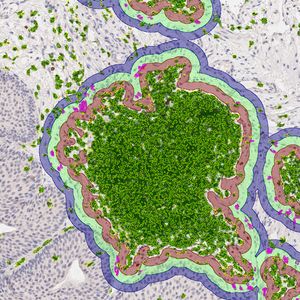
The Tumor Microenvironment (TME) is a highly complex niche, with many different cell types characterized by a range of biomarkers. Clever staining protocols like Cycle Immunofluorescence, an...
The All of Us (AoU) initiative aims to enhance personalized medical care by sequencing the genomes of over one million Americans of diverse ethnic backgrounds. To improve sequencing accuracy...
While viral fusion proteins are highly desirable for subunit vaccine generation, their inherent metastable nature complicates implementation and development. We have harnessed the structural...
Learning Objectives: 1. Define applications of approved and experimental (multiplexing IF) biomarker assessment in Immuno-Oncology 2. Define bottlenecks and areas of improvement to current t...
The NIST Biomanufacturing Program develops measurement science, standards, reference data and tools to support the development, manufacturing, and regulatory approval of biologic medicines....

 Informed consent (IC) is a fundamental aspect of ethical clinical research, safeguarding the rights and well-being of participants. It empowers participants with comprehensive information ab...

































![Anti-PRAME antibody [EPR20330]](https://d3bkbkx82g74b8.cloudfront.net/eyJidWNrZXQiOiJsYWJyb290cy1pbWFnZXMiLCJrZXkiOiJjb21wYW55X3Byb2R1Y3RfcHJvZmlsZV9pbWFnZV9mMzEwNTY4MGY1NmVmZjU3ZjZhMWRkZTU2M2Q4YjBmODZjMDJkNDE4XzMwMDA3MTg1ODEyLmpwZyIsImVkaXRzIjp7InRvRm9ybWF0IjoianBnIiwicmVzaXplIjp7IndpZHRoIjozMDAsImhlaWdodCI6MzAwLCJmaXQiOiJjb3ZlciIsInBvc2l0aW9uIjoiY2VudGVyIiwiYmFja2dyb3VuZCI6IiNmZmYifSwiZmxhdHRlbiI6eyJiYWNrZ3JvdW5kIjoiI2ZmZiJ9fX0=)