Our webinars allow users to learn from experts and earn continuing education credits on industry topics, progress in research, services available, and more.
Non-small cell lung cancer (NSCLC) accounts for more deaths than colon, breast, and prostate cancers combined. Of patients with NSCLC, 20% initially present with stage I or II disease, for w...
Like any other agricultural crop, pesticides are applied to hemp plants to protect it from pests and improve growth yield. Chronic exposure to pesticides can lead to serious health risks and...
DNASTAR offers an integrated suite of software for accurate assembly and analysis of sequence data from all major next-generation sequencing platforms supporting key workflows including de no...
More than half of the states around the country have legalized marijuana laws that permit individuals to use marijuana for medical or recreational purposes. However, the possession and...
Dr. Tony Hu’s research focuses on developing and validating integrated nanotechnique-based strategies for marker discovery and molecular diagnostics in peripheral blood samples to provi...
In the past two decades a small number of infrequently dividing cells have been proposed as the source of multi-drug resistance during cancer treatment. These cells identified by their expres...
While transformative, first-generation CRISPR technologies remain limited across multiple important dimensions including scalability, editing efficiency, types of modifications available, an...
Bridging a deep understanding of molecular profiles with clinical information is critical to developing innovative precision medicine tools in oncology. Discovery’s recently launched S...
This two-part webinar will focus on novel techniques for obtaining unbiased results in 16S rRNA gene sequencing of challenging microbiome samples. Part 1 will feature QIAGEN’s solutions...
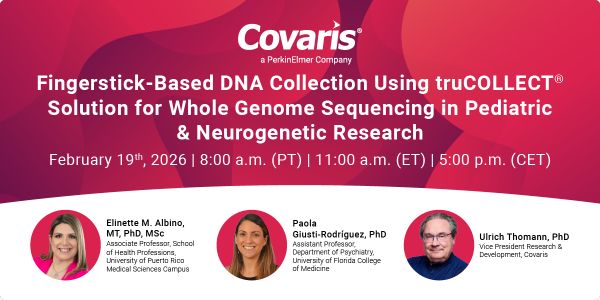
The collection of high-quality genomic DNA remains a major barrier in pediatric and neurodevelopmental research, particularly among children with autism spectrum disorder (ASD) and other neu...
The cannabis market is rapidly growing as legalization continues to increase across the United States and Internationally. As a result, an influx of different types of cannabis infused edibl...
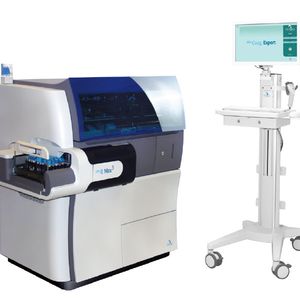
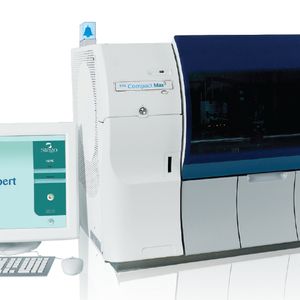
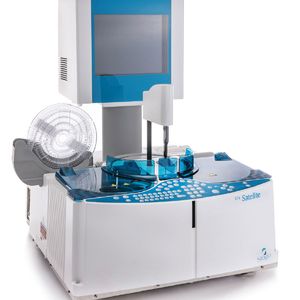
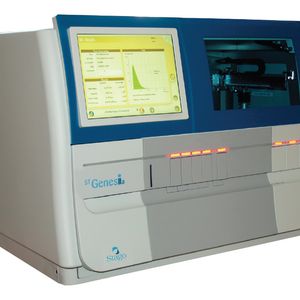
The nature of work in the clinical core lab has changed over the years from beakers of liquids, specimens and compounds on countertops to sophisticated equipment with prepackaged reagents and...
The efficacy of current influenza antiviral drugs is compromised by emerging drug resistance. To address this unmet medical need, we have made progress in developing novel influenza antiviral...
Learning Objectives: 1. List types of sequencing and genomics methods. 2. List several methods for epigenome engineering. 3. Describe the genomic changes that occur in a spacecraft and in ast...
Robotic partial nephrectomy (RPN) has increasingly been applied to the treatment of small renal masses. Because of space limitations and the size of the robot at the patient side, the standa...
To interpret genome sequence from telomere to telomere, it is helpful end-to-end haplotypes with single-molecule epigenetics overlays, via in situ omics at sub-cellular (20 nm) resolution an...
Several age-related neurodegenerative disorders are characterized by the deposition of aberrantly folded proteins. The histopathological hallmark of synucleinopathies is the deposition of ɑ-...
Metastatic prostate cancer (mPC) is a phenotypically diverse disease with poor responses to immune based therapeutics. Development of immunotherapeutic strategies for mPC is hampered by the...
Phosphorylation of α-synuclein at the Serine-129 site (α-syn Ser129P) is an established pathologic hallmark of synucleinopathies and a therapeutic target. In physiologic states,...
Cellular processes are orchestrated by a large number of biomolecules in a spatially and temporally coordinated manner within a tiny volume. To uncover the underlying organizational principle...
Precision medicine and next-generation sequencing – Two terms characterized by a highly dynamic nature, strong innovations and a bright future. Both merged together will exert a decisiv...
The scale-up and characterization of industrial bioprocesses is to a large extent still based on empirical knowledge. With advanced algorithms and graphic processing units in the computation...
Background: Acute myeloid leukemia (AML) is a molecularly and clinically heterogeneous hematological malignancy. Despite recent advancements in the treatment of AML, approximately 50% of pat...
Cases of traumatic brain injury (TBI) have been steadily rising over the past decade with most common causes of injury observed among participants in contact sports, combat military personne...
Bioconjugation is a critical technique for creating many of the key reagents used in research and commercial applications. This webinar will cover in great detail the major reactions used to...
Short-read sequencing has found wide-spread use in metagenomics but the short read lengths and bias with regard to sequence composition have translated to limitations of the study of complex...

 Non-small cell lung cancer (NSCLC) accounts for more deaths than colon, breast, and prostate cancers combined. Of patients with NSCLC, 20% initially present with stage I or II disease, for w...