Cells carry out specialized functions throughout the body and each cell type functions distinctly from other cell types. Some cellular functions include transporting nutrients throughout the body and producing energy. One specialized cell is muscle cells which function to create a force that moves parts of the body. Another example are bone cells, whose functions include protecting internal organs from damage and storing minerals such as calcium.
CRISPR/Cas gene editing has become the gold standard for individual gene perturbations as well as high-throughput functional screenings, with a rapidly increasing demand for high-quality CRIS...
In this webinar, we will discuss our most recent additions to our CRISPR protein portfolio, the GFP-SpCas9 and GFP-eCas9 fusion proteins. The two GFP-Cas9 fusion proteins offer great visualiz...
Genetic drivers of cancer can be dysregulated through epigenetic modifications of DNA. Although the critical role of DNA 5-methylcytosine (5mC) in the regulation of transcription is recognize...
DATE: April 11, 2019TIME: 10:00 AM PSTWith the recent FDA approval of the CAR-T cell therapies Kymriah® from Novartis and Yescarta® from Kite Pharma there has been a renewed i...
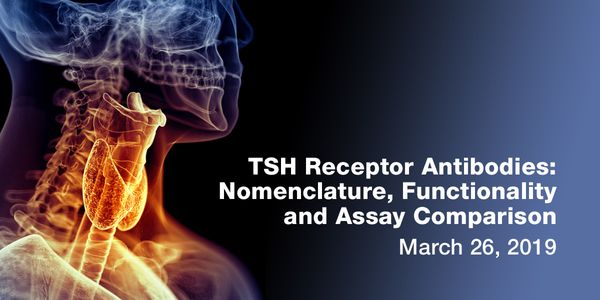
DATE: March 26, 2019TIME: 10:00am PDT, 1:00pm EDT Despite being the most common autoimmune disorder in the United States, knowledge surrounding thyroid di...
Batten disease or the Neuronal Ceroid Lipofuscinoses (NCLss) are each the result of inherited mutations that result in lysosomal dysfunction. Some of these disorders are due to deficiencies i...
An actual way of understanding complex systems in psychology and psychiatry is by building mathematical models on the functioning of mental, behavioral, or neural systems (computational syste...
Late-onset Alzheimer’s disease (LOAD) is the most common form of dementia worldwide. To date, animal models of Alzheimer’s have focused on rare familial mutations, due to a lack o...
The contemporary understanding of psychiatric disorders typically consists of a vast but often poorly interrelated set of facts and hypotheses that fail to coalesce into an integrated whole....
The size and burden of mental illness should ideally prompt a strategy of preemption and early intervention. On the neuroscientific side, this leads to the question of brain mechanisms of ris...
Deep brain stimulation (DBS) is an established therapy for cardinal motor signs and medication-related complications in Parkinson’s disease (PD). Current DBS therapy is limited to &ldqu...
Plasticity in the brain is very extensive due to the brain’s parallel architecture and synaptic reorganization capabilities. Because neuronal populations are typically in stable low e...
Actions are not mediated solely by cortical processes but rely on communication within basal ganglia-thalamocortical loops. Speech is one example, although how the basal ganglia participate i...
Deep brain stimulation (DBS) represents one of the major clinical breakthroughs in the age of translational neuroscience. In 1987, Benabid and colleagues demonstrated that high-frequency stim...
Neurotechnology promises a way to repair the damaged nervous system that requires a merger of neuroscience, engineering and clinical knowledge. Brain Computer Interfaces can now read out the...
Localizing and identifying neuronal patterns that generate pathological brain signals may assist with tissue resection and intervention strategies in patients with neurological and psychiatri...
Systems neuroscience offers new and powerful conceptual frameworks for testing the fundamental brain mechanisms that support behavior. More recently, modern neurotechnologies with translation...
Stimulation of human visual cortex is known to elicit visual perceptions that could potentially be used for restoring artificial vision to individuals who have lost their vision due to non-co...
The implications of NIH BRAIN research stretch beyond traditional medical and research contexts. This LabRoots session will present recent developments at the intersection of neuroscience and...
What motivates patients to participate in clinical trials? Discussions most often revolve around potential study participants’ perception of therapeutic benefit. Misconceptions about th...
The NIH BRAIN Initiative aims to develop new tools and neurotechnologies to transform our understanding of brain function in health and disease. That knowledge is critical to enable novel the...
CRISPR/Cas gene editing has become the gold standard for individual gene perturbations as well as high-throughput functional screenings, with a rapidly increasing demand for high-quality CRIS...
In this webinar, we will discuss our most recent additions to our CRISPR protein portfolio, the GFP-SpCas9 and GFP-eCas9 fusion proteins. The two GFP-Cas9 fusion proteins offer great visualiz...
Genetic drivers of cancer can be dysregulated through epigenetic modifications of DNA. Although the critical role of DNA 5-methylcytosine (5mC) in the regulation of transcription is recognize...
DATE: April 11, 2019TIME: 10:00 AM PSTWith the recent FDA approval of the CAR-T cell therapies Kymriah® from Novartis and Yescarta® from Kite Pharma there has been a renewed i...
DATE: March 26, 2019TIME: 10:00am PDT, 1:00pm EDT Despite being the most common autoimmune disorder in the United States, knowledge surrounding thyroid di...
Batten disease or the Neuronal Ceroid Lipofuscinoses (NCLss) are each the result of inherited mutations that result in lysosomal dysfunction. Some of these disorders are due to deficiencies i...
An actual way of understanding complex systems in psychology and psychiatry is by building mathematical models on the functioning of mental, behavioral, or neural systems (computational syste...
Late-onset Alzheimer’s disease (LOAD) is the most common form of dementia worldwide. To date, animal models of Alzheimer’s have focused on rare familial mutations, due to a lack o...
The contemporary understanding of psychiatric disorders typically consists of a vast but often poorly interrelated set of facts and hypotheses that fail to coalesce into an integrated whole....
The size and burden of mental illness should ideally prompt a strategy of preemption and early intervention. On the neuroscientific side, this leads to the question of brain mechanisms of ris...
Deep brain stimulation (DBS) is an established therapy for cardinal motor signs and medication-related complications in Parkinson’s disease (PD). Current DBS therapy is limited to &ldqu...
Plasticity in the brain is very extensive due to the brain’s parallel architecture and synaptic reorganization capabilities. Because neuronal populations are typically in stable low e...
Actions are not mediated solely by cortical processes but rely on communication within basal ganglia-thalamocortical loops. Speech is one example, although how the basal ganglia participate i...
Deep brain stimulation (DBS) represents one of the major clinical breakthroughs in the age of translational neuroscience. In 1987, Benabid and colleagues demonstrated that high-frequency stim...
Neurotechnology promises a way to repair the damaged nervous system that requires a merger of neuroscience, engineering and clinical knowledge. Brain Computer Interfaces can now read out the...
Localizing and identifying neuronal patterns that generate pathological brain signals may assist with tissue resection and intervention strategies in patients with neurological and psychiatri...
Systems neuroscience offers new and powerful conceptual frameworks for testing the fundamental brain mechanisms that support behavior. More recently, modern neurotechnologies with translation...
Stimulation of human visual cortex is known to elicit visual perceptions that could potentially be used for restoring artificial vision to individuals who have lost their vision due to non-co...
The implications of NIH BRAIN research stretch beyond traditional medical and research contexts. This LabRoots session will present recent developments at the intersection of neuroscience and...
What motivates patients to participate in clinical trials? Discussions most often revolve around potential study participants’ perception of therapeutic benefit. Misconceptions about th...
The NIH BRAIN Initiative aims to develop new tools and neurotechnologies to transform our understanding of brain function in health and disease. That knowledge is critical to enable novel the...

 Follow