 Follow
Mechanics
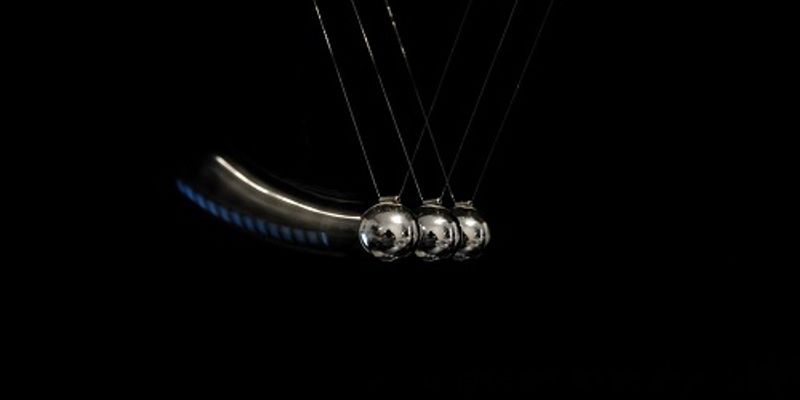
Mechanics: an area of science concerned with the behaviour of physical bodies when subjected to forces or displacements, and the subsequent effects of the bodies on their environment. During the early modern period, scientists such as Galileo, Kepler, and Newton, laid the foundation for what is now known as classical mechanics. It is a branch of classical physics that deals with particles that are either at rest or are moving with velocities significantly less than the speed of light. It can also be defined as a branch of science which deals with the motion of and forces on objects.

MAR 08, 2023 | 6:00 AM

Mild traumatic brain injuries (mTBIs) are a prevalent health issue in North America. There is increasing pressure to utilize ecologically valid models of closed-head mTBI in the preclinical...
MAR 08, 2023 | 6:00 AM

Explainable AI (XAI) aims at helping you understand and interpret predictions made by AI techniques and tools. Recently, there has been a growing interest in XAI as many users want explanati...
MAR 08, 2023 | 6:00 AM

Alzheimer’s and Parkinson’s diseases (AD, PD) are the two most common neurodegenerative disorders. Both diseases are characterized by abnormal aggregates in the brain, which incl...
MAR 08, 2023 | 6:00 AM

Neural networks are a powerful tool for modeling neural activity in the brain. In this talk, I will discuss how these models have helped in my own research and highlight recent work building...
FEB 23, 2023 | 8:00 AM

Date: February 23, 2023 Time: 8:00am (PST), 11:00am (EST), 5:00pm (CET) The RNAscope in situ hybridization (ISH) technology is a powerful method for detecting gene expression with spatial an...
FEB 22, 2023 | 5:30 AM

Non-alcoholic fatty liver disease (NAFLD) is a spectrum of metabolic disorders affecting 25% of our global population. 20% of NAFLD patients go on to develop Non-alcoholic steatohepatitis (N...
FEB 15, 2023 | 7:00 AM
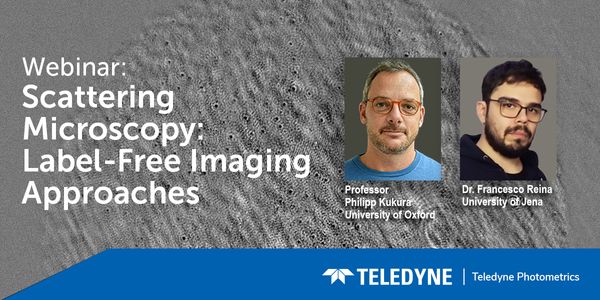
Date: February 15, 2023 Time: 7:00am (PST), 10:00pm (EST), 4:00pm (CET) While not all microscopy samples can fluoresce, all can scatter light, and this scattered light can be imaged. This ha...
JAN 18, 2023 | 9:00 AM
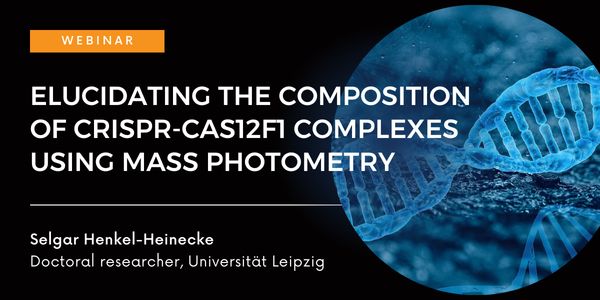
Date: January 18, 2023 Time: 9:00am (PST), 12:00pm (EST), 6:00pm (CET) CRISPR-Cas systems are widely used in genome engineering applications. They contain RNA-guided ribonucleoprotein (RNP)...
December 15, 2022 8:00 AM PST

Date: October 26, 2022 Time: 9:00am (PST), 12:00pm (EST), 6:00pm (CEST) Current protein biomarkers are only moderately predictive in identifying individuals with mild traumatic brain injury...
NOV 10, 2022 | 8:00 AM
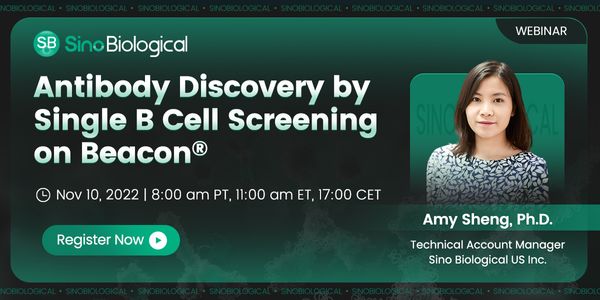
Date: November 10, 2022 Time: 8:00am (PST), 11:00am (EST), 5:00pm (CET) Single B cell screening is a powerful and efficient strategy for generating antigen-specific monoclonal antibodies. Di...
NOV 03, 2022 | 6:00 AM
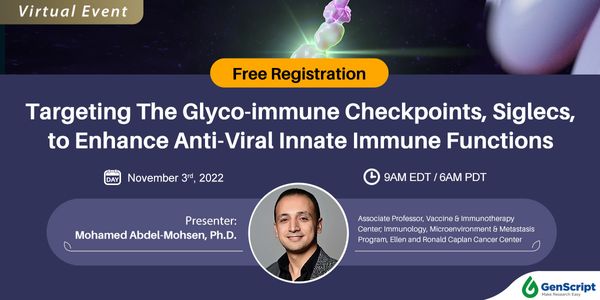
Date: October 13, 2022 Time: 10:00am (PDT), 12:00pm (EDT), 8:00pm (CEST) Most known immune checkpoints exert their effects upon protein-protein interactions, such as the PD1 checkpoint on CD...
NOV 02, 2022 | 7:30 AM

Clustered regularly interspaced short palindromic repeats (CRISPR)–CRISPR-associated protein 13 (Cas13) has been rapidly developed for nucleic-acid-based diagnostics by using its chara...
NOV 01, 2022 | 7:00 AM

Date: November 01, 2022 Time: 7:00am (PDT), 10:00am (EDT), 3:00pm (CET) Molecular imaging of living specimens offers a means to draw upon the growing body of high-throughput molecular data t...