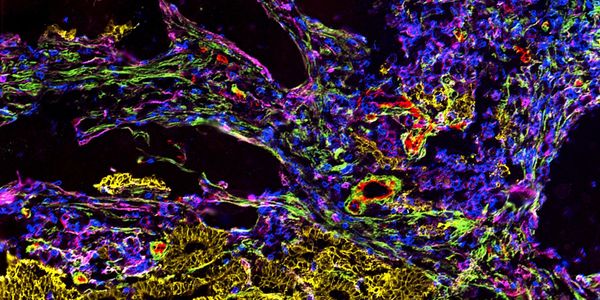
Biomarker Discovery is a process in which molecular substances in the body are used to indicate health or disease. One of the biggest challenges in biomarker discovery is the difficulty of identifying medium to low abundance proteins in complex biological samples.
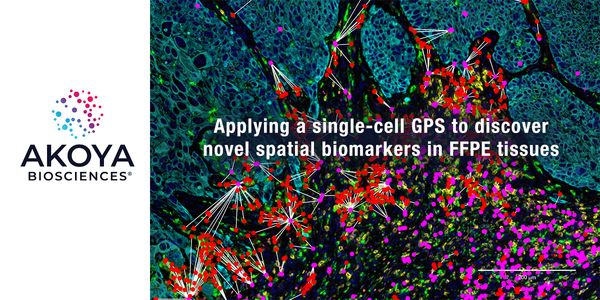
There is an expanding list of therapeutically relevant biomarkers for non-small cell lung cancer (NSCLC), and molecular profiling at diagnosis is paramount. Tissue attrition in scaling tradi...
There is an expanding list of therapeutically relevant biomarkers for non-small cell lung cancer (NSCLC), and molecular profiling at diagnosis is paramount. Tissue attrition in scaling tradi...
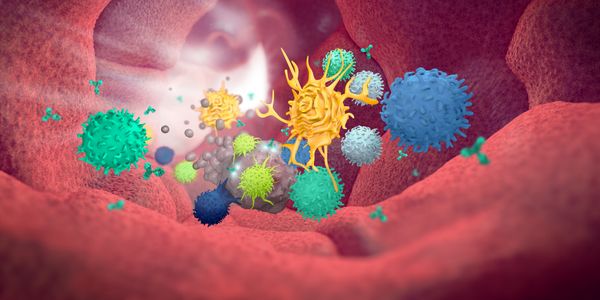
DATE: October 20th, 2020 TIME: 08:00am PT, 11:00am ET Tumor-associated macrophages (TAMs) are key cells in the tumor microenvironment (TME) with diverse immune functions that have a major in...
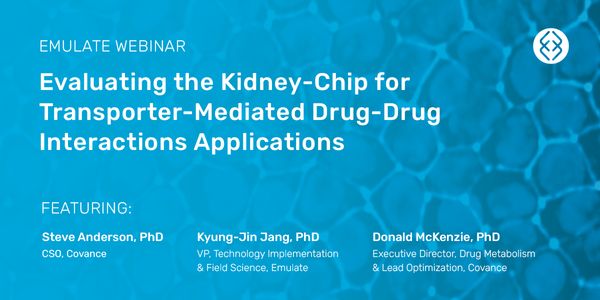
Date: October 15, 2020 Time: 9:00am (PDT), 12:00pm (EDT) Renal transporters play an important role in potential clinical drug-drug interactions (DDIs) as highlighted in the FDA, EMA and PMDA...
Soluble cytokine biomarkers are the master regulators of cell-to-cell communication-- the means by which one cell tells another what to do or where to go. Determining the biomarker signature...
Cancer is a multifactorial disease, and its genesis and progression are extremely complex. The scope of precision oncology is rapidly expanding to address previously undruggable targets. The...
Tumor phenotypes are dictated not only by the neoplastic cell component, but also by the tumor microenvironment (TME), which is inherently immuno-suppressive, is equipped to hamper effector...
RNA plays important and diverse roles in biology, but molecular tools to manipulate and measure RNA are limited. We demonstrate that RNA-targeting CRISPR effector Cas13 can be engineered for...
The CRISPR/Cas genome editing system has revolutionized nearly every aspect of the life science industry. Until recently, the most used formats for this technology have been plasmids, mRNA,...
CRISPR-based genome editing has accelerated biological research and holds great potential for studying and treating human diseases. The CRISPR-Cas9 system requires a Cas9 nuclease and a guid...
While transformative, first-generation CRISPR technologies remain limited across multiple important dimensions including scalability, editing efficiency, types of modifications available, an...
Genome Engineering allows the easy manipulation of genomes down to the nucleotide level. Targeted deep sequencing enables the detection and quantification of low-frequency editing events. Ho...
Genome editing with an expanded CRISPR-Cas tool set increases the opportunity to make intentional, targeted changes in the genome. Furthermore, improved specificity of genome editing and abi...
Combinatorial inhibition of effector and feedback pathways is a promising treatment strategy for KRAS mutant cancers. However, the particular pathways that should be targeted to optimize the...
Cas9 based therapeutics have the potential to revolutionize the treatment of genetic diseases. However, safe and effective methods for delivering Cas9 protein, gRNA and donor DNA need to be...
The adenosine analogue remdesivir has emerged as a front-line antiviral treatment for SARS-CoV-2, with preliminary evidence that it reduces the duration and severity of illness. Prior clinic...
Learning Objectives: 1. Using an optics- and label-free approach to CRISPR research 2. Explain current approaches to selecting the most robust gRNA for CRISPR assays 3. The opportunities tha...
A repeat expansion in the C9orf72-SMCR8 complex subunit (C9orf72) represents the most common genetic cause of two fatal neurodegenerative diseases: frontotemporal dementia (FTD) and amyotrop...
An extensively debated concern about CRISPR-Cas9 genome editing is that unspecific guide RNA (gRNA) binding may induce off-target mutations. However, accurate prediction of CRISPR-Cas9 off-t...
Date: September 28, 2020 Time: 5:00pm (PDT), 8:00am (HKT), 9:00am (JST) Although there have been dramatic advances in the field of single-cell sequencing, current methods cannot be applied t...
Suspension by day, imaging by night: how to efficiently manage your system and optimize utilization Presented By: Jared K. Burks, PhD Mass cytometry, be it suspension or imaging, opens the d...
Richard Hughes: New immunogenicity strategies to meet the needs of a developing pandemic Shortly after the COVID-19 pandemic began, the subject of serological testing for anti-viral antibodi...
Date: September 16, 2020 Time: 9:00am PTD, 12:00pm EDT Harnessing the power of the host immune system to treat diseases has been transformational in patient care. Physiologically relevant ce...
DATE: September 15, 2020 TIME: 08:00am PT Tumorigenesis and cancer progression are affected by the tumor immune microenvironment (TIME). The TIME not only influences the efficiency of existi...
There is an expanding list of therapeutically relevant biomarkers for non-small cell lung cancer (NSCLC), and molecular profiling at diagnosis is paramount. Tissue attrition in scaling tradi...
There is an expanding list of therapeutically relevant biomarkers for non-small cell lung cancer (NSCLC), and molecular profiling at diagnosis is paramount. Tissue attrition in scaling tradi...
DATE: October 20th, 2020 TIME: 08:00am PT, 11:00am ET Tumor-associated macrophages (TAMs) are key cells in the tumor microenvironment (TME) with diverse immune functions that have a major in...
Date: October 15, 2020 Time: 9:00am (PDT), 12:00pm (EDT) Renal transporters play an important role in potential clinical drug-drug interactions (DDIs) as highlighted in the FDA, EMA and PMDA...
Soluble cytokine biomarkers are the master regulators of cell-to-cell communication-- the means by which one cell tells another what to do or where to go. Determining the biomarker signature...
Cancer is a multifactorial disease, and its genesis and progression are extremely complex. The scope of precision oncology is rapidly expanding to address previously undruggable targets. The...
Tumor phenotypes are dictated not only by the neoplastic cell component, but also by the tumor microenvironment (TME), which is inherently immuno-suppressive, is equipped to hamper effector...
RNA plays important and diverse roles in biology, but molecular tools to manipulate and measure RNA are limited. We demonstrate that RNA-targeting CRISPR effector Cas13 can be engineered for...
The CRISPR/Cas genome editing system has revolutionized nearly every aspect of the life science industry. Until recently, the most used formats for this technology have been plasmids, mRNA,...
CRISPR-based genome editing has accelerated biological research and holds great potential for studying and treating human diseases. The CRISPR-Cas9 system requires a Cas9 nuclease and a guid...
While transformative, first-generation CRISPR technologies remain limited across multiple important dimensions including scalability, editing efficiency, types of modifications available, an...
Genome Engineering allows the easy manipulation of genomes down to the nucleotide level. Targeted deep sequencing enables the detection and quantification of low-frequency editing events. Ho...
Genome editing with an expanded CRISPR-Cas tool set increases the opportunity to make intentional, targeted changes in the genome. Furthermore, improved specificity of genome editing and abi...
Combinatorial inhibition of effector and feedback pathways is a promising treatment strategy for KRAS mutant cancers. However, the particular pathways that should be targeted to optimize the...
Cas9 based therapeutics have the potential to revolutionize the treatment of genetic diseases. However, safe and effective methods for delivering Cas9 protein, gRNA and donor DNA need to be...
The adenosine analogue remdesivir has emerged as a front-line antiviral treatment for SARS-CoV-2, with preliminary evidence that it reduces the duration and severity of illness. Prior clinic...
Learning Objectives: 1. Using an optics- and label-free approach to CRISPR research 2. Explain current approaches to selecting the most robust gRNA for CRISPR assays 3. The opportunities tha...
A repeat expansion in the C9orf72-SMCR8 complex subunit (C9orf72) represents the most common genetic cause of two fatal neurodegenerative diseases: frontotemporal dementia (FTD) and amyotrop...
An extensively debated concern about CRISPR-Cas9 genome editing is that unspecific guide RNA (gRNA) binding may induce off-target mutations. However, accurate prediction of CRISPR-Cas9 off-t...
Date: September 28, 2020 Time: 5:00pm (PDT), 8:00am (HKT), 9:00am (JST) Although there have been dramatic advances in the field of single-cell sequencing, current methods cannot be applied t...
Suspension by day, imaging by night: how to efficiently manage your system and optimize utilization Presented By: Jared K. Burks, PhD Mass cytometry, be it suspension or imaging, opens the d...
Richard Hughes: New immunogenicity strategies to meet the needs of a developing pandemic Shortly after the COVID-19 pandemic began, the subject of serological testing for anti-viral antibodi...
Date: September 16, 2020 Time: 9:00am PTD, 12:00pm EDT Harnessing the power of the host immune system to treat diseases has been transformational in patient care. Physiologically relevant ce...
DATE: September 15, 2020 TIME: 08:00am PT Tumorigenesis and cancer progression are affected by the tumor immune microenvironment (TIME). The TIME not only influences the efficiency of existi...
 Follow