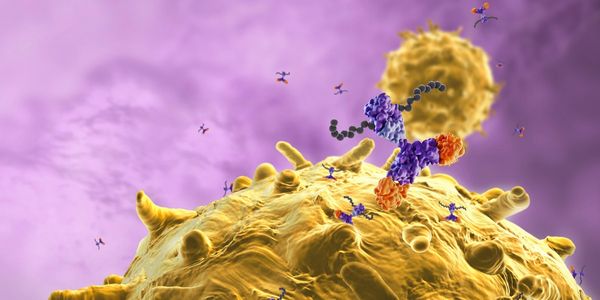
Cellular analysis is used to evaluate and measure cell number, state, health, and the viabiity, proliferation, and toxicity of a given cell. It provides lots of information in basic laboratory research, drug discovery and development, and within clinical applications.
DATE: August 13, 2019TIME: 10:00am PDTWhether you are new to live-cell imaging or an experienced researcher, this webinar will show you how to obtain publication-quality live-cell image...
DATE: August 13, 2019TIME: 9:00am PT, 12:00pm ET, 5:00pm BST Molecular complexes are major constituents of cells, hence unraveling their mechanisms is key to fuller comprehension of c...
DATE: July 24, 2019TIMEL 8:00am PT Mass cytometry (CyTOF®) is a powerful approach to characterize the immune composition of complex biological specimens and gain insights in...
DATE: July 23, 2019TIME: 10:00am PDTThe tumor microenvironment is a complex network of different cell types and states that imparts distinct properties to the tumor and plays a signif...
DATE: June 27, 2019TIME: 9:00am PDT, 12:00pm EDT At present cancer research focuses on three major areas viz. cancer diagnostics, drugs development, and next-generation therapi...
DATE: June 26, 2019TIME: 9:00am PDT, 12:00pm EDT An excessive number of software solutions are available to help manage your clinical, biobank, or biorepository sample inform...
Tumor heterogeneity is a hallmark of cancer and can have significant impact on identifying drivers, including those that may be therapeutically relevant. Although, the traditional sequencing...
The practice of precision medicine utilizes advanced diagnostic tools to identify specific groups of patients on the basis of particular molecular characteristics, and guide their treatment w...
Implementing precision genomic medicine in the pediatric acute care setting has several challenges. First, the diagnosis must be made quickly. Second, the determination of pathogenicity mus...
This talk will review successful efforts at Washington University to employ novel reagents and informatics to the problem of rare allele detection. I will discuss a published bakeoff of in si...
Clopidogrel, an antiplatelet agent frequently used for secondary stroke prevention, is a prodrug that requires both sufficient intestinal absorption and hepatic modification to produce its ac...
The long term goal of our collaborative effort is to bring precision medicine to the practice of veterinary oncology, using the wealth of genomic data gathered in human cancers as a roadmap....
Tumor mutational burden (TMB) is an emerging biomarker that correlates with response to immunotherapeutic agents, such as checkpoint inhibitors. Recent studies indicate that a high mutation l...
In this presentation, Dr. Kothari will provide an overview of the Precision Medicine Initiative from NIH and how NGS technologies have helped the researchers to look deep inside the human tra...
The development of automated DNA sequencers utilizing Sanger sequencing and capillary electrophoresis made it possible to develop the first draft sequences of the human genome. The cost of do...
Recent advances in genomic technologies have revealed enormous complexities and uniqueness of human physiology. Although enormous efforts are being made to apply this knowledge to enhance the...
The NIH put Precision Medicine on the map as a revolutionary way to manage disease, delivering the right treatment, to the right patient, at the right time. But what does Precision Medicine r...
Most cancer therapies have highly variable activity from one patient to another, with only a fraction of patients’ cancers responding to a given treatment. In many types of cancer, comb...
Virtually all tumors are genetically heterogeneous, containing subclonal populations of cells that are defined by distinct mutations. Subclones can have unique phenotypes that influence disea...
Inherited disorders affect millions of people globally. These diseases significantly impact lives of patients and their families, and in addition, also results in substantial socio-economic i...
DATE: June 19, 2019TIME: 10:00am PDT, 1:00pm EDT As we develop new methods to create more biologically relevant models for research in understanding disease etiology and in...
DATE: June 18, 2019TIME: 9:00am PDT, 12:00pm EDT, 5:00pm BST In the Atacama desert, Chile, twelve small aperture telescopes are observing the southern sky since 2016. Combining the opti...
DATE: June 18, 2019TIME: 08:00am PDTAnalytical Ultracentrifugation (AUC) is one of the most powerful biophysical tools used today for the characterization of biological samples ranging...
DATE: June 5, 2019TIME: 8:00am PDT, 11:00am EDT, 5:00pm CEST Eukaryotic cell cultures respond to the most subtle influence. Apart from the risk of contamination, minimal chan...
DATE: August 13, 2019TIME: 10:00am PDTWhether you are new to live-cell imaging or an experienced researcher, this webinar will show you how to obtain publication-quality live-cell image...
DATE: August 13, 2019TIME: 9:00am PT, 12:00pm ET, 5:00pm BST Molecular complexes are major constituents of cells, hence unraveling their mechanisms is key to fuller comprehension of c...
DATE: July 24, 2019TIMEL 8:00am PT Mass cytometry (CyTOF®) is a powerful approach to characterize the immune composition of complex biological specimens and gain insights in...
DATE: July 23, 2019TIME: 10:00am PDTThe tumor microenvironment is a complex network of different cell types and states that imparts distinct properties to the tumor and plays a signif...
DATE: June 27, 2019TIME: 9:00am PDT, 12:00pm EDT At present cancer research focuses on three major areas viz. cancer diagnostics, drugs development, and next-generation therapi...
DATE: June 26, 2019TIME: 9:00am PDT, 12:00pm EDT An excessive number of software solutions are available to help manage your clinical, biobank, or biorepository sample inform...
Tumor heterogeneity is a hallmark of cancer and can have significant impact on identifying drivers, including those that may be therapeutically relevant. Although, the traditional sequencing...
The practice of precision medicine utilizes advanced diagnostic tools to identify specific groups of patients on the basis of particular molecular characteristics, and guide their treatment w...
Implementing precision genomic medicine in the pediatric acute care setting has several challenges. First, the diagnosis must be made quickly. Second, the determination of pathogenicity mus...
This talk will review successful efforts at Washington University to employ novel reagents and informatics to the problem of rare allele detection. I will discuss a published bakeoff of in si...
Clopidogrel, an antiplatelet agent frequently used for secondary stroke prevention, is a prodrug that requires both sufficient intestinal absorption and hepatic modification to produce its ac...
The long term goal of our collaborative effort is to bring precision medicine to the practice of veterinary oncology, using the wealth of genomic data gathered in human cancers as a roadmap....
Tumor mutational burden (TMB) is an emerging biomarker that correlates with response to immunotherapeutic agents, such as checkpoint inhibitors. Recent studies indicate that a high mutation l...
In this presentation, Dr. Kothari will provide an overview of the Precision Medicine Initiative from NIH and how NGS technologies have helped the researchers to look deep inside the human tra...
The development of automated DNA sequencers utilizing Sanger sequencing and capillary electrophoresis made it possible to develop the first draft sequences of the human genome. The cost of do...
Recent advances in genomic technologies have revealed enormous complexities and uniqueness of human physiology. Although enormous efforts are being made to apply this knowledge to enhance the...
The NIH put Precision Medicine on the map as a revolutionary way to manage disease, delivering the right treatment, to the right patient, at the right time. But what does Precision Medicine r...
Most cancer therapies have highly variable activity from one patient to another, with only a fraction of patients’ cancers responding to a given treatment. In many types of cancer, comb...
Virtually all tumors are genetically heterogeneous, containing subclonal populations of cells that are defined by distinct mutations. Subclones can have unique phenotypes that influence disea...
Inherited disorders affect millions of people globally. These diseases significantly impact lives of patients and their families, and in addition, also results in substantial socio-economic i...
DATE: June 19, 2019TIME: 10:00am PDT, 1:00pm EDT As we develop new methods to create more biologically relevant models for research in understanding disease etiology and in...
DATE: June 18, 2019TIME: 9:00am PDT, 12:00pm EDT, 5:00pm BST In the Atacama desert, Chile, twelve small aperture telescopes are observing the southern sky since 2016. Combining the opti...
DATE: June 18, 2019TIME: 08:00am PDTAnalytical Ultracentrifugation (AUC) is one of the most powerful biophysical tools used today for the characterization of biological samples ranging...
DATE: June 5, 2019TIME: 8:00am PDT, 11:00am EDT, 5:00pm CEST Eukaryotic cell cultures respond to the most subtle influence. Apart from the risk of contamination, minimal chan...
Opens in a new windowOpens an external siteOpens an external site in a new window
 Follow