High throughput cell biology is the use of automation equipment with classical cell biology techniques to address biological questions that are otherwise unattainable using conventional methods. It may incorporate techniques from optics, chemistry, biology or image analysis to permit rapid, highly parallel research into how cells function, interact with each other and how pathogens exploit them in disease. High-throughput biology serves as one facet of what has also been called "omics research" - the interface between large scale biology (genome, proteome, transcriptome), technology and researchers. High throughput cell biology has a definite focus on the cell, and methods accessing the cell such as imaging, gene expression microarrays, or genome wide screening. The basic idea is to take methods normally performed on their own and do a very large number of them without impacting their quality.
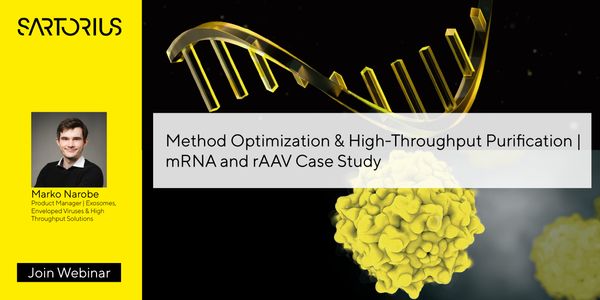
As the most widely used viral vector for gene therapies, Adeno-Associated Viruses (AAVs) present unique advantages, including their ability to enter both dividing and non-dividing cells, the...
In-situ multiomics is revolutionizing research in oncology, immunology and neurobiology. However, speed and throughput are major bottlenecks for these critical studies. Here, we present data...
Explore the latest developments in cancer organoid (tumoroid) technology and the promising implications for drug screening during this two-part webinar. In the first half, Colin Paul will di...
As workflow efficiency and data reproducibility are common challenges faced by scientists for high throughput laboratories, GenScript has developed unique automation technologies to address...
Biopharmaceutical manufacturing of proteins requires an efficient cell line. Starting with several thousand clones, researchers use multiple selection rounds to ultimately chose one clone fo...
Learning Objevtives: 1. Demonstrate Knowledge with gene editing, microfluidics and non-viral delivery methods. 2. Review the uses of a low-volume high-throughput transfection platform for ge...
The 21st century brought with it an unprecedented number of global and regional economic and political crises, giving rise to a new generation of conflicts in which novel technological, biol...
Vestibular sensation anchors our perception of the environment and is crucial for maintaining balance during locomotion. Vertebrate animals use the evolutionarily conserved vestibular system...
In recent years, small volume biopsies have been increasingly utilized for diagnosis of tumors in both primary and recurrent settings. Concomitantly, the numbers of ancillary studies for cha...
Surface plasmon resonance is a real-time and label-free technique that offers low sample consumption and high throughput when compared to other biophysical techniques and has been widely ado...
Multiplex immunofluorescence is a powerful tool for phenotyping cells from a single tissue slide, while preserving spatial context. The MultiOmyxTM platform, offered as an end to end service...
The study of a single cell, the fundamental unit of our complex bodies, has become an important field in cellular biology, and researchers are using single-cell analysis to shed new light on...
Globally there has been a constant rise in the population suffering from cardiovascular diseases mostly due to metabolic complications. We have made use of two high throughput omics-based ap...
The downstream processing of virus particles, vesicles, RNAs, plasmids and other forms of DNA, contains multiple interdependent steps, each requiring optimization for best results. This webi...
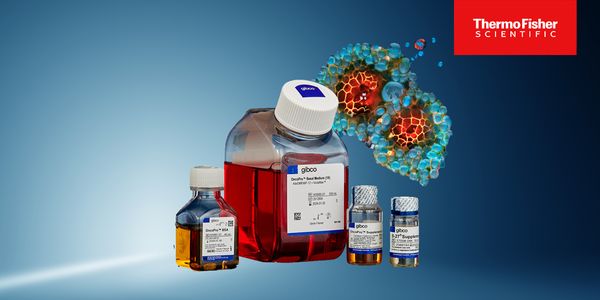
The study of 3D organoids has transformed biomedical research, offering a more accurate representation of in vivo conditions. Maximizing the potential of 3D organoid research requires advanc...
Organoid technologies are increasingly being used as in vitro models of human development and disease because they exhibit morphogenetic, structural and functional properties that recapitula...
Join our webinar where we will highlight key features of the NovaSeq™ X series including technology innovations, product updates, and features of the on-board DRAGEN™ secondary a...
High content screening at speed requires compromise: sacrificing resolution, sample coverage or both. This has limited high content screening’s utility as a high throughput tool. In or...
Spheroids and organoids, two examples of 3D cell culture models, have become invaluable tools to study the processes that dictate behavior of tissues under physiological and pathological con...
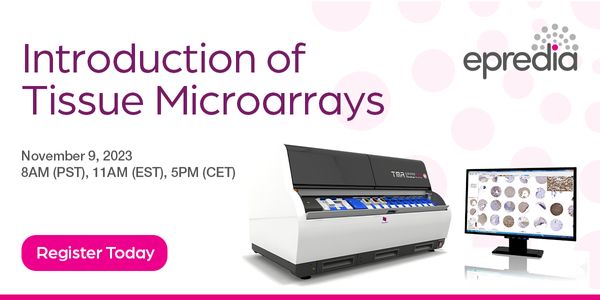
Tissue microarray combines tens to hundreds paraffin-embedded specimens into a single paraffin block. It is a practical and highly effective tool for high-throughput analyses including valid...
Lateral flow assays (LFA) are simple diagnostic tools that can be used to detect a variety of biomolecules that include biomarkers, pathogens, and environmental contaminants. Many industries...
This talk will provide an overview of our work in the design of self-assembled, functionalised peptide and protein nanoparticles, hydrogels and bio-interfaces for applications in healthcare....
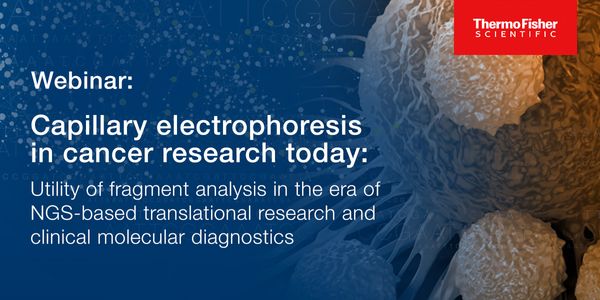
Description: Join this two-part webinar to learn how capillary electrophoresis (CE) complements sequencing technologies, such as next generation sequencing, that are being used by cancer res...
Description: Join this two-part webinar to learn when capillary electrophoresis is an ideal choice relative to other various sequencing technologies – such as next generation sequencin...
As the most widely used viral vector for gene therapies, Adeno-Associated Viruses (AAVs) present unique advantages, including their ability to enter both dividing and non-dividing cells, the...
In-situ multiomics is revolutionizing research in oncology, immunology and neurobiology. However, speed and throughput are major bottlenecks for these critical studies. Here, we present data...
Explore the latest developments in cancer organoid (tumoroid) technology and the promising implications for drug screening during this two-part webinar. In the first half, Colin Paul will di...
As workflow efficiency and data reproducibility are common challenges faced by scientists for high throughput laboratories, GenScript has developed unique automation technologies to address...
Biopharmaceutical manufacturing of proteins requires an efficient cell line. Starting with several thousand clones, researchers use multiple selection rounds to ultimately chose one clone fo...
Learning Objevtives: 1. Demonstrate Knowledge with gene editing, microfluidics and non-viral delivery methods. 2. Review the uses of a low-volume high-throughput transfection platform for ge...
The 21st century brought with it an unprecedented number of global and regional economic and political crises, giving rise to a new generation of conflicts in which novel technological, biol...
Vestibular sensation anchors our perception of the environment and is crucial for maintaining balance during locomotion. Vertebrate animals use the evolutionarily conserved vestibular system...
In recent years, small volume biopsies have been increasingly utilized for diagnosis of tumors in both primary and recurrent settings. Concomitantly, the numbers of ancillary studies for cha...
Surface plasmon resonance is a real-time and label-free technique that offers low sample consumption and high throughput when compared to other biophysical techniques and has been widely ado...
Multiplex immunofluorescence is a powerful tool for phenotyping cells from a single tissue slide, while preserving spatial context. The MultiOmyxTM platform, offered as an end to end service...
The study of a single cell, the fundamental unit of our complex bodies, has become an important field in cellular biology, and researchers are using single-cell analysis to shed new light on...
Globally there has been a constant rise in the population suffering from cardiovascular diseases mostly due to metabolic complications. We have made use of two high throughput omics-based ap...
The downstream processing of virus particles, vesicles, RNAs, plasmids and other forms of DNA, contains multiple interdependent steps, each requiring optimization for best results. This webi...
The study of 3D organoids has transformed biomedical research, offering a more accurate representation of in vivo conditions. Maximizing the potential of 3D organoid research requires advanc...
Organoid technologies are increasingly being used as in vitro models of human development and disease because they exhibit morphogenetic, structural and functional properties that recapitula...
Join our webinar where we will highlight key features of the NovaSeq™ X series including technology innovations, product updates, and features of the on-board DRAGEN™ secondary a...
High content screening at speed requires compromise: sacrificing resolution, sample coverage or both. This has limited high content screening’s utility as a high throughput tool. In or...
Spheroids and organoids, two examples of 3D cell culture models, have become invaluable tools to study the processes that dictate behavior of tissues under physiological and pathological con...
Tissue microarray combines tens to hundreds paraffin-embedded specimens into a single paraffin block. It is a practical and highly effective tool for high-throughput analyses including valid...
Lateral flow assays (LFA) are simple diagnostic tools that can be used to detect a variety of biomolecules that include biomarkers, pathogens, and environmental contaminants. Many industries...
This talk will provide an overview of our work in the design of self-assembled, functionalised peptide and protein nanoparticles, hydrogels and bio-interfaces for applications in healthcare....
Description: Join this two-part webinar to learn how capillary electrophoresis (CE) complements sequencing technologies, such as next generation sequencing, that are being used by cancer res...
Description: Join this two-part webinar to learn when capillary electrophoresis is an ideal choice relative to other various sequencing technologies – such as next generation sequencin...

 Follow