Learn about the latest medical breakthroughs by participating in webinars on topics surrounding disease, prevention and treatment in accordance with the latest research in health and medicine. Updates encompass a biological, psychological and sociological understanding of health.
Learning Obejctives: 1. Understand the key requirements for sample preparation in a single cell and/or spatial transcriptomics experiment 2. Learn the synergies between a combined single cel...
Recently, long-read sequencing with high accuracy has become a reality. Previous technologies allowed for the detection of particular classes of genetic variation and/or have focused on pre-...
Traumatic brain injury (TBI) is best characterized as brain dysfunction caused by an outside force, usually a violent blow to the head, often occurring as a result of a severe sports injury...
Somatic mutations that arise during development are increasingly recognized as contributors to neurodevelopmental disease. One challenge has been to determine how mosaic mutations contribute...
Microbial communities include distinct lineages of closely related organisms which have proved challenging to separate in metagenomic assembly. Challenges include the existence of highly rel...
The recent explosion in the sample sizes and diversity of omics assays has created exciting new opportunities for biomedical scientists. However, connecting these omics data types in an inte...
The complete assembly of each human chromosome is essential for understanding human biology and evolution. Using complementary long-read sequencing technologies, we complete the first linear...
Learning Objectives: 1. Demonstrate the utility of long-read RNA-sequencing in studying alternative isoforms 2. Define the long-Split-seq approach to profiling the transcriptomes of single-c...
Biological systems are comprised of numerous cell types, intricately organized to form functional tissues and organs. Cell atlas initiatives with single-cell RNA sequencing have begun to cha...
Sex and gender differences are apparent in health and disease and aduring aging. Chronic obstructive pulmonary disease is a leading cause of death with pronounced sex and gender differences...
Nanopore sequencing has enormous potential in epigenetic applications; unlike traditional sequencing-by-synthesis technologies, it can distinguish covalently modified nucleotides directly th...
The ability of single-cell RNA-Seq (scRNA-Seq) to measure the transcriptional basis of heterogeneity between individual cells is transforming biomedical research. It enables the precise &lsq...
We are entering into an exciting era of genomics where truly complete, high-quality assemblies of human chromosomes are available end-to-end, or from ‘telomere-to-telomere’ (T2T)...
Telomere length (TL) is widely considered a molecular/cellular hallmark of the aging process with implications for multiple diseases. While there has been success in epidemiology and genomew...
Many diseases show sex differences in incidence or progression, suggesting that one sex has inherent biological factors that protect from or exacerbate disease. Historically the root causes...
In mammals, DNA methylation is an epigenetic mark that regulates gene expression by serving as a maintainable mark whose absence marks promoters and enhancers. Recent epidemiological studies...
ASH Anticoagulation Guidelines in Patients with COVID-19: A moving target The American Society of Hematology (ASH) published in February 2021 “Anticoagulation Guidelines in Patients wi...
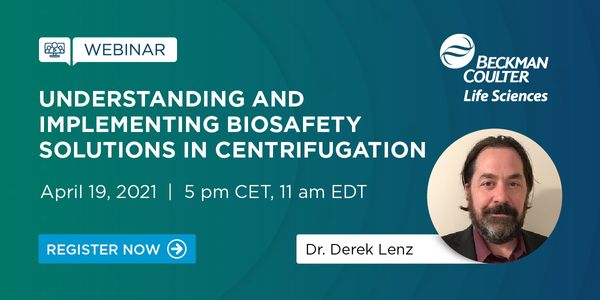
Date: Apri 19, 2021 Time: 8:00am PDT, 5:00pm CEST Since the inception of modern biological research, BioSafety has evolved into a critical consideration in Good Laboratory Practices (GLP). Wi...
Date: April 15, 2021 Time: 8:00am PST Stem cell’s unique properties confer them a multitude of potential applications in the fields of cellular therapy, disease modelling and drug scre...
Three popular microplastic identification methods were practically compared with real complex environmental samples. The advantages and limitations of each method including analysis time, fa...
Accuracy and utility of spectral analysis has plateaued, but techniques are still are not good enough for many environmental forensics applications (such as microplastic analysis). The prima...
When SARS-CoV-2 reached the United States in late January 2020, Labcorp immediately began development of an RT-PCR test to aid in detection and diagnosis of COVID-19 in infected patients. As...
Dr. Jordan RoseFigura from Swift Biosciences will present on the technology created to enable this research that covers 99.7 % of the SARS-CoV-2 genome from limited viral titers. Including a...
As of March 2021, SARS-CoV-2 has infected 115 million people and caused over 2.56 million deaths. The emergence of mutants associated with changes to transmission of SARS-CoV-2 has shown tha...
Several SARS-CoV-2 variants are circulating globally. The most prominent variants of concern, including the B.1.1.7, B.1.351 and B1.1.28 lineages, not only carry a constellation of genetic m...
This presentation will focus on strategies for the design and validation of robust assays for the detection of SARS-CoV-2, including nucleic acid extraction, multiplexed qPCR assays, and int...
 Learning Obejctives: 1. Understand the key requirements for sample preparation in a single cell and/or spatial transcriptomics experiment 2. Learn the synergies between a combined single cel...