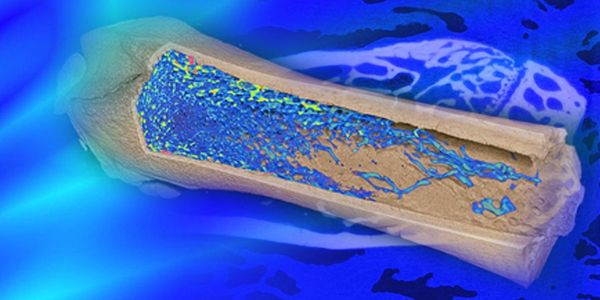
Cellular analysis is used to evaluate and measure cell number, state, health, and the viabiity, proliferation, and toxicity of a given cell. It provides lots of information in basic laboratory research, drug discovery and development, and within clinical applications.
The size and burden of mental illness should ideally prompt a strategy of preemption and early intervention. On the neuroscientific side, this leads to the question of brain mechanisms of ris...
Deep brain stimulation (DBS) represents one of the major clinical breakthroughs in the age of translational neuroscience. In 1987, Benabid and colleagues demonstrated that high-frequency stim...
Direct recording of neural activity from the human brain (intracranial encephalography, iEEG, also known as electrocorticography, ECoG) using implanted electrodes is one of the fastest-growin...
Stimulation of human visual cortex is known to elicit visual perceptions that could potentially be used for restoring artificial vision to individuals who have lost their vision due to non-co...
What motivates patients to participate in clinical trials? Discussions most often revolve around potential study participants’ perception of therapeutic benefit. Misconceptions about th...
Developing new diagnostic and therapeutic tools for brain disorders is an ethical imperative and conducting human research with neural devices is a key step towards achieving that goal. Condu...
The NIH BRAIN Initiative aims to develop new tools and neurotechnologies to transform our understanding of brain function in health and disease. That knowledge is critical to enable novel the...
Joshua Gordon, M.D., Ph.D., Director of the National Institute of Mental Health, will provide an overview of challenges and opportunities in mental health research. Dr. Gordon will present em...
DATE: March 5, 2019TIME: 10:00am PSTSingle cell analysis, starting with the earliest low parameter fluorescent experiments, helped define the major cell subsets of human ce...
Surgery is the first line of treatment for Stage III melanoma. Often adjuvant therapy is administered post-surgery, which can include weeks of radiation, chemotherapy, targeted drug therapy,...
Advanced Cell Diagnostics’ RNAscope products and assay services are utilized widely for tissue-based gene expression analysis in early target validation, preclinical animal efficacy and...
The last two decades have seen an explosion in the volume of oncology data generated using next-generation sequencing (NGS) and multi-omics techniques. As a result, there is a growing need fo...
DATE: February 26, 2019TIME: 9:00am PST, 12:00pm EST In an era of increasingly high-throughput, large-scale biology, with companies, government and non-prof...
The lung is a highly complex organ, comprised of more than 40 cell types that are responsible for various important functions, the lung’s complexity contributes to the subsequent challe...
Experimental models that promise to replace animal tests that are currently required for drugs and chemicals are rapidly proliferating. This includes a number of novel solutions offered by bi...
Xenobiotic-induced cardiotoxicity is a major concern for both pharmaceuticals and chemicals in the marketplace. For drugs, "Thorough QT/corrected QT (QTc)" (TQT) studies are corners...
Digitalization has transformed virtually every industry, but it has been slow to gain traction within the preclinical phase of the drug development journey. Recent advances in digital vivariu...
Date: February 7, 2019Time: 8:00am PST, 11:00am EST Modern microscopes are becoming increasingly complex instruments enabling registration of image sets far beyon...
The biologics development process is fraught with risks from pre-clinical studies through clinical evaluation. Prominent among these risks are changes in the critical quality attributes of th...
DATE: December 012, 2018TIME: 08:00 PSTImmunotherapy is a powerful treatment that harnesses the body’s immune system in the fight against cancer. With optimized cell therapy,...
DATE: December 06, 2018TIME: 7:00AM PSTHigh-throughput confocal microscopy has changed the way drug screening can be performed, by enabling the detection of single-cell pheno...
The size and burden of mental illness should ideally prompt a strategy of preemption and early intervention. On the neuroscientific side, this leads to the question of brain mechanisms of ris...
Deep brain stimulation (DBS) represents one of the major clinical breakthroughs in the age of translational neuroscience. In 1987, Benabid and colleagues demonstrated that high-frequency stim...
Direct recording of neural activity from the human brain (intracranial encephalography, iEEG, also known as electrocorticography, ECoG) using implanted electrodes is one of the fastest-growin...
Stimulation of human visual cortex is known to elicit visual perceptions that could potentially be used for restoring artificial vision to individuals who have lost their vision due to non-co...
What motivates patients to participate in clinical trials? Discussions most often revolve around potential study participants’ perception of therapeutic benefit. Misconceptions about th...
Developing new diagnostic and therapeutic tools for brain disorders is an ethical imperative and conducting human research with neural devices is a key step towards achieving that goal. Condu...
The NIH BRAIN Initiative aims to develop new tools and neurotechnologies to transform our understanding of brain function in health and disease. That knowledge is critical to enable novel the...
Joshua Gordon, M.D., Ph.D., Director of the National Institute of Mental Health, will provide an overview of challenges and opportunities in mental health research. Dr. Gordon will present em...
DATE: March 5, 2019TIME: 10:00am PSTSingle cell analysis, starting with the earliest low parameter fluorescent experiments, helped define the major cell subsets of human ce...
Surgery is the first line of treatment for Stage III melanoma. Often adjuvant therapy is administered post-surgery, which can include weeks of radiation, chemotherapy, targeted drug therapy,...
Advanced Cell Diagnostics’ RNAscope products and assay services are utilized widely for tissue-based gene expression analysis in early target validation, preclinical animal efficacy and...
The last two decades have seen an explosion in the volume of oncology data generated using next-generation sequencing (NGS) and multi-omics techniques. As a result, there is a growing need fo...
DATE: February 26, 2019TIME: 9:00am PST, 12:00pm EST In an era of increasingly high-throughput, large-scale biology, with companies, government and non-prof...
The lung is a highly complex organ, comprised of more than 40 cell types that are responsible for various important functions, the lung’s complexity contributes to the subsequent challe...
Experimental models that promise to replace animal tests that are currently required for drugs and chemicals are rapidly proliferating. This includes a number of novel solutions offered by bi...
Xenobiotic-induced cardiotoxicity is a major concern for both pharmaceuticals and chemicals in the marketplace. For drugs, "Thorough QT/corrected QT (QTc)" (TQT) studies are corners...
Digitalization has transformed virtually every industry, but it has been slow to gain traction within the preclinical phase of the drug development journey. Recent advances in digital vivariu...
Date: February 7, 2019Time: 8:00am PST, 11:00am EST Modern microscopes are becoming increasingly complex instruments enabling registration of image sets far beyon...
The biologics development process is fraught with risks from pre-clinical studies through clinical evaluation. Prominent among these risks are changes in the critical quality attributes of th...
DATE: December 012, 2018TIME: 08:00 PSTImmunotherapy is a powerful treatment that harnesses the body’s immune system in the fight against cancer. With optimized cell therapy,...
DATE: December 06, 2018TIME: 7:00AM PSTHigh-throughput confocal microscopy has changed the way drug screening can be performed, by enabling the detection of single-cell pheno...
 Follow