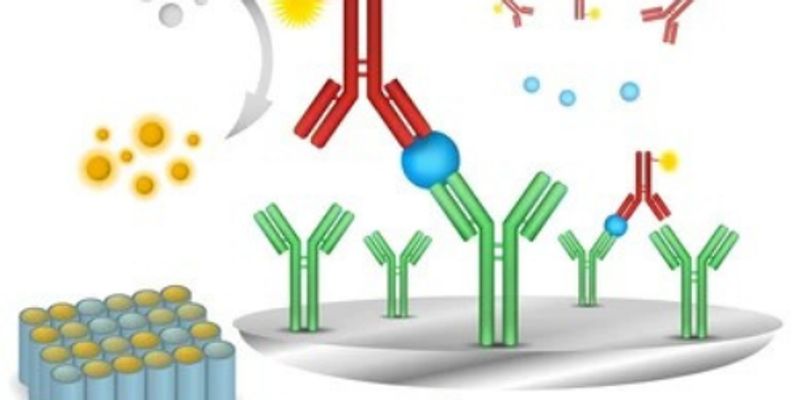
An immunoassay is a biochemical test that measures the presence or concentration of a macromolecule or a small molecule in a solution through the use of an antibody or an antigen. Immunoassays come in many different formats and variations, and may be run in multiple steps with reagents being added and washed away or separated at different points in the assay. Credit: Shutterstock
Breast cancer is a complex heterogeneous disease, with each subtype characterized by distinct clinical features and molecular alterations. The heterogeneity of breast cancer has presented mas...
There have been significant increases in emergency room visits across the US and delays in the ED leads to poor outcomes. There is an association between waiting times and short term mo...
Laboratory tests come into existence through a variety of processes but regardless of the genesis all share a certain set of requirements. These include discovery, development, validation, re...
The recent Zika virus outbreak highlights the need for low-cost diagnostics that can be rapidly developed for distribution and use in pandemic regions. In early 2016 we developed a pipe...
Liquid chromatography high resolution time-of-flight mass spectrometry (LC-TOF-MS) is becoming increasingly popular in the clinical research laboratory. It can offer higher throughput and sup...
The aim of the learning healthcare system is to leverage data stored in the electronic health record (EHR) to gain insights into and improve healthcare delivery. Laboratory testing represents...
Fusion genes are hybrid genes formed by the fusion of two separate genes. Translocation, interstitial deletion and chromosomal inversions are some of the genetic events that can lead to the f...
Sanger sequencing and polymerase chain reaction (PCR) methods have been the standard molecular methods in clinical diagnostics for decades. Next-Generation Sequencing (NGS) technology r...
IQCP represents a new approach to quality control for clinical laboratories. Beginning in 2016 clinical laboratories were tasked with developing individualized quality control plans for...
Core or central laboratory are facing several challenges. First, the management and operations of a successful modern laboratory is a real complex exercise, with multiple pre- and post-analyt...
Today there are about 7B mobile phone worldwide and about 50,000 mobile health applications actively changing the landscape of how healthcare will be delivered in the next years. While numero...
In the past several years, there has been an increase in drug testing associated with chronic pain. Immunoassays are the most common method for initial screening which can test for a specific...
Vitamin D3 supplementation can effectively remedy the current epidemic of vitamin D deficiency, especially within the African-American population and the elderly of any ethnicity. Racial disp...
With increasing emphasis on effective pain management in clinical care, there has been a significant increase in the number of opioid prescriptions in the past decade. While these drugs...
Are there DNA targets in your lab that are difficult to genotype using standard PCR or sequencing?Do you ever need to genotype a single sample, and you don’t want to wait to batch sam...
Vitamin D insufficiency and deficiency are prevalent worldwide, and pregnant women and infants are at highest risk for having deficiency and related consequences. Epidemiologic studies have s...
Most of the tests performed for patient care use automated colorimetric and immunoassay methods in the clinical laboratories. Clinical labs are regulated by CLIA and are routinely inspected b...
Whole genome and exome sequencing is being widely used to identify disease-causing variants in patients with hereditary and rare diseases. Discovering the true disease-causing variants often...
Chronic pain is a major problem in most countries. Specialized pain management physicians often see and treat patients with chronic pain, and one type of therapy that may be prescribed is an...
DATE: October 13, 2016TIME: 9:00am PT, 11:00am CTPrimary Aldosteronism (PA) is a group of disorders characterized by inappropriate aldosterone production. PA is commonly caus...
Learning Objectives:
Describe the various causative factors of ketosis and the physiological processes that lead to acidosis, a life threatening condition
Summarize the biochemical diff...
Translational investigators require powerful immunoassays for the targeted detection of proteomic biomarkers with the goal of studying human health. Cytokine profiling tools are critical to u...
The greatest health epidemic of our time is cancer. Deaths from cancer worldwide outnumber the combined deaths from HIV/AIDS, tuberculosis and malaria by a wide margin. There are at least 100...
A century and a half after we first probed heritability, we risk forgetting one of Mendel's own basic findings, in rushing to broaden clinical genomics to lifelong care for all. Embracing...
Breast cancer is a complex heterogeneous disease, with each subtype characterized by distinct clinical features and molecular alterations. The heterogeneity of breast cancer has presented mas...
There have been significant increases in emergency room visits across the US and delays in the ED leads to poor outcomes. There is an association between waiting times and short term mo...
Laboratory tests come into existence through a variety of processes but regardless of the genesis all share a certain set of requirements. These include discovery, development, validation, re...
The recent Zika virus outbreak highlights the need for low-cost diagnostics that can be rapidly developed for distribution and use in pandemic regions. In early 2016 we developed a pipe...
Liquid chromatography high resolution time-of-flight mass spectrometry (LC-TOF-MS) is becoming increasingly popular in the clinical research laboratory. It can offer higher throughput and sup...
The aim of the learning healthcare system is to leverage data stored in the electronic health record (EHR) to gain insights into and improve healthcare delivery. Laboratory testing represents...
Fusion genes are hybrid genes formed by the fusion of two separate genes. Translocation, interstitial deletion and chromosomal inversions are some of the genetic events that can lead to the f...
Sanger sequencing and polymerase chain reaction (PCR) methods have been the standard molecular methods in clinical diagnostics for decades. Next-Generation Sequencing (NGS) technology r...
IQCP represents a new approach to quality control for clinical laboratories. Beginning in 2016 clinical laboratories were tasked with developing individualized quality control plans for...
Core or central laboratory are facing several challenges. First, the management and operations of a successful modern laboratory is a real complex exercise, with multiple pre- and post-analyt...
Today there are about 7B mobile phone worldwide and about 50,000 mobile health applications actively changing the landscape of how healthcare will be delivered in the next years. While numero...
In the past several years, there has been an increase in drug testing associated with chronic pain. Immunoassays are the most common method for initial screening which can test for a specific...
Vitamin D3 supplementation can effectively remedy the current epidemic of vitamin D deficiency, especially within the African-American population and the elderly of any ethnicity. Racial disp...
With increasing emphasis on effective pain management in clinical care, there has been a significant increase in the number of opioid prescriptions in the past decade. While these drugs...
Are there DNA targets in your lab that are difficult to genotype using standard PCR or sequencing?Do you ever need to genotype a single sample, and you don’t want to wait to batch sam...
Vitamin D insufficiency and deficiency are prevalent worldwide, and pregnant women and infants are at highest risk for having deficiency and related consequences. Epidemiologic studies have s...
Most of the tests performed for patient care use automated colorimetric and immunoassay methods in the clinical laboratories. Clinical labs are regulated by CLIA and are routinely inspected b...
Whole genome and exome sequencing is being widely used to identify disease-causing variants in patients with hereditary and rare diseases. Discovering the true disease-causing variants often...
Chronic pain is a major problem in most countries. Specialized pain management physicians often see and treat patients with chronic pain, and one type of therapy that may be prescribed is an...
DATE: October 13, 2016TIME: 9:00am PT, 11:00am CTPrimary Aldosteronism (PA) is a group of disorders characterized by inappropriate aldosterone production. PA is commonly caus...
Learning Objectives:
Describe the various causative factors of ketosis and the physiological processes that lead to acidosis, a life threatening condition
Summarize the biochemical diff...
Translational investigators require powerful immunoassays for the targeted detection of proteomic biomarkers with the goal of studying human health. Cytokine profiling tools are critical to u...
The greatest health epidemic of our time is cancer. Deaths from cancer worldwide outnumber the combined deaths from HIV/AIDS, tuberculosis and malaria by a wide margin. There are at least 100...
A century and a half after we first probed heritability, we risk forgetting one of Mendel's own basic findings, in rushing to broaden clinical genomics to lifelong care for all. Embracing...
 Follow