 Follow
Mechanics
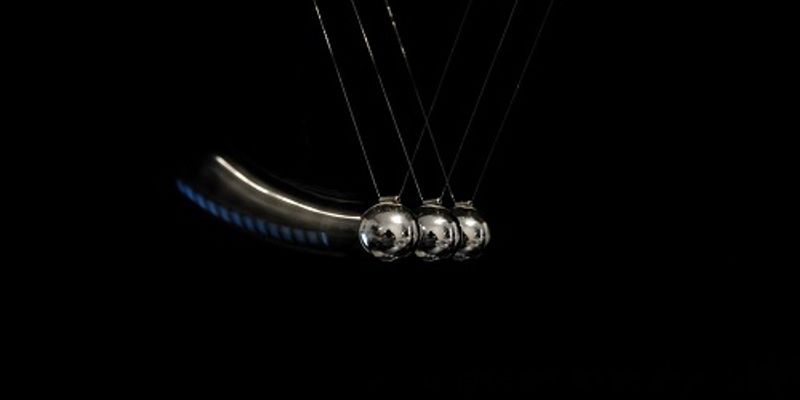
Mechanics: an area of science concerned with the behaviour of physical bodies when subjected to forces or displacements, and the subsequent effects of the bodies on their environment. During the early modern period, scientists such as Galileo, Kepler, and Newton, laid the foundation for what is now known as classical mechanics. It is a branch of classical physics that deals with particles that are either at rest or are moving with velocities significantly less than the speed of light. It can also be defined as a branch of science which deals with the motion of and forces on objects.

OCT 10, 2018 | 9:00 AM

High-throughput screening is widely useful in identifying genes and pathways that drive changes in cell behavior such as cell cycle regulation, metastasis, and drug resistance. Millipor...
MAR 14, 2018 | 6:00 AM

Psychiatric diagnosis is inherently difficult, due to the lack of clear biomarkers or any other objective assessment. Although quantitative, the psychometric scales employed during the psychi...
DEC 14, 2016 | 9:00 AM

DATE: December 14, 2016TIME: 9:00 AM PT, 12:00 PM ETMicroarrays and nucleotide sequencers have become commonplace tools in current research, yet until now, equivalent technologies for p...
AUG 21, 2014 | 9:45 AM

Accurate and timely diagnosis of rejection and infection is essential for long-term survival of solid-organ transplant recipients. We evaluated the performance a novel test to monitor rejecti...
DEC 14, 2016 | 9:00 AM
DATE: December 14, 2016TIME: 9:00 AM PT, 12:00 PM ETMicroarrays and nucleotide sequencers have become commonplace tools in current research, yet until now, equivalent technologies for p...
AUG 21, 2014 | 9:45 AM
Accurate and timely diagnosis of rejection and infection is essential for long-term survival of solid-organ transplant recipients. We evaluated the performance a novel test to monitor rejecti...