
 Follow
Research
Research: comprises "creative and systematic work undertaken to increase the stock of knowledge, including knowledge of humans, culture and society, and the use of this stock of knowledge to devise new applications."

SEP 05, 2024 | 9:00 AM
C.E. CREDITS

The effect of long-term mixed-waste contamination, particularly uranium and nitrate, on the microbial community in the terrestrial subsurface at the Oak Ridge Integrated Field Research Chall...
SEP 04, 2024 | 9:00 AM
C.E. CREDITS

Bacterial vaginosis is a common cause of vaginal complaints, mainly of odor and discharge in women of reproductive age. BV is poorly understood and recurrence is frequent. More questions tha...
SEP 04, 2024 | 8:00 AM

In this webinar, we will introduce the in situ proximity ligation technology (isPLA) developed by Navinci, and how it can be used for the highly sensitive detection of protein-protein intera...
SEP 03, 2024 | 9:00 AM
C.E. CREDITS

In the rapidly expanding landscape of molecular diagnostics, the focus is shifting from top to bottom, with a redirection from post-pandemic respiratory testing to developments in gastrointe...
AUG 29, 2024 | 10:00 AM

In this presentation, Vizgen’s Instrument Product Manager will introduce you to their latest platform, the MERSCOPE® Ultra, for in situ spatial genomics powered by MERFISH technolo...
AUG 29, 2024 | 7:00 AM

Unlocking the potential of mRNA technology is revolutionizing medicine and biotechnology. Solid-phase in vitro transcription enables scalability and automation, making it a valuable tool for...
AUGUST 16, 2024 3:30 PM ET

Properly managing a stockroom is vital to the success of the research on your campus. The everchanging nature of technology coupled with volatle supply chains have impacted how stockrooms op...
AUG 06, 2024 | 8:00 AM

Analytical Ultracentrifugation (AUC) stands as a cornerstone technique in the realm of molecular and particle analysis, offering unparalleled insights into the size, shape, and interactions...
July 30, 2024 9am PDT, 11am CDT, 12pm EDT

Liquid Biopsy: Understand the significance of liquid biopsy in cancer research and the role of magnetic beads in sample preparation: After listening to the podcast, learners will be able to...
JUL 16, 2024 | 10:00 PM

Cell health assessment is the foundation in cancer drug discovery. Potential cancer drug candidates need to show anti-cancer activity such as inhibition of proliferation and induction of apo...
JUL 09, 2024 | 9:00 AM
Introduction to Magnetic Bead: Understand the history, development, versatility, and impact of Dynabeads magnetic beads: After listening to the podcast, learners will be able to explain the...
JUN 27, 2024 | 10:00 AM

Variant detection of multiple genes from a single tumor sample requires high-throughput molecular testing. To meet this demand, targeted next-generation sequencing (NGS) panels are useful in...
JUN 27, 2024 | 6:00 AM
C.E. CREDITS

High-resolution spatial transcriptomics stands at the forefront of technological advancements, offering transformative capabilities in the domain of tumor biology research. In this presentat...
JUN 26, 2024 | 9:00 AM
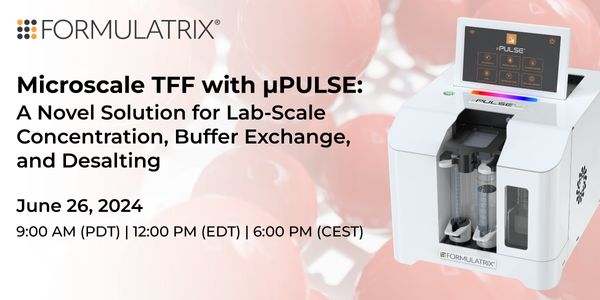
In this presentation, we will present a novel way of concentrating samples and performing buffer exchange using the µPULSE —TFF System. The instrument is a fully automated walk-a...
JUN 25, 2024 | 9:00 PM
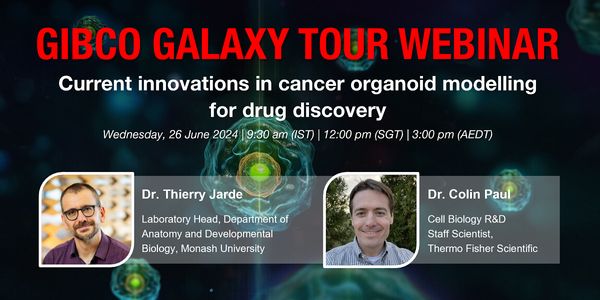
Over 95% of potential anti-cancer drugs failed in clinical trials despite vast investment to bring the drug to market. The last decade of cancer research has also seen numerous advances aime...
JUN 21, 2024 | 12:00 AM

Rapid detection and identification of microbial pathogens in the laboratory is imperative. However, standard microbiology testing approaches often depend on the recovery and culture of viabl...
JUN 18, 2024 | 9:00 AM
Introduction to Magnetic Bead: Understand the history, development, versatility, and impact of Dynabeads magnetic beads: After listening to the podcast, learners will be able to explain the...
JUN 18, 2024 | 8:00 AM

Patients with rheumatoid arthritis (RA) can be categorized as either anti-citrullinated protein antibody-positive (ACPA+) ornegative (ACPA-). In this webinar, Dr. Sung will present his...
JUN 12, 2024 | 8:00 AM

In quantitative polymerase chain reaction (qPCR), multiplexing increases sample throughout, while reducing the time and cost associated with having separate reactions for each target. Furthe...
JUN 06, 2024 | 8:00 AM

In the rapidly expanding landscape of molecular diagnostics, the focus is shifting from top to bottom, with a redirection from post-pandemic respiratory testing to developments in gastrointe...
JUN 05, 2024 | 8:00 AM

As the most widely used viral vector for gene therapies, Adeno-Associated Viruses (AAVs) present unique advantages, including their ability to enter both dividing and non-dividing cells, the...
JUN 04, 2024 | 9:15 AM

HPV-negative head and neck squamous cell carcinoma (HNSCC) poses challenges for treatment, particularly with limited response to immunotherapy. We investigated tumor-infiltrating lymphocytes...
JUN 04, 2024 | 8:15 AM

The revolution in life science research aims to understand how single cells work, which is crucial for developing new therapies. Traditional methods like FACS and scRNASeq give only a partia...
SEP 04, 2024 | 8:00 AM
In this webinar, we will introduce the in situ proximity ligation technology (isPLA) developed by Navinci, and how it can be used for the highly sensitive detection of protein-protein intera...