Troubleshooting: is a form of problem solving, often applied to repair failed products or processes on a machine or a system. It is a logical, systematic search for the source of a problem in order to solve it, and make the product or process operational again. Troubleshooting is needed to identify the symptoms.

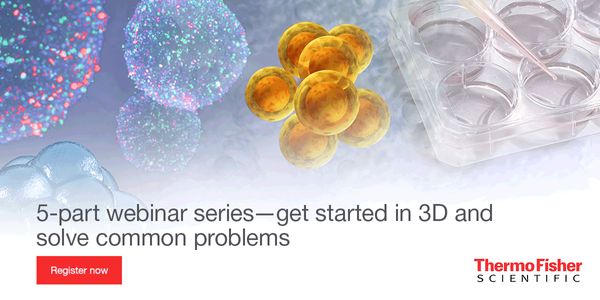
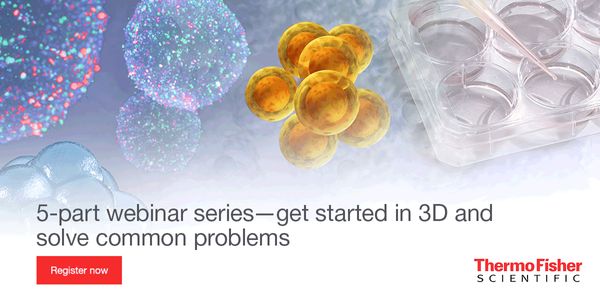
DATE: June 19, 2019TIME: 10:00am PDT, 1:00pm EDT As we develop new methods to create more biologically relevant models for research in understanding disease etiology and in...
DATE: June 12, 2019TIME: 9:00am PDTDoes your work require you to freeze dry samples? Are your results inconsistent? Is your freeze dry cycle taking too long? Learn how to optimize you...
Real-time PCR, or quantitative qPCR, is a commonly used molecular biology lab technique to determine the actual amount of PCR product at a given cycle. For quantitative reverse transcription...
The last two decades have seen an explosion in the volume of oncology data generated using next-generation sequencing (NGS) and multi-omics techniques. As a result, there is a growing need fo...
Development of novel types of therapeutics require adaptation of traditional bioprocessing applications to include the use of primary cells, such as stem cells, fibroblasts, astrocytes and ne...
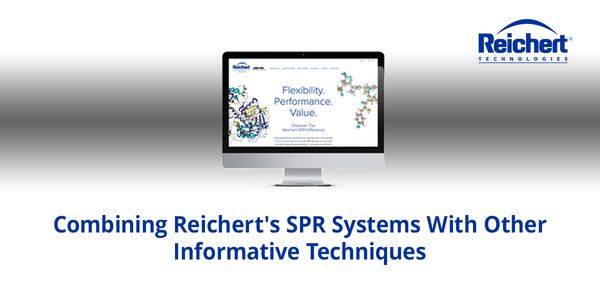
DATE: December 11, 2018TIME: 11:00 PSTThis webinar will focus on how Reichert's Surface Plasmon Resonance (SPR) systems can generate additional valuable information that is not...
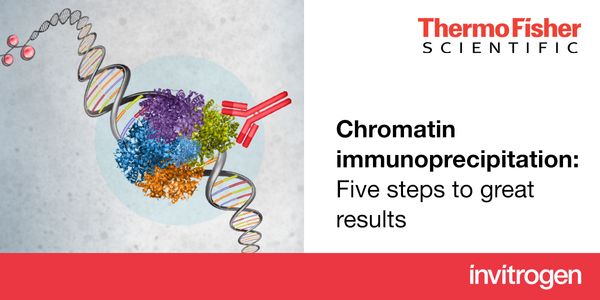
DATE: October 31, 2018TIME: 8:00AM PDTChromatin immunoprecipitation (ChIP) is a technique researchers employ to obtain a snapshot of protein-DNA interactions in the cell. ChI...
Everyone that uses titration in their lab knows how simple and fast the technique can be. However, uncertainty around when to replace electrodes creates confusion. Reagent quality, tubi...
In the last two decades, large amount of next-generation sequencing (NGS) and -omics data has been generated in the field of immuno-oncology. Generating hypotheses by analyzing hundreds if no...
Does your work require you to freeze dry samples? Are your results inconsistent? Is your freeze dry cycle taking too long? Learn how to optimize your lyophilization process. This webinar will...
Immunohistochemistry protocols, which utilize antibodies to visualize proteins in tissue sections, have many steps that need optimized to prevent non-specific background effects, artifacts, o...
DATE: March 28, 2018TIME: 10:00am PDT, 01:00pm EDTPrimary cells are derived from various tissues typically via dissection, enzymatic dissociation, and subsequent culture in media specif...

Enzyme Linked Immunosorbent Assay(s), or ELISAs for short, allow for the rapid determination of the presence and concentration of a target molecule of interest in a rapid and sensitive manner...

DATE: December 13, 2017TIME: 9:00am PT, 12:00pm ET Listen in as our scientific expert, Tom Ruyle, discusses how to optimize your IHC protocol and reviews top troublesho...
DATE: July 27, 2017TIME: 9:00AM PT, 11:00AM CT, 12:00PM ETDo you have inconsistent results freeze drying samples? Are some of your samples too challenging? Is your freeze dry cycle taki...
DATE: May 17, 2017TIME: 10:30am PT, 1:30pm ETNeurons derived from human pluripotent stem cells (hPSCs) and primary rodent neurons both are excellent resources for disease modeling and d...
Getting started Equipment Troubleshooting Scale up or scale down your expression runs Tackling difficult-to-express proteins 293 vs. CHO cell expression...
Neurons derived from human pluripotent stem cells (hPSCs) and primary rodent neurons both are excellent resources for disease modeling and drug screening. Human PSCs derived neural stem...
DATE: March 14, 2017TIME: 8:00AM PST, 11:00AM ESTSurface Plasmon Resonance (SPR) is a widely-used label-free technique to characterize a variety of molecular interactions. SPR is...
DATE: June 19, 2019TIME: 10:00am PDT, 1:00pm EDT As we develop new methods to create more biologically relevant models for research in understanding disease etiology and in...
DATE: June 12, 2019TIME: 9:00am PDTDoes your work require you to freeze dry samples? Are your results inconsistent? Is your freeze dry cycle taking too long? Learn how to optimize you...
Real-time PCR, or quantitative qPCR, is a commonly used molecular biology lab technique to determine the actual amount of PCR product at a given cycle. For quantitative reverse transcription...
The last two decades have seen an explosion in the volume of oncology data generated using next-generation sequencing (NGS) and multi-omics techniques. As a result, there is a growing need fo...
Development of novel types of therapeutics require adaptation of traditional bioprocessing applications to include the use of primary cells, such as stem cells, fibroblasts, astrocytes and ne...
DATE: December 11, 2018TIME: 11:00 PSTThis webinar will focus on how Reichert's Surface Plasmon Resonance (SPR) systems can generate additional valuable information that is not...
DATE: October 31, 2018TIME: 8:00AM PDTChromatin immunoprecipitation (ChIP) is a technique researchers employ to obtain a snapshot of protein-DNA interactions in the cell. ChI...
Everyone that uses titration in their lab knows how simple and fast the technique can be. However, uncertainty around when to replace electrodes creates confusion. Reagent quality, tubi...
In the last two decades, large amount of next-generation sequencing (NGS) and -omics data has been generated in the field of immuno-oncology. Generating hypotheses by analyzing hundreds if no...
Does your work require you to freeze dry samples? Are your results inconsistent? Is your freeze dry cycle taking too long? Learn how to optimize your lyophilization process. This webinar will...
Immunohistochemistry protocols, which utilize antibodies to visualize proteins in tissue sections, have many steps that need optimized to prevent non-specific background effects, artifacts, o...
DATE: March 28, 2018TIME: 10:00am PDT, 01:00pm EDTPrimary cells are derived from various tissues typically via dissection, enzymatic dissociation, and subsequent culture in media specif...
Enzyme Linked Immunosorbent Assay(s), or ELISAs for short, allow for the rapid determination of the presence and concentration of a target molecule of interest in a rapid and sensitive manner...

DATE: December 13, 2017TIME: 9:00am PT, 12:00pm ET Listen in as our scientific expert, Tom Ruyle, discusses how to optimize your IHC protocol and reviews top troublesho...
DATE: July 27, 2017TIME: 9:00AM PT, 11:00AM CT, 12:00PM ETDo you have inconsistent results freeze drying samples? Are some of your samples too challenging? Is your freeze dry cycle taki...
DATE: May 17, 2017TIME: 10:30am PT, 1:30pm ETNeurons derived from human pluripotent stem cells (hPSCs) and primary rodent neurons both are excellent resources for disease modeling and d...
Getting started Equipment Troubleshooting Scale up or scale down your expression runs Tackling difficult-to-express proteins 293 vs. CHO cell expression...
Neurons derived from human pluripotent stem cells (hPSCs) and primary rodent neurons both are excellent resources for disease modeling and drug screening. Human PSCs derived neural stem...
DATE: March 14, 2017TIME: 8:00AM PST, 11:00AM ESTSurface Plasmon Resonance (SPR) is a widely-used label-free technique to characterize a variety of molecular interactions. SPR is...