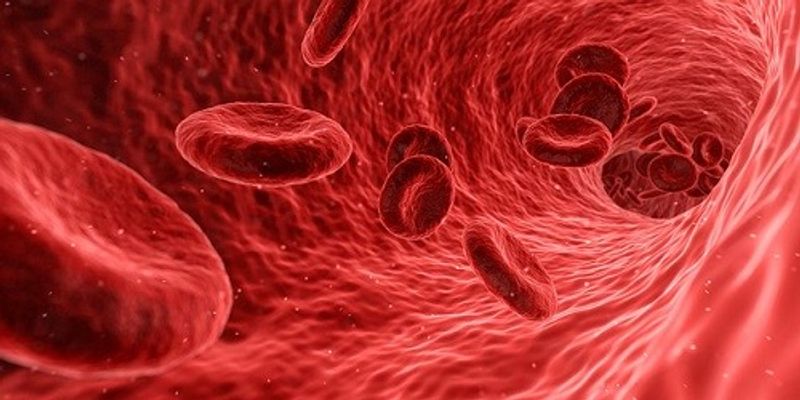
A liquid biopsy is a diagnostic test using liquid biological samples. Considered non-invasive, it can be used to track cancers, heart issues, and do prenatal diagnosis.
As reimbursement changes and healthcare moves towards value-based models, the clinical laboratory is faced with the challenge of redefining its value outside the cost per test. This session...
Rapid, inexpensive, and sensitive nucleic acid detection may aid point-of-care pathogen detection, genotyping, and disease monitoring. We combine the RNA- targeting CRISPR effector Cas13 with...
Management of complex quality control (QC) data is essential to insure high quality patient care and maintain regulatory compliance within clinical laboratories. Robust software solutions fo...
DATE: March 5, 2019TIME: 09:00am PST, 12:00pm EST MicroRNA(miRNA) are short non-coding single stranded RNA molecules that regulate gene expression at the post tran...
DATE: November 20, 2018TIME: 07:00 PSTSince its original development (2008) COLD-PCR has been used by several groups for increasing the sensitivity of mutation detection in di...
As the most common female malignancy, breast cancer is the most likely reason that a woman will die of cancer around the world. Breast cancer mortality has dropped in the U.S. by 35% since 19...
Recent work has identified epigenomic features of distal regulatory elements to be dynamic and defining indicators of cellular specification and transformation. Of particular relevance is our...
Although targeted therapies often elicit profound initial patient responses, these effects are transient due to residual disease leading to acquired resistance. How tumors transition between...
Lung cancer is the leading cause of cancer-related mortality worldwide. Large-scale sequencing studies have revealed the complex genomic landscape of NSCLC and genomic differences between lun...
Two projects looking at novel approaches to targeting inflammatory breast cancer will be presented. Inflammatory breast cancer (IBC) is a unique, understudied, and most lethal subtype account...
Antibodies are extremely valuable and ubiquitous tools in life science research, but in spite of their widespread use in immunoassays over the past several decades, there is still a lack of u...
The oncogenic transcription factor c-MYC (MYC) is deregulated, and often overexpressed, in more than 50% of cancers. MYC deregulation is associated with poor prognosis and aggressive disease,...
In the last two decades, large amount of next-generation sequencing (NGS) and -omics data has been generated in the field of immuno-oncology. Generating hypotheses by analyzing hundreds if no...
In the past two decades a small number of infrequently dividing cells have been proposed as the source of multi-drug resistance during cancer treatment. These cells identified by their expres...
PacBio Sequencing simultaneously provides long sequence reads, high consensus accuracy, minimal sequence bias, and methylation detection. I will highlight new advances and updates on applying...
To date the anatomic extent of tumor (TNM-classification) has been by far the most important factors to predict the prognosis of cancer patients. However, this classification provides limited...
RNA sequencing unlocks the mysteries hidden in the transcriptome. Whether your goal is gene expression analysis, gene fusion analysis, SNP analysis or miRNA expression analysis, achieving hig...
The microbiome signatures in the context of gynecologic cancers (endometrial and ovarian) and the potential for their clinical use will be discussed. The use of microfluidic technologies to i...
Pancreatic tumors are dynamic pseudo-organs that contain numerous cell types interacting to create unique physiology. A typical pancreatic tumor is made up largely of stromal fibroblasts and...
High-throughput screening is widely useful in identifying genes and pathways that drive changes in cell behavior such as cell cycle regulation, metastasis, and drug resistance. Millipor...
In prior work, we have pursued how tumor reactive monoclonal antibody (mAb), together with activators of innate immune cells, like NK cells, can augment antibody dependent cell-mediated cytot...
Molecular analyses of cancer biology have tended to segregate between a focus on nucleic acids – DNA, RNA and their modifications – and a focus on proteins and protein function. P...
Understanding the immune repertoire is an important aspect of immuno-oncology research, which can be used to gather insights into the function and overall status of the immune system. We have...
As reimbursement changes and healthcare moves towards value-based models, the clinical laboratory is faced with the challenge of redefining its value outside the cost per test. This session...
Rapid, inexpensive, and sensitive nucleic acid detection may aid point-of-care pathogen detection, genotyping, and disease monitoring. We combine the RNA- targeting CRISPR effector Cas13 with...
Management of complex quality control (QC) data is essential to insure high quality patient care and maintain regulatory compliance within clinical laboratories. Robust software solutions fo...
DATE: March 5, 2019TIME: 09:00am PST, 12:00pm EST MicroRNA(miRNA) are short non-coding single stranded RNA molecules that regulate gene expression at the post tran...
DATE: November 20, 2018TIME: 07:00 PSTSince its original development (2008) COLD-PCR has been used by several groups for increasing the sensitivity of mutation detection in di...
As the most common female malignancy, breast cancer is the most likely reason that a woman will die of cancer around the world. Breast cancer mortality has dropped in the U.S. by 35% since 19...
Recent work has identified epigenomic features of distal regulatory elements to be dynamic and defining indicators of cellular specification and transformation. Of particular relevance is our...
Although targeted therapies often elicit profound initial patient responses, these effects are transient due to residual disease leading to acquired resistance. How tumors transition between...
Lung cancer is the leading cause of cancer-related mortality worldwide. Large-scale sequencing studies have revealed the complex genomic landscape of NSCLC and genomic differences between lun...
Two projects looking at novel approaches to targeting inflammatory breast cancer will be presented. Inflammatory breast cancer (IBC) is a unique, understudied, and most lethal subtype account...
Antibodies are extremely valuable and ubiquitous tools in life science research, but in spite of their widespread use in immunoassays over the past several decades, there is still a lack of u...
The oncogenic transcription factor c-MYC (MYC) is deregulated, and often overexpressed, in more than 50% of cancers. MYC deregulation is associated with poor prognosis and aggressive disease,...
In the last two decades, large amount of next-generation sequencing (NGS) and -omics data has been generated in the field of immuno-oncology. Generating hypotheses by analyzing hundreds if no...
In the past two decades a small number of infrequently dividing cells have been proposed as the source of multi-drug resistance during cancer treatment. These cells identified by their expres...
PacBio Sequencing simultaneously provides long sequence reads, high consensus accuracy, minimal sequence bias, and methylation detection. I will highlight new advances and updates on applying...
To date the anatomic extent of tumor (TNM-classification) has been by far the most important factors to predict the prognosis of cancer patients. However, this classification provides limited...
RNA sequencing unlocks the mysteries hidden in the transcriptome. Whether your goal is gene expression analysis, gene fusion analysis, SNP analysis or miRNA expression analysis, achieving hig...
The microbiome signatures in the context of gynecologic cancers (endometrial and ovarian) and the potential for their clinical use will be discussed. The use of microfluidic technologies to i...
Pancreatic tumors are dynamic pseudo-organs that contain numerous cell types interacting to create unique physiology. A typical pancreatic tumor is made up largely of stromal fibroblasts and...
High-throughput screening is widely useful in identifying genes and pathways that drive changes in cell behavior such as cell cycle regulation, metastasis, and drug resistance. Millipor...
In prior work, we have pursued how tumor reactive monoclonal antibody (mAb), together with activators of innate immune cells, like NK cells, can augment antibody dependent cell-mediated cytot...
Molecular analyses of cancer biology have tended to segregate between a focus on nucleic acids – DNA, RNA and their modifications – and a focus on proteins and protein function. P...
Understanding the immune repertoire is an important aspect of immuno-oncology research, which can be used to gather insights into the function and overall status of the immune system. We have...
 Follow