 Follow
Mechanics
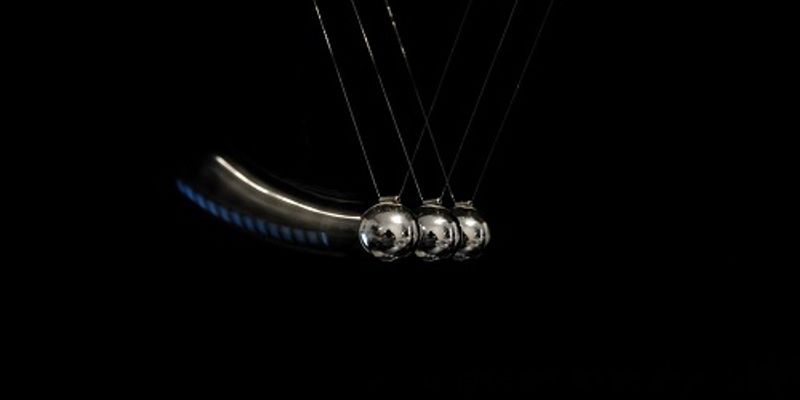
Mechanics: an area of science concerned with the behaviour of physical bodies when subjected to forces or displacements, and the subsequent effects of the bodies on their environment. During the early modern period, scientists such as Galileo, Kepler, and Newton, laid the foundation for what is now known as classical mechanics. It is a branch of classical physics that deals with particles that are either at rest or are moving with velocities significantly less than the speed of light. It can also be defined as a branch of science which deals with the motion of and forces on objects.


APR 21, 2021 | 5:00 PM

Date: April 21, 2021 Time: 8:00am (PDT), 11:00am (EDT), 5:00pm (CEST) Spatial Answers Trilogy - Spatial Answers in Immunology Immunology Researchers share their Spatial Discoveries in SARS-C...
APR 20, 2021 | 3:00 PM

Bridging a deep understanding of molecular profiles with clinical information is critical to developing innovative precision medicine tools in oncology. Discovery’s recently launched S...
APR 20, 2021 | 9:00 AM

Chromatin Immunoprecipitation, coupled with sequencing, has shaped our understanding of how transcriptional machinery interacts with genomes to facilitate gene regulation. These protein-DNA...
APR 20, 2021 | 7:30 AM
C.E. CREDITS

Structural variants (SVs) are essential in human evolution and genetic disease but remain understudied. This is especially the case for non-Caucasian ethnicities. We report, for the first ti...
APR 20, 2021 | 12:00 AM

Nanopore sequencing has enormous potential in epigenetic applications; unlike traditional sequencing-by-synthesis technologies, it can distinguish covalently modified nucleotides directly th...
APR 20, 2021 | 12:00 AM

Many diseases show sex differences in incidence or progression, suggesting that one sex has inherent biological factors that protect from or exacerbate disease. Historically the root causes...
APR 14, 2021 | 3:00 PM

Dr. Jordan RoseFigura from Swift Biosciences will present on the technology created to enable this research that covers 99.7 % of the SARS-CoV-2 genome from limited viral titers. Including a...
APR 08, 2021 | 11:00 AM
Date: April 8, 2021 Time: 11:00am (PDT), 3:00pm (EDT) Pneumonia is a deadly condition with clinical outcomes highly dependent on prompt and appropriate therapy. Diagnosis of pneumonia is cha...
MAR 31, 2021 | 9:00 AM

Date: March 31, 2021 Time: 9:00am (PDT), 12:00pm (EDT) Knockdown studies are prevalent and powerful ways to illustrate gene function. CRISPRi delivers a new mechanism for gene knockdown, PAM...
MAR 24, 2021 | 11:00 AM
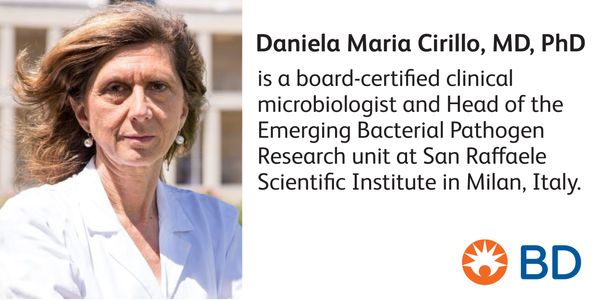
Date: March 24, 2021 Time: 11:00am (PDT), 2:00pm (EDT) In 2019, roughly 10 million people developed Tuberculosis (TB) globally and 1.4 million of them died, which makes it one of the top 1...
MAR 24, 2021 | 12:00 AM

Too often, cannabis labs are trying to open for business without the solid foundation of an ISO management system. This afterthought is detrimental to labs’ short and long term success...