 Follow
Mechanics
Mechanics: an area of science concerned with the behaviour of physical bodies when subjected to forces or displacements, and the subsequent effects of the bodies on their environment. During the early modern period, scientists such as Galileo, Kepler, and Newton, laid the foundation for what is now known as classical mechanics. It is a branch of classical physics that deals with particles that are either at rest or are moving with velocities significantly less than the speed of light. It can also be defined as a branch of science which deals with the motion of and forces on objects.


AUG 25, 2021 | 12:00 AM

Ataxia Telangiectasia, also known as A-T, is a devastating neuropediatric and genetic disorder for which there is no cure. Patients suffer from immune deficiency, cancer predisposition, and...
AUG 25, 2021 | 12:00 AM

Parkinson’s disease (PD) is the second most common neurodegenerative disorder with multiple motor and non-motor symptoms. PD is characterized by the presence on proteinaceous neuronal...
AUG 25, 2021 | 12:00 AM

Over 40 tandem repeats undergo expansion events that lead to neurological disease. This number is likely an underestimate as many repeats are difficult to amplify using existing short read s...
AUG 25, 2021 | 12:00 AM

Adolescence is a critical period for the developing brain, and binge drinking during this neuromaturation can result in enduring abnormal brain function and behavior. Repeated adolescent bin...
AUG 25, 2021 | 12:00 AM

Alzheimer’s and Parkinson’s diseases (AD, PD) are the two most common neurodegenerative disorders. Despite their debilitating effects and increasing prevalence in society, no cur...
AUG 24, 2021 | 11:00 AM

Date: August 24, 2021 Time: 11:00am (PDT), 1:00pm (EDT) Electron-based dissociation mechanisms have shown great promise for advanced characterization of biomolecules. However, routine adopti...
JUL 28, 2021 | 7:00 AM

Date: July 28, 2021 Time: 7:00am PDT Bacterial persistence is a potential cause of antibiotic therapy failure. Antibiotic-tolerant persisters originate from phenotypic differentiation within...
JUN 29, 2021 | 7:00 AM

Date: June 29, 2021 Time: 7:00am (PDT), 10:00am (EDT) The Unyvero Lower Respiratory Tract Panel demonstrated reliable concordance with culture based methods for organism identification from...
JUN 24, 2021 | 8:00 AM

Date: June 24, 2021 Time: 8:00am (PDT), 11:00am (EDT) Cardiovascular disease is a leading health problem, affecting almost 30% of individuals in the developed world, and comprises a wide ran...
JUN 16, 2021 | 8:00 AM
Date: June 16, 2021 Time: 8:00am PDT The MACSima™ Imaging Platform is the only complete solution for ultrahigh-content imaging of hundreds of markers, allowing you to understand the tu...
JUN 10, 2021 | 10:00 AM

Date: June 10, 2021 Time: 10:00am (PDT), 1:00pm (EDT) Microglia, the primary brain macrophages, regulate a plethora of processes that impact the organization of neural circuits, including sy...
JUN 10, 2021 | 7:00 AM

Date: June 10, 2021 Time: 7:00am (PDT), 10:00am (EDT), 4:00pm (CEST) Discover how to categorize small-to-large genetic modifications using molecular combing. Our Proprietary Genome Morse Cod...
JUN 09, 2021 | 7:00 AM
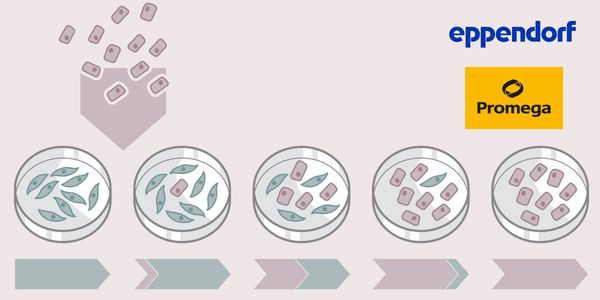
Date: June 9, 2021 Time: 09 June 2021, 7am PDT, 10am EDT, 4pm CEST cells with dramatic implications on the validity of past cell culture related research. The fact that at least 509 cell lin...
JUN 08, 2021 | 8:00 AM
Date: June 08, 2021 Time: 08:00am (PDT) COVID-19 displays high clinical variability, but what determines its severity is unclear. Analysis of antigen-specific T cell responses has contribu...
JUN 02, 2021 | 12:00 AM

Despite the promising results with current approved immunotherapies, all patients do not have the same level of response, and recent efforts have focused on understanding and avoiding immuno...
MAY 26, 2021 | 9:00 AM
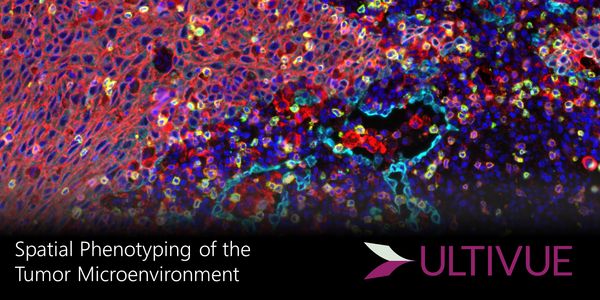
Date: May 26, 2021 Time: 9:00am (PDT), 12:00pm (EDT) Immunotherapy has transformed the treatment of metastatic and recurrent solid tumors but is challenged in that only a minority of patie...
MAY 25, 2021 | 8:00 AM
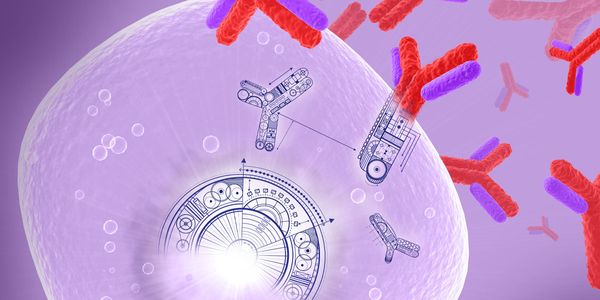
Date: May 25, 2021 Time: 8:00am (PDT) Reliable expression of recombinant proteins in human, CHO, or insect cells is essential for many aspects of biomedical research and drug development, bu...
MAY 06, 2021 | 7:00 AM

Date: May 6, 2021 Time: 7:00am PDT, 10:00am EDT, 4:00pm CEST Eukaryotic cell cultures respond to the most subtle influence. Apart from the risk of contamination, minimal changes in cultivati...
MAY 05, 2021 | 12:00 AM

When violent crimes are committed, the crime scene is usually covered with blood. Blood may be shed when the person is standing, sitting, or on the ground. The weapon that caused blood to be...