
 Follow
Medicine
Medicine: the science or practice of the diagnosis, treatment, and prevention of disease (in technical use often taken to exclude surgery).

MAY 28, 2014 | 6:00 AM

Due to the large increase in the number and complexity of clinical laboratory tests, optimal use of laboratory testing services has presented many challenges. The Clinical Laboratory Integrat...
MAR 20, 2014 | 2:00 PM

The therapeutic utility of stem cells is rooted in an understanding -- and exploitation -- of their natural role from earliest development to lifes end. Their job is first to participate in o...
MAR 20, 2014 | 1:00 PM

Neural stem cells exist in the adult mammalian brain throughout life. They reside in the subgranular layer of the dentate gyrus and in the subventricular zone. Neural stem cells have the capa...
MAR 20, 2014 | 1:00 PM

Using high throughput next-generation sequencing to simultaneously search large number of genes for pathogenic mutations has numerous advantages. It decreases the pressure to narrow the dif...
MAR 20, 2014 | 12:00 PM

Assessment of sensorimotor and cognitive function plays a crucial role in all facets of patient care, from diagnosing the specific disease or injury, to management and monitoring of rehabilit...
MAR 20, 2014 | 12:00 PM
Alzheimers disease (AD) is a common neurodegenerative disorder characterized clinically by progress decline in memory and thinking and pathologically by the presence of senile plaques and neu...
MAR 20, 2014 | 11:00 AM

Alzheimers disease (AD) is a neurodegenerative disorder producing cognitive impairment and dementia in millions of elders. Currently no treatment is effective to slow the progression of AD. M...
MAR 20, 2014 | 9:00 AM

The Brain Research through Advancing Innovative Neurotechnologies (BRAIN) Initiative is part of a new Presidential focus aimed at revolutionizing our understanding of the human brain. By acce...
MAR 20, 2014 | 8:00 AM

The therapeutic utility of stem cells is rooted in an understanding -- and exploitation -- of their natural role from earliest development to lifes end. Their job is first to participate in o...

MAR 20, 2014 | 7:00 AM

Huntington's disease (HD) is a progressive, inherited, degenerative brain disorder that produces physical, mental and emotional changes. Named for George Huntington, the physician who fi...
MAR 20, 2014 | 6:00 AM

Connectomics is a new field of research that aims to map the synapses of the nervous system in order to construct a wiring diagram of all the neural circuits. It is necessary to use the elect...
MAR 19, 2014 | 1:00 PM

The Willerth lab investigates how to engineer neural tissue by combining pluripotent stem cells, controlled drug delivery and biomaterial scaffolds. When generating these replacement tissues,...
MAR 19, 2014 | 1:00 PM
ATP-binding cassette transporter A1 (ABCA1) mediates cholesterol efflux to lipid-free apolipoproteins such as apolipoprotein A-I (apoA-I) and apolipoprotein E (apoE). ABCA1 is essential regul...
MAR 19, 2014 | 12:00 PM
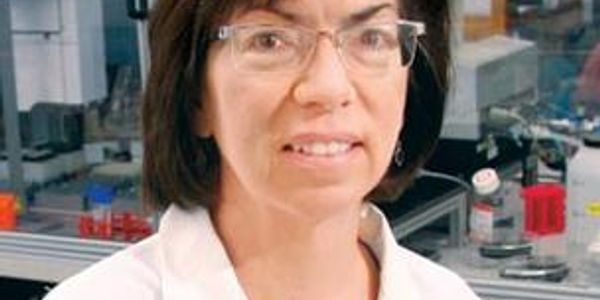
Synaptic dysfunction and loss caused by age-dependent accumulation of synaptotoxic Amyloid beta (Abeta)1-42 oligomers is proposed to underlie cognitive decline in Alzheimers disease (AD). Syn...
MAR 19, 2014 | 11:00 AM

...
MAR 19, 2014 | 10:00 AM
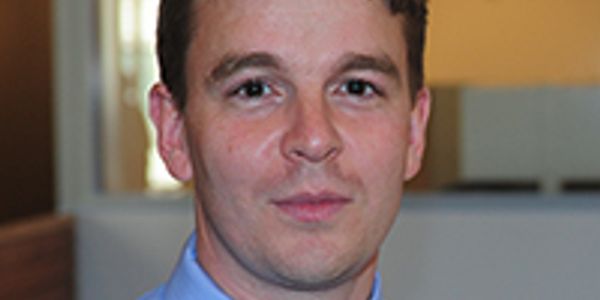
We present a personalized medicine suite of software applications developed at UCSF for multiple sclerosis (MS): the MS Bioscreen. This new tool addresses the challenges of the dynamic manage...
MAR 19, 2014 | 10:00 AM

Neuron-glial interactions are increasingly recognized as being key for physiological and pathological processes in the central nervous system. Microglia have been found to play a causal role...
MAR 19, 2014 | 9:00 AM

Multiple Sclerosis is a debilitating neurodegnerative disease of the central nervous system in which the immune system targets and destroys myelin sheaths surrounding axons. Progressive a...
MAR 19, 2014 | 9:00 AM

Dendritic spine shape enables sequestering of subcellular components needed for synaptic plasticity, including polyribosomes for local protein synthesis, smooth endoplasmic reticulum (SER) to...
MAR 19, 2014 | 8:00 AM

The Brain Research through Advancing Innovative Neurotechnologies (BRAIN) Initiative is part of a new Presidential focus aimed at revolutionizing our understanding of the human brain. By...
MAR 20, 2014 | 1:00 PM
Neural stem cells exist in the adult mammalian brain throughout life. They reside in the subgranular layer of the dentate gyrus and in the subventricular zone. Neural stem cells have the capa...
MAR 20, 2014 | 1:00 PM
Using high throughput next-generation sequencing to simultaneously search large number of genes for pathogenic mutations has numerous advantages. It decreases the pressure to narrow the dif...
MAR 20, 2014 | 12:00 PM
Assessment of sensorimotor and cognitive function plays a crucial role in all facets of patient care, from diagnosing the specific disease or injury, to management and monitoring of rehabilit...
MAR 20, 2014 | 12:00 PM
Alzheimers disease (AD) is a common neurodegenerative disorder characterized clinically by progress decline in memory and thinking and pathologically by the presence of senile plaques and neu...
MAR 20, 2014 | 11:00 AM
Alzheimers disease (AD) is a neurodegenerative disorder producing cognitive impairment and dementia in millions of elders. Currently no treatment is effective to slow the progression of AD. M...
MAR 20, 2014 | 9:00 AM
The Brain Research through Advancing Innovative Neurotechnologies (BRAIN) Initiative is part of a new Presidential focus aimed at revolutionizing our understanding of the human brain. By acce...
MAR 20, 2014 | 8:00 AM
The therapeutic utility of stem cells is rooted in an understanding -- and exploitation -- of their natural role from earliest development to lifes end. Their job is first to participate in o...
MAR 20, 2014 | 7:00 AM
Huntington's disease (HD) is a progressive, inherited, degenerative brain disorder that produces physical, mental and emotional changes. Named for George Huntington, the physician who fi...
MAR 20, 2014 | 6:00 AM
Connectomics is a new field of research that aims to map the synapses of the nervous system in order to construct a wiring diagram of all the neural circuits. It is necessary to use the elect...
MAR 19, 2014 | 1:00 PM
The Willerth lab investigates how to engineer neural tissue by combining pluripotent stem cells, controlled drug delivery and biomaterial scaffolds. When generating these replacement tissues,...
MAR 19, 2014 | 1:00 PM
ATP-binding cassette transporter A1 (ABCA1) mediates cholesterol efflux to lipid-free apolipoproteins such as apolipoprotein A-I (apoA-I) and apolipoprotein E (apoE). ABCA1 is essential regul...
MAR 19, 2014 | 12:00 PM
Synaptic dysfunction and loss caused by age-dependent accumulation of synaptotoxic Amyloid beta (Abeta)1-42 oligomers is proposed to underlie cognitive decline in Alzheimers disease (AD). Syn...
MAR 19, 2014 | 11:00 AM
...