Omics: The English-language neologism omics informally refers to a field of study in biology ending in -omics, such as genomics, proteomics or metabolomics. The related suffix -ome is used to address the objects of study of such fields, such as the genome, proteome or metabolome respectively.
With humans pushing to live further off Earth for longer periods of time, it is increasingly important to understand the changes that occur in biological systems during spaceflight whether th...
Background: The vast majority of all genes are contained within the genomes of the prokaryotes, including the eubacteria and the archaea. These largely single-cellular domains of life thus...
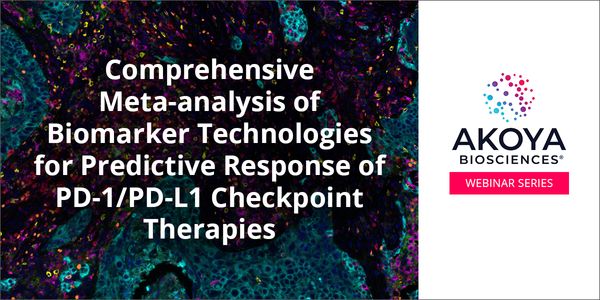
DATE: August 27, 2019 TIME: 9:00am PDT, 12:00pm EDT Immunotherapies targeting PD-1 or PD-L1 have proven remarkably effective for treating cancer in some patients, with considerabl...
DATE: March 26, 2019TIME: 4:00pm PDTIn this webinar we will show, using live software demonstrations, how well data visualization supports precision medicine research. We will disc...
The last two decades have seen an explosion in the volume of oncology data generated using next-generation sequencing (NGS) and multi-omics techniques. As a result, there is a growing need fo...
DATE: November 14, 2018TIME: 08:00am PST, 11:00am EST International Genetics & Translational Research in Transplantation Network (iGeneTRAIN) has recently generated genome...
Analytical chemistry can take you to strange places - for me it has been to the bottom of a quarry, being covered in dirt, excavating sesame-seed sized fossils that allow us to work out when...
Everyone that uses titration in their lab knows how simple and fast the technique can be. However, uncertainty around when to replace electrodes creates confusion. Reagent quality, tubi...
This intensive workshop will introduce infrared spectroscopy, outline the various sample handling methods and provide guidance on the numerous transmission and reflectance methods available f...
Ion mobility-mass spectrometry (IM-MS) is a rapid, gas-phase separation technique that has become an integral part of the analytical repertoire of techniques for the -omics. This method coupl...
Solid phase microextraction (SPME) is a versatile, non-exhaustive sample preparation tool that has been demonstrated to be well-suited for facile and effective analysis of a broad range of co...
In the postgenomic era, one expects the suite of chemical players in a brain region to be known and their functions uncovered. Perhaps surprisingly, many neurochemicals remain poorly characte...
A fast, reliable and low cost characterization of materials/ products as fed to a process, and/or resulting from different processing actions, represents one of the most challenging targets i...
As the most common female malignancy, breast cancer is the most likely reason that a woman will die of cancer around the world. Breast cancer mortality has dropped in the U.S. by 35% since 19...
Lung cancer is the leading cause of cancer-related mortality worldwide. Large-scale sequencing studies have revealed the complex genomic landscape of NSCLC and genomic differences between lun...
Two projects looking at novel approaches to targeting inflammatory breast cancer will be presented. Inflammatory breast cancer (IBC) is a unique, understudied, and most lethal subtype account...
The oncogenic transcription factor c-MYC (MYC) is deregulated, and often overexpressed, in more than 50% of cancers. MYC deregulation is associated with poor prognosis and aggressive disease,...
In the past two decades a small number of infrequently dividing cells have been proposed as the source of multi-drug resistance during cancer treatment. These cells identified by their expres...
PacBio Sequencing simultaneously provides long sequence reads, high consensus accuracy, minimal sequence bias, and methylation detection. I will highlight new advances and updates on applying...
To date the anatomic extent of tumor (TNM-classification) has been by far the most important factors to predict the prognosis of cancer patients. However, this classification provides limited...
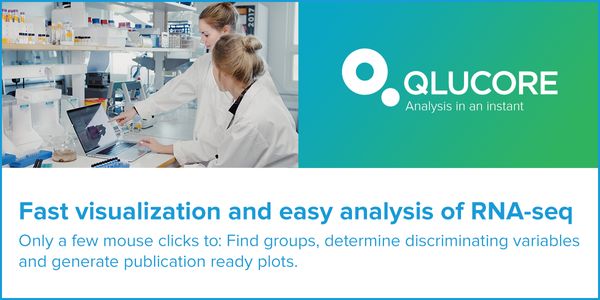
RNA sequencing unlocks the mysteries hidden in the transcriptome. Whether your goal is gene expression analysis, gene fusion analysis, SNP analysis or miRNA expression analysis, achieving hig...
High-throughput screening is widely useful in identifying genes and pathways that drive changes in cell behavior such as cell cycle regulation, metastasis, and drug resistance. Millipor...
In prior work, we have pursued how tumor reactive monoclonal antibody (mAb), together with activators of innate immune cells, like NK cells, can augment antibody dependent cell-mediated cytot...
Molecular analyses of cancer biology have tended to segregate between a focus on nucleic acids – DNA, RNA and their modifications – and a focus on proteins and protein function. P...
With humans pushing to live further off Earth for longer periods of time, it is increasingly important to understand the changes that occur in biological systems during spaceflight whether th...
Background: The vast majority of all genes are contained within the genomes of the prokaryotes, including the eubacteria and the archaea. These largely single-cellular domains of life thus...
DATE: August 27, 2019 TIME: 9:00am PDT, 12:00pm EDT Immunotherapies targeting PD-1 or PD-L1 have proven remarkably effective for treating cancer in some patients, with considerabl...
DATE: March 26, 2019TIME: 4:00pm PDTIn this webinar we will show, using live software demonstrations, how well data visualization supports precision medicine research. We will disc...
The last two decades have seen an explosion in the volume of oncology data generated using next-generation sequencing (NGS) and multi-omics techniques. As a result, there is a growing need fo...
DATE: November 14, 2018TIME: 08:00am PST, 11:00am EST International Genetics & Translational Research in Transplantation Network (iGeneTRAIN) has recently generated genome...
Analytical chemistry can take you to strange places - for me it has been to the bottom of a quarry, being covered in dirt, excavating sesame-seed sized fossils that allow us to work out when...
Everyone that uses titration in their lab knows how simple and fast the technique can be. However, uncertainty around when to replace electrodes creates confusion. Reagent quality, tubi...
This intensive workshop will introduce infrared spectroscopy, outline the various sample handling methods and provide guidance on the numerous transmission and reflectance methods available f...
Ion mobility-mass spectrometry (IM-MS) is a rapid, gas-phase separation technique that has become an integral part of the analytical repertoire of techniques for the -omics. This method coupl...
Solid phase microextraction (SPME) is a versatile, non-exhaustive sample preparation tool that has been demonstrated to be well-suited for facile and effective analysis of a broad range of co...
In the postgenomic era, one expects the suite of chemical players in a brain region to be known and their functions uncovered. Perhaps surprisingly, many neurochemicals remain poorly characte...
A fast, reliable and low cost characterization of materials/ products as fed to a process, and/or resulting from different processing actions, represents one of the most challenging targets i...
As the most common female malignancy, breast cancer is the most likely reason that a woman will die of cancer around the world. Breast cancer mortality has dropped in the U.S. by 35% since 19...
Lung cancer is the leading cause of cancer-related mortality worldwide. Large-scale sequencing studies have revealed the complex genomic landscape of NSCLC and genomic differences between lun...
Two projects looking at novel approaches to targeting inflammatory breast cancer will be presented. Inflammatory breast cancer (IBC) is a unique, understudied, and most lethal subtype account...
The oncogenic transcription factor c-MYC (MYC) is deregulated, and often overexpressed, in more than 50% of cancers. MYC deregulation is associated with poor prognosis and aggressive disease,...
In the past two decades a small number of infrequently dividing cells have been proposed as the source of multi-drug resistance during cancer treatment. These cells identified by their expres...
PacBio Sequencing simultaneously provides long sequence reads, high consensus accuracy, minimal sequence bias, and methylation detection. I will highlight new advances and updates on applying...
To date the anatomic extent of tumor (TNM-classification) has been by far the most important factors to predict the prognosis of cancer patients. However, this classification provides limited...
RNA sequencing unlocks the mysteries hidden in the transcriptome. Whether your goal is gene expression analysis, gene fusion analysis, SNP analysis or miRNA expression analysis, achieving hig...
High-throughput screening is widely useful in identifying genes and pathways that drive changes in cell behavior such as cell cycle regulation, metastasis, and drug resistance. Millipor...
In prior work, we have pursued how tumor reactive monoclonal antibody (mAb), together with activators of innate immune cells, like NK cells, can augment antibody dependent cell-mediated cytot...
Molecular analyses of cancer biology have tended to segregate between a focus on nucleic acids – DNA, RNA and their modifications – and a focus on proteins and protein function. P...

 Follow