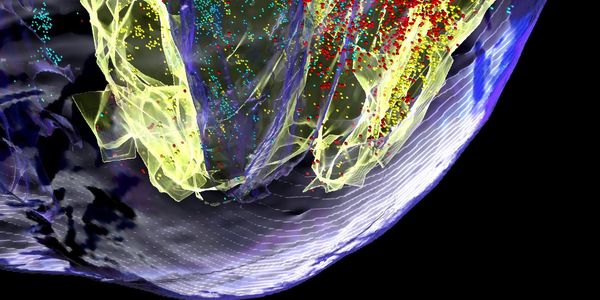
Technology is the science or information put into functional use to take care of issues or design helpful devices. It utilizes significantly more than logical information and incorporates values as much as realities, down to earth make information as much as hypothetical information.
Safety and potency testing in the cannabis and hemp industries necessitates analytical systems that include chromatography, mass spectrometry, and real time quantitative polymerase chain rea...
The ExD Option, available for both new and existing Agilent instruments, offers superior electron fragmentation in combination with collision induced dissociation (CID) compared to other exi...
We present a novel workflow for native MS, using a robust and sensitive LC/MS method using standard LC flow for native protein analysis. Most of the native MS analyses are using a nano-elect...
Veterinary drugs are commonly used chemicals to improve the growth and health outcomes of farm animals raised for human consumption. However, improper use of vet-drugs in animal farming can...
DATE: June 9, 2020 TIME: 10:00am PT, 1:00pm ET The presentation will first discuss sepsis as a disease and then explain the importance of performing diagnostic tests in the clinical labora...
In 2019, over 220,000 Canadians will be diagnosed with cancer and 82,000 will die of the disease. Approximately 90% of cancer related deaths are the result of metastatic disease. This is ind...
Similar to the “histone code” hypothesis in which epigenetic marks on histone tails expand the information potential of the genetic code, different tubulin isoforms, combined wit...
Multi-colour electron microscopy (MCEM) combines ultrastructural electron data with elemental information, transforming traditionally grey scale electron micrographs into colourful images th...
Microtubules (MTs) are dynamic cytoskeleton polymers forming a polarized intracellular network that provides structural support, facilitates intracellular transport and drives chromosome seg...
With technology advances and collaboration between engineers and neuroscientists, single-synapse network maps of the brain are possible at increasing scales. In this symposium, our speakers...
The BRAIN Initiative has enabled the development of novel neural recording tools that can benefit many labs, but are difficult to transition to industry for a variety of reasons. Here we ass...
Optimizing a routine LC/MS workflow can greatly improve laboratory efficiency and time to results. Often, a considerable burden to improving LC/MS productivity is the time and cost associate...
DATE: May 28, 2020 TIME: 9:00am PDT High-resolution imaging of sentinel lymph nodes (SLN) is gaining significance to specify staging and to determine patients requiring adjuvant treatment. C...
With over 200 validated antibodies and the option to add custom antibodies, the GeoMx DSP protein portfolio offers options to fit a wide range of spatial profiling application needs. NanoStr...
Background: Acute myeloid leukemia (AML) is a molecularly and clinically heterogeneous hematological malignancy. Despite recent advancements in the treatment of AML, approximately 50% of pat...
Background: Despite the immunogenicity and safety profile of dendritic cell (DC) vaccines, the importance of vaccine-induced antigen-specific T cell responses is unclear across clinical tria...
Tumor phenotypes are dictated not only by the neoplastic cell component, but also by the tumor microenvironment (TME), which is inherently immuno-suppressive, is equipped to hamper effector...
Personalized medicine has beomce a paradigm in lung cancer management; ~ 25–30% of advanced lung cancer patients could benefit from a targeted therapy. Several guidelines currently end...
Metastatic prostate cancer (mPC) is a phenotypically diverse disease with poor responses to immune based therapeutics. Development of immunotherapeutic strategies for mPC is hampered by the...
Safety and potency testing in the cannabis and hemp industries necessitates analytical systems that include chromatography, mass spectrometry, and real time quantitative polymerase chain rea...
The ExD Option, available for both new and existing Agilent instruments, offers superior electron fragmentation in combination with collision induced dissociation (CID) compared to other exi...
We present a novel workflow for native MS, using a robust and sensitive LC/MS method using standard LC flow for native protein analysis. Most of the native MS analyses are using a nano-elect...
Veterinary drugs are commonly used chemicals to improve the growth and health outcomes of farm animals raised for human consumption. However, improper use of vet-drugs in animal farming can...
DATE: June 9, 2020 TIME: 10:00am PT, 1:00pm ET The presentation will first discuss sepsis as a disease and then explain the importance of performing diagnostic tests in the clinical labora...
In 2019, over 220,000 Canadians will be diagnosed with cancer and 82,000 will die of the disease. Approximately 90% of cancer related deaths are the result of metastatic disease. This is ind...
Similar to the “histone code” hypothesis in which epigenetic marks on histone tails expand the information potential of the genetic code, different tubulin isoforms, combined wit...
Multi-colour electron microscopy (MCEM) combines ultrastructural electron data with elemental information, transforming traditionally grey scale electron micrographs into colourful images th...
Microtubules (MTs) are dynamic cytoskeleton polymers forming a polarized intracellular network that provides structural support, facilitates intracellular transport and drives chromosome seg...
With technology advances and collaboration between engineers and neuroscientists, single-synapse network maps of the brain are possible at increasing scales. In this symposium, our speakers...
The BRAIN Initiative has enabled the development of novel neural recording tools that can benefit many labs, but are difficult to transition to industry for a variety of reasons. Here we ass...
Optimizing a routine LC/MS workflow can greatly improve laboratory efficiency and time to results. Often, a considerable burden to improving LC/MS productivity is the time and cost associate...
DATE: May 28, 2020 TIME: 9:00am PDT High-resolution imaging of sentinel lymph nodes (SLN) is gaining significance to specify staging and to determine patients requiring adjuvant treatment. C...
With over 200 validated antibodies and the option to add custom antibodies, the GeoMx DSP protein portfolio offers options to fit a wide range of spatial profiling application needs. NanoStr...
Background: Acute myeloid leukemia (AML) is a molecularly and clinically heterogeneous hematological malignancy. Despite recent advancements in the treatment of AML, approximately 50% of pat...
Background: Despite the immunogenicity and safety profile of dendritic cell (DC) vaccines, the importance of vaccine-induced antigen-specific T cell responses is unclear across clinical tria...
Tumor phenotypes are dictated not only by the neoplastic cell component, but also by the tumor microenvironment (TME), which is inherently immuno-suppressive, is equipped to hamper effector...
Personalized medicine has beomce a paradigm in lung cancer management; ~ 25–30% of advanced lung cancer patients could benefit from a targeted therapy. Several guidelines currently end...
Metastatic prostate cancer (mPC) is a phenotypically diverse disease with poor responses to immune based therapeutics. Development of immunotherapeutic strategies for mPC is hampered by the...

 Follow