Therapy: is the attempted remediation of a health problem, usually following a diagnosis. In the medical field, it is usually synonymous with treatment.
Cell and gene therapy is at the forefront of medical innovation, offering transformative potential for treating complex diseases. However, achieving success in these therapies requires metic...
Across the entire spectrum of the life sciences sector, from academia and hospitals to pharmaceutical and biotech companies, enormous amounts of resources are invested in the development of...
The development of cell and gene therapies faces immense pressure in terms of time and cost. Advanced therapy medicinal products (ATMPs) demand stringent quality control measures to ensure s...
The path from research discovery to effective immune cell therapies requires innovative approaches to match the challenges we face. Examining the full richness of biological complexity&mdash...
Gene therapy is defined as the treatment of disease by transfer of genetic material into cells, to prevent, treat and potentially even cure a disease. Gene therapies can work by several mech...
Inborn errors of metabolism (IEMs) are rare, devastating disorders caused by pathogenic variants in genes encoding key metabolic enzymes, with the liver playing a critical role in over 140 I...
A fundamental challenge for cystic fibrosis (CF) gene therapy is ensuring sufficient transduction of airway epithelial cells to achieve therapeutic correction. Vehicles such as lysophosphati...
Discover how targeting RNA-binding motif protein 39 (RBM39) is unlocking new possibilities in cancer treatment. RBM39, a key player in transcriptional regulation, alternative splicing, and p...
To determine efficacy of specific complementary therapies to advance evidence-based, integrative healthcare, the complementary modality should first be introduced to stakeholders to determin...
Engineered immune cell therapies offer the promise of more tailored interventions than traditional systemic checkpoint blockades, but so far remain ineffective across the majority of clinica...
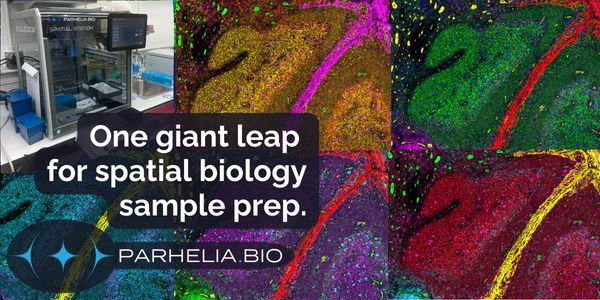
Advances in spatial biology enable scientists to visualize multiplexed biomolecules across multiple 'omics technologies at single-cell resolution. However, all of these technologies requ...
With the increasing number, complexity, and diversity of biomarkers to be tested in support of precision medicine approaches, limited tissue availability and patient health status can be bar...
Introduction to Magnetic Bead: Understand the history, development, versatility, and impact of Dynabeads magnetic beads: After listening to the podcast, learners will be able to explain the...
Homologous recombination repair deficiency (HRD) is associated with response to poly-ADP-ribose polymerase inhibition (PARPi) therapy in advanced ovarian cancer. In combination with CGP, the...
Cancer immunotherapy approaches such as adoptive transfer of chimeric antigen receptor (CAR) T cells or tumor-infiltrating lymphocytes have yielded promising results in hematological maligna...
The revolution in life science research aims to understand how single cells work, which is crucial for developing new therapies. Traditional methods like FACS and scRNASeq give only a partia...
Precision medicine aims to match the right therapy to the right patient at the right time, improving efficacy and reducing side effects. In this webinar, Dr. Hsu discusses his work to develo...
Immunotherapies, including immune checkpoint inhibitors, have emerged as promising treatments for advanced cancers. However, a subset of patients exhibits resistance to such therapies, and t...
The personalized treatment of each cancer patient with targeted therapies selected based on our understanding of the molecular biology of cancer has been the long-standing goal of precision...
Cell-based therapeutics show immense promise in treating a variety of currently incurable diseases due to their potent mechanisms. However, despite recent successes, challenges persist in ma...
Chimeric antigen receptor (CAR) T-cell therapy shows significant potential in treating various human cancers. Unfortunately, researchers have faced difficulty in adapting this therapy to tar...
Chimeric antigen receptor (CAR) T cell therapy has emerged as a novel therapeutic option for cancer patients in recent years. Despite its success, this approach faces acknowledged limitation...
Despite the remarkable clinical efficacy of chimeric antigen receptor (CAR) T cells in hematological malignancies, only a subset of patients achieve a durable complete response. Furthermore,...
Chimeric antigen receptor (CAR) T-cell therapy has been extremely successful in treating relapsed/refractory B-cell malignancies, with six CAR T-cell products now FDA approved. Unfortunately...
Cell and gene therapy is at the forefront of medical innovation, offering transformative potential for treating complex diseases. However, achieving success in these therapies requires metic...
Across the entire spectrum of the life sciences sector, from academia and hospitals to pharmaceutical and biotech companies, enormous amounts of resources are invested in the development of...
The development of cell and gene therapies faces immense pressure in terms of time and cost. Advanced therapy medicinal products (ATMPs) demand stringent quality control measures to ensure s...
The path from research discovery to effective immune cell therapies requires innovative approaches to match the challenges we face. Examining the full richness of biological complexity&mdash...
Gene therapy is defined as the treatment of disease by transfer of genetic material into cells, to prevent, treat and potentially even cure a disease. Gene therapies can work by several mech...
Inborn errors of metabolism (IEMs) are rare, devastating disorders caused by pathogenic variants in genes encoding key metabolic enzymes, with the liver playing a critical role in over 140 I...
A fundamental challenge for cystic fibrosis (CF) gene therapy is ensuring sufficient transduction of airway epithelial cells to achieve therapeutic correction. Vehicles such as lysophosphati...
Discover how targeting RNA-binding motif protein 39 (RBM39) is unlocking new possibilities in cancer treatment. RBM39, a key player in transcriptional regulation, alternative splicing, and p...
To determine efficacy of specific complementary therapies to advance evidence-based, integrative healthcare, the complementary modality should first be introduced to stakeholders to determin...
Engineered immune cell therapies offer the promise of more tailored interventions than traditional systemic checkpoint blockades, but so far remain ineffective across the majority of clinica...
Advances in spatial biology enable scientists to visualize multiplexed biomolecules across multiple 'omics technologies at single-cell resolution. However, all of these technologies requ...
With the increasing number, complexity, and diversity of biomarkers to be tested in support of precision medicine approaches, limited tissue availability and patient health status can be bar...
Introduction to Magnetic Bead: Understand the history, development, versatility, and impact of Dynabeads magnetic beads: After listening to the podcast, learners will be able to explain the...
Homologous recombination repair deficiency (HRD) is associated with response to poly-ADP-ribose polymerase inhibition (PARPi) therapy in advanced ovarian cancer. In combination with CGP, the...
Cancer immunotherapy approaches such as adoptive transfer of chimeric antigen receptor (CAR) T cells or tumor-infiltrating lymphocytes have yielded promising results in hematological maligna...
The revolution in life science research aims to understand how single cells work, which is crucial for developing new therapies. Traditional methods like FACS and scRNASeq give only a partia...
Precision medicine aims to match the right therapy to the right patient at the right time, improving efficacy and reducing side effects. In this webinar, Dr. Hsu discusses his work to develo...
Immunotherapies, including immune checkpoint inhibitors, have emerged as promising treatments for advanced cancers. However, a subset of patients exhibits resistance to such therapies, and t...
The personalized treatment of each cancer patient with targeted therapies selected based on our understanding of the molecular biology of cancer has been the long-standing goal of precision...
Cell-based therapeutics show immense promise in treating a variety of currently incurable diseases due to their potent mechanisms. However, despite recent successes, challenges persist in ma...
Chimeric antigen receptor (CAR) T-cell therapy shows significant potential in treating various human cancers. Unfortunately, researchers have faced difficulty in adapting this therapy to tar...
Chimeric antigen receptor (CAR) T cell therapy has emerged as a novel therapeutic option for cancer patients in recent years. Despite its success, this approach faces acknowledged limitation...
Despite the remarkable clinical efficacy of chimeric antigen receptor (CAR) T cells in hematological malignancies, only a subset of patients achieve a durable complete response. Furthermore,...
Chimeric antigen receptor (CAR) T-cell therapy has been extremely successful in treating relapsed/refractory B-cell malignancies, with six CAR T-cell products now FDA approved. Unfortunately...

 Follow