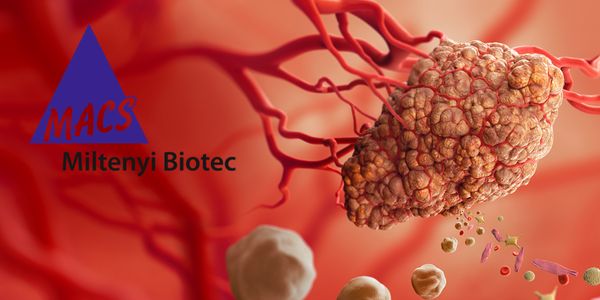
Tumor heterogeneity describes differences between tumors. Tumor heterogeneity can refer to differences between (1) tumors in different patients, (2) cancer cells in an individual patient's tumor, or (3) a primary and metastatic tumor. Understanding the heterogeneity of a tumor can facilitate diagnosis and treatment.
Current methods to treat malignant brain tumors are highly intrusive, leading to poor quality of life with abysmal patient survival rates. Combined with radiation therapy, first/second-line...
In line with the role of T cells as critical mediators of the adaptive immune response, recombinational and junctional diversity of the T cell receptor makes each T cell almost entirely uniq...
Brain malignancies can either originate from within the CNS (gliomas) or invade from other locations in the body (metastases). A highly immunosuppressive tumor microenvironment (TME) influen...
DATE: June 26, 2020 TIME: 8:00am PT Structural variants (SVs) are an important source of genetic variation in the human genome and they are involved in a multitude of human diseases as well...
The RNAscope in situ hybridization technology allows high sensitivity, specificity and spatial resolution providing pivotal single-cell gene expression information to gain better insights in...
A key step in the clinical production of CAR T cells is the expansion of engineered T cells. To generate enough cells for viable adoptive cell therapy, cells must be robustly stimulated, whi...
B cells have recently come into vogue as important contributors to the anti-tumor immune response in cancer patients. Specifically, B cells and the immune structures in which they reside (te...
Background: Acute myeloid leukemia (AML) is a molecularly and clinically heterogeneous hematological malignancy. Despite recent advancements in the treatment of AML, approximately 50% of pat...
Metastatic prostate cancer (mPC) is a phenotypically diverse disease with poor responses to immune based therapeutics. Development of immunotherapeutic strategies for mPC is hampered by the...
The RNAscope in situ hybridization technology allows high sensitivity, specificity and spatial resolution providing pivotal single-cell gene expression information to gain better insights in...
Increasing evidence suggests that targeted sequencing of cell free DNA (cfDNA) can provide a comprehensive molecular portrait of solid tumors. However, the concordance between tissue and cfD...
Increasing evidence suggests that targeted sequencing of cell free DNA (cfDNA) can provide a comprehensive molecular portrait of solid tumors. However, the concordance between tissue and cfD...
Date: April 29, 2020 Time: 8:00AM PDT, 11:00AM EDT Single cell genomics and other next generation sequencing applications depend strongly on adequate upstream sample preparation. Results can...
DATE: April 28, 2020 TIME: 10:00am PT All cells release extracellular vesicles (EVs) that can carry molecular cargo to other cells to affect their function. EVs are promising as potential bi...
Digital spatial profiling (DSP) on the NanoString GeoMx platform enables high plex molecular profiling of clinical tissue samples. This new profiling strategy enables deep insights into the...
Recent advances in DNA sequencing and omics-based capabilities are revealing incredible therapeutic opportunities and quickly transforming drug discovery. Molecularly targeted drugs aim to e...
“The poor translatability of early-stage preclinical models is a major setback in oncology drug development. Immortalized cell lines, that are extensively used in drug screens, undergo...
DATE: November 21, 2019TIME: 8:00am PSTA complex interaction among heterogenous immune and tumor cells within the tumorous tissue not only influences tumor progression, but can also sha...
DATE: November 12, 2019TIME: 10:00am PSTDirect measurement of copy number by droplet-based shallow sequencing of genomic DNA has the potential to provide new insights into tumor heterog...
DATE: September 17, 2019TIME: 9:00am PTSpatial Transcriptomics (ST) technology reveals gene expression from up to one thousand spots across a tissue section. In this webinar, Dr. H...
Tumor heterogeneity is a hallmark of cancer and can have significant impact on identifying drivers, including those that may be therapeutically relevant. Although, the traditional sequencing...
Virtually all tumors are genetically heterogeneous, containing subclonal populations of cells that are defined by distinct mutations. Subclones can have unique phenotypes that influence disea...
DATE: June 19, 2019TIME: 8:00am PDT, 11:00am EDT Approximately 80% of all cancers are known to be affected by both somatic mutations and copy number changes. Furthermore, r...
Current methods to treat malignant brain tumors are highly intrusive, leading to poor quality of life with abysmal patient survival rates. Combined with radiation therapy, first/second-line...
In line with the role of T cells as critical mediators of the adaptive immune response, recombinational and junctional diversity of the T cell receptor makes each T cell almost entirely uniq...
Brain malignancies can either originate from within the CNS (gliomas) or invade from other locations in the body (metastases). A highly immunosuppressive tumor microenvironment (TME) influen...
DATE: June 26, 2020 TIME: 8:00am PT Structural variants (SVs) are an important source of genetic variation in the human genome and they are involved in a multitude of human diseases as well...
The RNAscope in situ hybridization technology allows high sensitivity, specificity and spatial resolution providing pivotal single-cell gene expression information to gain better insights in...
A key step in the clinical production of CAR T cells is the expansion of engineered T cells. To generate enough cells for viable adoptive cell therapy, cells must be robustly stimulated, whi...
B cells have recently come into vogue as important contributors to the anti-tumor immune response in cancer patients. Specifically, B cells and the immune structures in which they reside (te...
Background: Acute myeloid leukemia (AML) is a molecularly and clinically heterogeneous hematological malignancy. Despite recent advancements in the treatment of AML, approximately 50% of pat...
Metastatic prostate cancer (mPC) is a phenotypically diverse disease with poor responses to immune based therapeutics. Development of immunotherapeutic strategies for mPC is hampered by the...
The RNAscope in situ hybridization technology allows high sensitivity, specificity and spatial resolution providing pivotal single-cell gene expression information to gain better insights in...
Increasing evidence suggests that targeted sequencing of cell free DNA (cfDNA) can provide a comprehensive molecular portrait of solid tumors. However, the concordance between tissue and cfD...
Increasing evidence suggests that targeted sequencing of cell free DNA (cfDNA) can provide a comprehensive molecular portrait of solid tumors. However, the concordance between tissue and cfD...
Date: April 29, 2020 Time: 8:00AM PDT, 11:00AM EDT Single cell genomics and other next generation sequencing applications depend strongly on adequate upstream sample preparation. Results can...
DATE: April 28, 2020 TIME: 10:00am PT All cells release extracellular vesicles (EVs) that can carry molecular cargo to other cells to affect their function. EVs are promising as potential bi...
Digital spatial profiling (DSP) on the NanoString GeoMx platform enables high plex molecular profiling of clinical tissue samples. This new profiling strategy enables deep insights into the...
Recent advances in DNA sequencing and omics-based capabilities are revealing incredible therapeutic opportunities and quickly transforming drug discovery. Molecularly targeted drugs aim to e...
“The poor translatability of early-stage preclinical models is a major setback in oncology drug development. Immortalized cell lines, that are extensively used in drug screens, undergo...
DATE: November 21, 2019TIME: 8:00am PSTA complex interaction among heterogenous immune and tumor cells within the tumorous tissue not only influences tumor progression, but can also sha...
DATE: November 12, 2019TIME: 10:00am PSTDirect measurement of copy number by droplet-based shallow sequencing of genomic DNA has the potential to provide new insights into tumor heterog...
DATE: September 17, 2019TIME: 9:00am PTSpatial Transcriptomics (ST) technology reveals gene expression from up to one thousand spots across a tissue section. In this webinar, Dr. H...
Tumor heterogeneity is a hallmark of cancer and can have significant impact on identifying drivers, including those that may be therapeutically relevant. Although, the traditional sequencing...
Virtually all tumors are genetically heterogeneous, containing subclonal populations of cells that are defined by distinct mutations. Subclones can have unique phenotypes that influence disea...
DATE: June 19, 2019TIME: 8:00am PDT, 11:00am EDT Approximately 80% of all cancers are known to be affected by both somatic mutations and copy number changes. Furthermore, r...
Opens in a new windowOpens an external siteOpens an external site in a new window

 Follow