 Follow
High Throughput Screening
High Throughput Screening: a method for scientific experimentation especially used in drug discovery and relevant to the fields of biology and chemistry[1][2]. Using robotics, data processing/control software, liquid handling devices, and sensitive detectors, high-throughput screening allows a researcher to quickly conduct millions of chemical, genetic, or pharmacological tests. Through this process one can rapidly identify active compounds, antibodies, or genes that modulate a particular biomolecular pathway.

MAY 20, 2020 | 12:00 AM

Proteins are the functional blocks of any biological entity from 50 nm sized viruses to the 100 ft long mammals (blue whale). They perform intra cellular, tissue, organ, system, or organism...
MAY 20, 2020 | 12:00 AM

The amount of data that is produced each day is mind boggling. Over 2.5 quintillion bytes of data are created every single day, and this number continues to grow every single day. This year...
MAY 20, 2020 | 12:00 AM

The basic units of biological structure and function are cells, which exhibit wide variation in regard to both type and state. We assess such variation by simultaneously profiling the transc...
MAY 20, 2020 | 12:00 AM

If you have ever worked in the field of gene-editing, then you must know the powerful gene-editing technology known as CRISPR. It has the potential to alter science and biotechnology at an i...
MAY 12, 2020 | 9:00 AM

NEW DATE: Date: May 12, 2020 Time: 9:00am PDT, 12:00pm EDT...
MAY 07, 2020 | 7:00 AM

DATE: May 7, 2020 TIME: 7:00am PT As cost of sequencing continues to drop, the throughput and complexity of NGS assays have risen precipitously. At the same time, the types of samples being...
APR 30, 2020 | 9:00 AM

DATE: April 30, 2020 TIME: 9:00am PT, 12:00pm ET Loss-of-function studies are an established method for uncovering a gene’s role in a biological pathway or disease state. The advent of...

APR 29, 2020 | 6:00 AM

Histone post-translational modifications (PTMs) play pivotal roles in chromatin dynamics and function, with alterations in the healthy profile associated with diverse human pathologies. The...
APR 07, 2020 | 8:00 AM
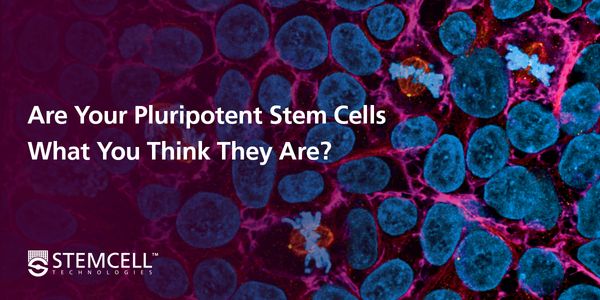
DATE: April 7, 2020 TIME: 8:00am PT, 11:00am ET This webinar sets out to establish why quality control is key to robust, reliable, reproducible science. We will look at best practice criteri...
MAR 31, 2020 | 7:00 AM

DATE: March 31, 2020 TIME: 7:00am PT, 10:00am PT Please join us for this webinar, during which we will present and discuss the promotion of NK cell-driven tumor immunity. In addition, we wil...
MAR 25, 2020 | 6:00 AM

Household produce varieties such as ‘Red Delicious,’ ‘Campari,’ and ‘Earlidew’ have been selectively bred and have been enhanced for flavor since the 1990...