Conservation Biology and Wildlife: the science of managing native plants and animals. It aims to limit the effects of environmental degradation, climate change and the loss of biodiversity. Conservation biology is tied closely to ecology in researching the population ecology (dispersal, migration, demographics, effective population size, inbreeding depression, and minimum population viability) of rare or endangered species.[12][13] Conservation biology is concerned with phenomena that affect the maintenance, loss, and restoration of biodiversity and the science of sustaining evolutionary processes that engender genetic, population, species, and ecosystem diversity.
Management of complex quality control (QC) data is essential to insure high quality patient care and maintain regulatory compliance within clinical laboratories. Robust software solutions fo...
Dramatic responses observed with targeted agents in the ‘right’ genomic context have fueled large scale sequencing efforts to identify ‘effective’ treatments for a giv...
In today's presentation I will give an overview to developing NextGen ADCs. We will discuss everything from the beginning stages of development to the varying ADC combination therapies av...
NTRK fusions are rare but important recent biomarkers linked to response to new TRK inhibitors. Comprehensive genomic profiling on all solid tumors permits detection of rare genomic events an...
Surgery is the first line of treatment for Stage III melanoma. Often adjuvant therapy is administered post-surgery, which can include weeks of radiation, chemotherapy, targeted drug therapy,...
The last two decades have seen an explosion in the volume of oncology data generated using next-generation sequencing (NGS) and multi-omics techniques. As a result, there is a growing need fo...
DATE: February 26, 2019TIME: 11:00am PST, 2:00pm EST Osteosarcoma is the most common type of primary bone cancer affecting adolescents and children attributed to...
Comparative oncology is the study of naturally-occurring cancers in pet animals (mainly dogs) to broaden and deepen our collective understanding of cancers in both companion species and human...
DATE: January 16th, 2019TIME: 9:00AM PDT, 12:00PM EDTDr. Kamat will present his clinical experience using molecular markers, in addition to the standard of care,to examine pat...
DATE: November 20, 2018’TIME: 3:00pm WET Today, hematology analyzers can collect vast amounts of data about cell characteristics, that subsequently improve...
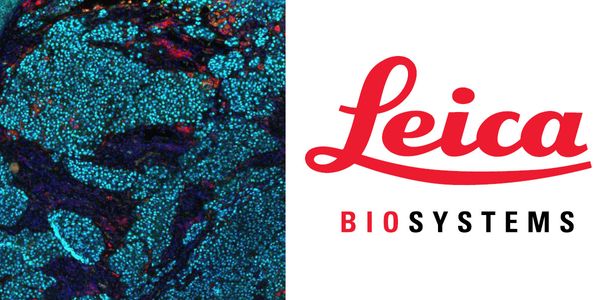
DATE: November 15, 2018TIME: 10:00am PT, 1:00pm ET Multiplex fluorescence immunohistochemistry offers a window into the biology of human disease, enabling the ana...
Clinical testing with next generation sequencing requires a complex bioinformatics pipeline to process raw DNA sequence into interpretable variants for medical reporting. With sequencin...
DATE: November 7, 2018TIME: 8:00PM PSTExosomes have been shown to have significant roles in cancer including disease progression acting in the tumor micro-environment, metasta...
DATE: November 7, 2018TIME: 7:00AM PDTExosomes have been shown to have significant roles in cancer including disease progression acting in the tumor micro-environment, metastasis a...
The success of immune checkpoint blockade adds a new therapeutic category to the cancer therapy repertoire. Despite efforts made on cancer cell and immune cell interaction, how cancer cells i...
Alongside intense efforts to exploit T-cells as immunotherapies for cancer (e.g. checkpoint inhibitors, CAR-T, T-cell metabolism), researchers are increasingly considering other immune cell t...
Recent work has identified epigenomic features of distal regulatory elements to be dynamic and defining indicators of cellular specification and transformation. Of particular relevance is our...
As the most common female malignancy, breast cancer is the most likely reason that a woman will die of cancer around the world. Breast cancer mortality has dropped in the U.S. by 35% since 19...
Lung cancer is the leading cause of cancer-related mortality worldwide. Large-scale sequencing studies have revealed the complex genomic landscape of NSCLC and genomic differences between lun...
Although targeted therapies often elicit profound initial patient responses, these effects are transient due to residual disease leading to acquired resistance. How tumors transition between...
Two projects looking at novel approaches to targeting inflammatory breast cancer will be presented. Inflammatory breast cancer (IBC) is a unique, understudied, and most lethal subtype account...
Antibodies are extremely valuable and ubiquitous tools in life science research, but in spite of their widespread use in immunoassays over the past several decades, there is still a lack of u...
In the last two decades, large amount of next-generation sequencing (NGS) and -omics data has been generated in the field of immuno-oncology. Generating hypotheses by analyzing hundreds if no...
The oncogenic transcription factor c-MYC (MYC) is deregulated, and often overexpressed, in more than 50% of cancers. MYC deregulation is associated with poor prognosis and aggressive disease,...
Management of complex quality control (QC) data is essential to insure high quality patient care and maintain regulatory compliance within clinical laboratories. Robust software solutions fo...
Dramatic responses observed with targeted agents in the ‘right’ genomic context have fueled large scale sequencing efforts to identify ‘effective’ treatments for a giv...
In today's presentation I will give an overview to developing NextGen ADCs. We will discuss everything from the beginning stages of development to the varying ADC combination therapies av...
NTRK fusions are rare but important recent biomarkers linked to response to new TRK inhibitors. Comprehensive genomic profiling on all solid tumors permits detection of rare genomic events an...
Surgery is the first line of treatment for Stage III melanoma. Often adjuvant therapy is administered post-surgery, which can include weeks of radiation, chemotherapy, targeted drug therapy,...
The last two decades have seen an explosion in the volume of oncology data generated using next-generation sequencing (NGS) and multi-omics techniques. As a result, there is a growing need fo...
DATE: February 26, 2019TIME: 11:00am PST, 2:00pm EST Osteosarcoma is the most common type of primary bone cancer affecting adolescents and children attributed to...
Comparative oncology is the study of naturally-occurring cancers in pet animals (mainly dogs) to broaden and deepen our collective understanding of cancers in both companion species and human...
DATE: January 16th, 2019TIME: 9:00AM PDT, 12:00PM EDTDr. Kamat will present his clinical experience using molecular markers, in addition to the standard of care,to examine pat...
DATE: November 20, 2018’TIME: 3:00pm WET Today, hematology analyzers can collect vast amounts of data about cell characteristics, that subsequently improve...
DATE: November 15, 2018TIME: 10:00am PT, 1:00pm ET Multiplex fluorescence immunohistochemistry offers a window into the biology of human disease, enabling the ana...
Clinical testing with next generation sequencing requires a complex bioinformatics pipeline to process raw DNA sequence into interpretable variants for medical reporting. With sequencin...
DATE: November 7, 2018TIME: 8:00PM PSTExosomes have been shown to have significant roles in cancer including disease progression acting in the tumor micro-environment, metasta...
DATE: November 7, 2018TIME: 7:00AM PDTExosomes have been shown to have significant roles in cancer including disease progression acting in the tumor micro-environment, metastasis a...
The success of immune checkpoint blockade adds a new therapeutic category to the cancer therapy repertoire. Despite efforts made on cancer cell and immune cell interaction, how cancer cells i...
Alongside intense efforts to exploit T-cells as immunotherapies for cancer (e.g. checkpoint inhibitors, CAR-T, T-cell metabolism), researchers are increasingly considering other immune cell t...
Recent work has identified epigenomic features of distal regulatory elements to be dynamic and defining indicators of cellular specification and transformation. Of particular relevance is our...
As the most common female malignancy, breast cancer is the most likely reason that a woman will die of cancer around the world. Breast cancer mortality has dropped in the U.S. by 35% since 19...
Lung cancer is the leading cause of cancer-related mortality worldwide. Large-scale sequencing studies have revealed the complex genomic landscape of NSCLC and genomic differences between lun...
Although targeted therapies often elicit profound initial patient responses, these effects are transient due to residual disease leading to acquired resistance. How tumors transition between...
Two projects looking at novel approaches to targeting inflammatory breast cancer will be presented. Inflammatory breast cancer (IBC) is a unique, understudied, and most lethal subtype account...
Antibodies are extremely valuable and ubiquitous tools in life science research, but in spite of their widespread use in immunoassays over the past several decades, there is still a lack of u...
In the last two decades, large amount of next-generation sequencing (NGS) and -omics data has been generated in the field of immuno-oncology. Generating hypotheses by analyzing hundreds if no...
The oncogenic transcription factor c-MYC (MYC) is deregulated, and often overexpressed, in more than 50% of cancers. MYC deregulation is associated with poor prognosis and aggressive disease,...

 Follow