Conservation Biology and Wildlife: the science of managing native plants and animals. It aims to limit the effects of environmental degradation, climate change and the loss of biodiversity. Conservation biology is tied closely to ecology in researching the population ecology (dispersal, migration, demographics, effective population size, inbreeding depression, and minimum population viability) of rare or endangered species.[12][13] Conservation biology is concerned with phenomena that affect the maintenance, loss, and restoration of biodiversity and the science of sustaining evolutionary processes that engender genetic, population, species, and ecosystem diversity.

Blockade of CTLA-4 and PD-1, members of the B7/CD28 family, have proven to be the most successful cancer immunotherapies to date. While the current therapeutic focus remains on B7/CD28 family...
Copy-number alterations and chromosomal translocations are widespread in cancer and frequently causing oncogenic mutations that drive tumorigenesis and therapy resistance. Despite their preva...
The introduction of robot-assisted surgical technology into urological practice, has introduced new horizons for reducing the morbidity and enhancing the efficacy of surgery. Open radical cys...
A subset of women with ovarian cancer will present with an apparently isolated adnexal mass. Many of these women will have early stage ovarian cancer with a relatively good prognosis. Unfortu...
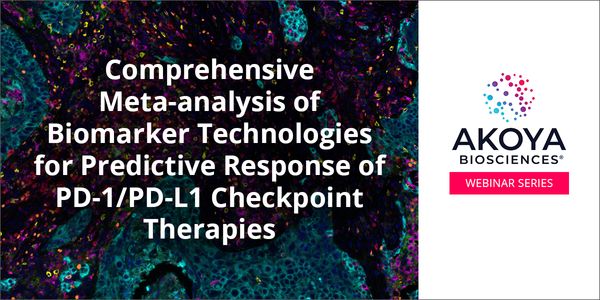
DATE: August 27, 2019 TIME: 9:00am PDT, 12:00pm EDT Immunotherapies targeting PD-1 or PD-L1 have proven remarkably effective for treating cancer in some patients, with considerabl...
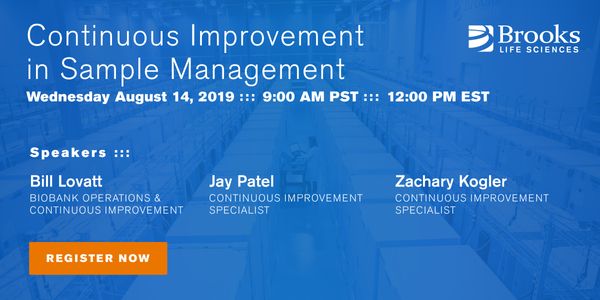
DATE: August 14, 2019TIME: 9:00am PT. 12:00pm ET Implementation of Lean Methodology in Biobanking Operations to standardize sample management processes is effective. Each proce...
DATE: July 30, 2019TIME: 6:00am PT, 9:00am ET The current version of the EMA Guideline for the environmental risk assessment of human drugs was published in 2006. This guidance...
DATE: July 23, 2019TIME: 10:00am PDTThe tumor microenvironment is a complex network of different cell types and states that imparts distinct properties to the tumor and plays a signif...
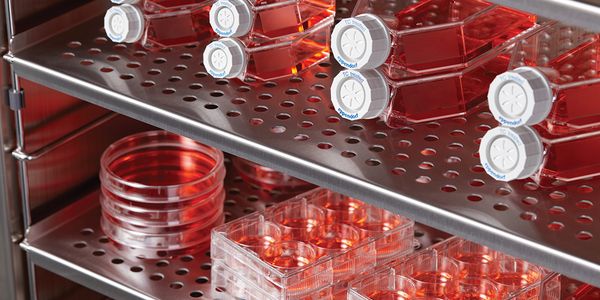
DATE: June 5, 2019TIME: 8:00am PDT, 11:00am EDT, 5:00pm CEST Eukaryotic cell cultures respond to the most subtle influence. Apart from the risk of contamination, minimal chan...
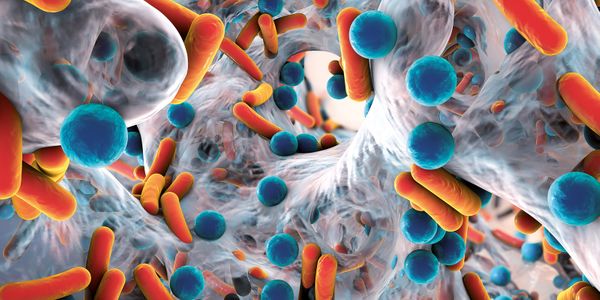
DATE: May 16, 2019TIME: 7:00am PDT, 10:00am EDT, 4:00pm CEST The emergence of NGS is revolutionizing the microbiological sciences and transforming medicine. Deep sequencing has...
Integration of technology is influencing practice in the clinical laboratory and treatment of patients in the clinical practice arena. As laboratories begin to move from a volume to value mod...
Myeloid leukemias encompass a group of different diseases that include myeloproliferative neoplasms (MPN), myelodysplastic syndrome (MDS) or acute myeloid leukemia (AML). These diseases are d...
The exponential advents of advances in techniques and types of molecular diagnostic testing, and modifying strategies for these tests, are encouraging; but these evolutions simultaneously con...
The prevailing philosophy in biological testing has been to focus on simple tests with easy to interpret information such as ELISA or lateral flow assays. At the same time, there has been a d...

Personalized medicine driven by genomic-based treatments continues to increase in importance. Representatives from two distinct healthcare entities – a regional reference lab and commun...
Determining which patients would derive clinical benefit from immunotherapy is a compelling clinical question. Biomarkers have been shown to predict therapy outcome in various types of cancer...
CRISPR-chip combines two powerful technologies ,CRISPR and Graphene, for rapid detection of nucleic acids. This talk will focus on design and fabrication of CRISPR-chip and its potential util...
QIAGEN helps your team focus on the opportunities, not the obstacles, with an end-to-end clinical testing solution. During this talk, we will present our clinical decision support solutions,...
The BRCA1 and BRCA2 genes represent the best examples of the modern understanding of cancer molecular genetics. Testing for germline and somatic mutations in BRCA 1/2 has gradually become com...
Regulatory requirements for verification and validation are complex and often cause confusion among clinical laboratorians, especially in regards to quantitative molecular assays. This presen...
The laboratory diagnosis of infectious diseases has traditionally relied on recovery of pathogens in cultures and for many infections, this approach remains the standard of care. The developm...
As reimbursement changes and healthcare moves towards value-based models, the clinical laboratory is faced with the challenge of redefining its value outside the cost per test. This session...
Rapid, inexpensive, and sensitive nucleic acid detection may aid point-of-care pathogen detection, genotyping, and disease monitoring. We combine the RNA- targeting CRISPR effector Cas13 with...
Blockade of CTLA-4 and PD-1, members of the B7/CD28 family, have proven to be the most successful cancer immunotherapies to date. While the current therapeutic focus remains on B7/CD28 family...
Copy-number alterations and chromosomal translocations are widespread in cancer and frequently causing oncogenic mutations that drive tumorigenesis and therapy resistance. Despite their preva...
The introduction of robot-assisted surgical technology into urological practice, has introduced new horizons for reducing the morbidity and enhancing the efficacy of surgery. Open radical cys...
A subset of women with ovarian cancer will present with an apparently isolated adnexal mass. Many of these women will have early stage ovarian cancer with a relatively good prognosis. Unfortu...
DATE: August 27, 2019 TIME: 9:00am PDT, 12:00pm EDT Immunotherapies targeting PD-1 or PD-L1 have proven remarkably effective for treating cancer in some patients, with considerabl...
DATE: August 14, 2019TIME: 9:00am PT. 12:00pm ET Implementation of Lean Methodology in Biobanking Operations to standardize sample management processes is effective. Each proce...
DATE: July 30, 2019TIME: 6:00am PT, 9:00am ET The current version of the EMA Guideline for the environmental risk assessment of human drugs was published in 2006. This guidance...
DATE: July 23, 2019TIME: 10:00am PDTThe tumor microenvironment is a complex network of different cell types and states that imparts distinct properties to the tumor and plays a signif...
DATE: June 5, 2019TIME: 8:00am PDT, 11:00am EDT, 5:00pm CEST Eukaryotic cell cultures respond to the most subtle influence. Apart from the risk of contamination, minimal chan...
DATE: May 16, 2019TIME: 7:00am PDT, 10:00am EDT, 4:00pm CEST The emergence of NGS is revolutionizing the microbiological sciences and transforming medicine. Deep sequencing has...
Integration of technology is influencing practice in the clinical laboratory and treatment of patients in the clinical practice arena. As laboratories begin to move from a volume to value mod...
Myeloid leukemias encompass a group of different diseases that include myeloproliferative neoplasms (MPN), myelodysplastic syndrome (MDS) or acute myeloid leukemia (AML). These diseases are d...
The exponential advents of advances in techniques and types of molecular diagnostic testing, and modifying strategies for these tests, are encouraging; but these evolutions simultaneously con...
The prevailing philosophy in biological testing has been to focus on simple tests with easy to interpret information such as ELISA or lateral flow assays. At the same time, there has been a d...

Personalized medicine driven by genomic-based treatments continues to increase in importance. Representatives from two distinct healthcare entities – a regional reference lab and commun...
Determining which patients would derive clinical benefit from immunotherapy is a compelling clinical question. Biomarkers have been shown to predict therapy outcome in various types of cancer...
CRISPR-chip combines two powerful technologies ,CRISPR and Graphene, for rapid detection of nucleic acids. This talk will focus on design and fabrication of CRISPR-chip and its potential util...
QIAGEN helps your team focus on the opportunities, not the obstacles, with an end-to-end clinical testing solution. During this talk, we will present our clinical decision support solutions,...
The BRCA1 and BRCA2 genes represent the best examples of the modern understanding of cancer molecular genetics. Testing for germline and somatic mutations in BRCA 1/2 has gradually become com...
Regulatory requirements for verification and validation are complex and often cause confusion among clinical laboratorians, especially in regards to quantitative molecular assays. This presen...
The laboratory diagnosis of infectious diseases has traditionally relied on recovery of pathogens in cultures and for many infections, this approach remains the standard of care. The developm...
As reimbursement changes and healthcare moves towards value-based models, the clinical laboratory is faced with the challenge of redefining its value outside the cost per test. This session...
Rapid, inexpensive, and sensitive nucleic acid detection may aid point-of-care pathogen detection, genotyping, and disease monitoring. We combine the RNA- targeting CRISPR effector Cas13 with...