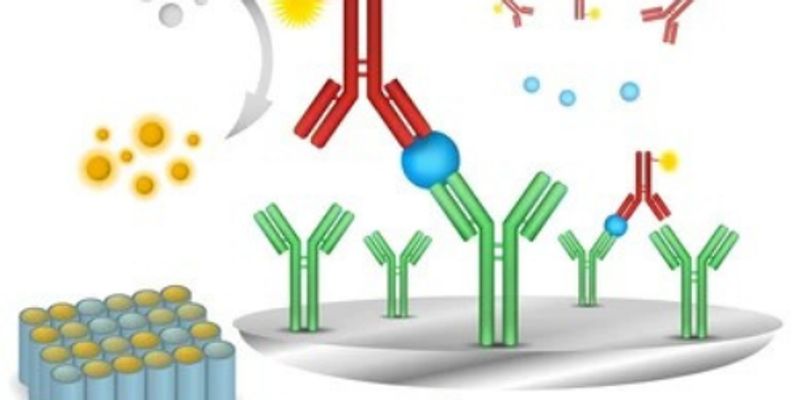
An immunoassay is a biochemical test that measures the presence or concentration of a macromolecule or a small molecule in a solution through the use of an antibody or an antigen. Immunoassays come in many different formats and variations, and may be run in multiple steps with reagents being added and washed away or separated at different points in the assay. Credit: Shutterstock
As one of the nation's most prevalent sexually transmitted infections, genital herpes represents a diagnostic and therapeutic challenge to clinicians, laboratorians and the patients they...
As hospitals and healthcare systems move toward value-based care, new management systems are needed to measure and improve clinical processes. This presents both an opportunity and a ch...
Medical Technology Partner’s presentation is designed highlight what Medicare is proposing to do based on the Protecting Access to Medicare Act of April 1, 2014 with regard to clinical...
This lecture will provide attendees with the knowledge and skills to bring on new clinical laboratory tests in clinical chemistry and molecular diagnostics. The lecture will provide a general...
Diagnosis and management of CKD requires a spectrum of diagnostic tests to not only diagnose kidney function but also determine the status of other complications due to CKD, including creatin...
In November of 2013 the AHA/ACA jointly proposed new guidelines for the management of hypercholesterolemia, the first full update in over a decade. The charge was to create evidence bas...
DNASTAR offers an integrated suite of software for accurate assembly, alignment, and analysis of sequence data from all major next-generation sequencing platforms, supporting key workflows in...
Aggressive low-density lipoprotein cholesterol (LDL-C) lowering strategies are recommended for prevention of cardiovascular events in high-risk populations. Guidelines recommend a 30-50% redu...
Liquid chromatography triple quadrupole mass spectrometry (LC/MS/MS) is ideally suited for the direct and rapid analysis of prepared biological samples. While analysis times can be shortened...
Until recently most of the phenotypic information on congenital endocrine disorders have relied on biochemical testing of steroids, biogenic amines and peptides but is now...
FDA has generally not enforced applicable regulatory requirements on a group of IVD tests called Laboratory Developed Tests. This use of “enforcement discretion” has been un...
There is agreement among clinicians that laboratory analyses are indispensable for correct diagnosis of disease, therapy, and patient monitoring. It is evident that laboratory data should be...
Drugs of abuse toxicology testing by immunoassays is widely used clinically, but also known to be inadequate for many clinical indications. In this presentation, the speaker will outline diff...
Cancer is complex, but recent findings are yielding a greater understanding of the disease. The tumor suppressor genes BRCA1 and BRCA2 are implicated in breast, ovarian, prostate, and other c...
Next-generation sequencing has emerged as a valuable tool for generating patient-specific genetic information for clinical diagnostics and optimal selection of targeted therapies. The heterog...
Is your lab constantly challenged by case back log while trying to validate new methods to identify designer drugs? Your challenge is common to many forensic toxicology labs around the world....
Control of infection from methicillin resistant Staphylococcus aureus (MRSA) has been a healthcare focus for more than 50 years. One of the reasons that active surveillance testing (AST) for...
Human microbiome projects have delivered our first glimpse into the microbial communities that reside in and on our bodies. Building on these efforts the research community has begun to corre...
Consistent accuracy in reporting quantitative viral load results is critically important to patients, their physicians and to the clinical laboratory. In clinical practice, quantitative viral...
As evidenced by the changes in the new Guide for the Care and Use of Laboratory animals and the latest AVMA Panel on Euthanasia, it is clear that there is growing concern about the care and w...
The management of animal research programs has evolved into a complex and multifaceted endeavor. Scientific discovery moves at a fast pace and our knowledge of animal science is continually...
The pre-operative assessment and post-operative is critical for successful surgical procedures which will in turn lead to high quality outcomes in research studies. The care of the animals go...
Effective workplace training in a research facility is an important key in ensuring smooth operations and high standards of animal care. Today's diverse workforce offers many benefits such a...
In the context of an experimental project requiring surgical preparation of animals, training is not only required for technicians lacking a strong surgical background but also for more exper...
As one of the nation's most prevalent sexually transmitted infections, genital herpes represents a diagnostic and therapeutic challenge to clinicians, laboratorians and the patients they...
As hospitals and healthcare systems move toward value-based care, new management systems are needed to measure and improve clinical processes. This presents both an opportunity and a ch...
Medical Technology Partner’s presentation is designed highlight what Medicare is proposing to do based on the Protecting Access to Medicare Act of April 1, 2014 with regard to clinical...
This lecture will provide attendees with the knowledge and skills to bring on new clinical laboratory tests in clinical chemistry and molecular diagnostics. The lecture will provide a general...
Diagnosis and management of CKD requires a spectrum of diagnostic tests to not only diagnose kidney function but also determine the status of other complications due to CKD, including creatin...
In November of 2013 the AHA/ACA jointly proposed new guidelines for the management of hypercholesterolemia, the first full update in over a decade. The charge was to create evidence bas...
DNASTAR offers an integrated suite of software for accurate assembly, alignment, and analysis of sequence data from all major next-generation sequencing platforms, supporting key workflows in...
Aggressive low-density lipoprotein cholesterol (LDL-C) lowering strategies are recommended for prevention of cardiovascular events in high-risk populations. Guidelines recommend a 30-50% redu...
Liquid chromatography triple quadrupole mass spectrometry (LC/MS/MS) is ideally suited for the direct and rapid analysis of prepared biological samples. While analysis times can be shortened...
Until recently most of the phenotypic information on congenital endocrine disorders have relied on biochemical testing of steroids, biogenic amines and peptides but is now...
FDA has generally not enforced applicable regulatory requirements on a group of IVD tests called Laboratory Developed Tests. This use of “enforcement discretion” has been un...
There is agreement among clinicians that laboratory analyses are indispensable for correct diagnosis of disease, therapy, and patient monitoring. It is evident that laboratory data should be...
Drugs of abuse toxicology testing by immunoassays is widely used clinically, but also known to be inadequate for many clinical indications. In this presentation, the speaker will outline diff...
Cancer is complex, but recent findings are yielding a greater understanding of the disease. The tumor suppressor genes BRCA1 and BRCA2 are implicated in breast, ovarian, prostate, and other c...
Next-generation sequencing has emerged as a valuable tool for generating patient-specific genetic information for clinical diagnostics and optimal selection of targeted therapies. The heterog...
Is your lab constantly challenged by case back log while trying to validate new methods to identify designer drugs? Your challenge is common to many forensic toxicology labs around the world....
Control of infection from methicillin resistant Staphylococcus aureus (MRSA) has been a healthcare focus for more than 50 years. One of the reasons that active surveillance testing (AST) for...
Human microbiome projects have delivered our first glimpse into the microbial communities that reside in and on our bodies. Building on these efforts the research community has begun to corre...
Consistent accuracy in reporting quantitative viral load results is critically important to patients, their physicians and to the clinical laboratory. In clinical practice, quantitative viral...
As evidenced by the changes in the new Guide for the Care and Use of Laboratory animals and the latest AVMA Panel on Euthanasia, it is clear that there is growing concern about the care and w...
The management of animal research programs has evolved into a complex and multifaceted endeavor. Scientific discovery moves at a fast pace and our knowledge of animal science is continually...
The pre-operative assessment and post-operative is critical for successful surgical procedures which will in turn lead to high quality outcomes in research studies. The care of the animals go...
Effective workplace training in a research facility is an important key in ensuring smooth operations and high standards of animal care. Today's diverse workforce offers many benefits such a...
In the context of an experimental project requiring surgical preparation of animals, training is not only required for technicians lacking a strong surgical background but also for more exper...
 Follow