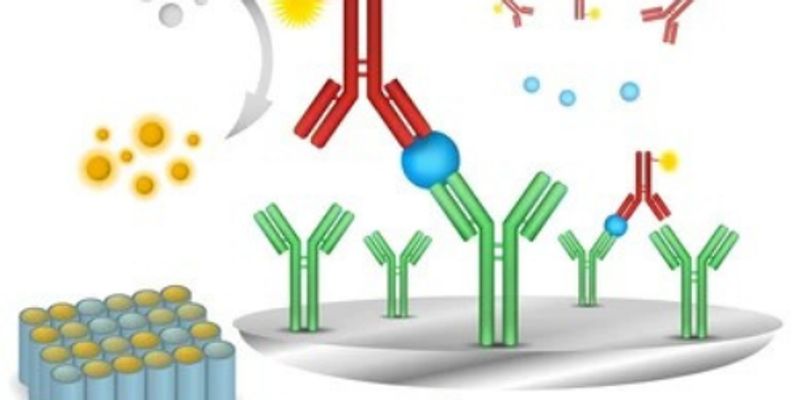
An immunoassay is a biochemical test that measures the presence or concentration of a macromolecule or a small molecule in a solution through the use of an antibody or an antigen. Immunoassays come in many different formats and variations, and may be run in multiple steps with reagents being added and washed away or separated at different points in the assay. Credit: Shutterstock
Understanding systematic biases in primary research are important for appropriate interpretation of research and recognizing features of reproducible research. Systematic biases arise from th...
Animal models have provided an important tool to help make the decision to take potential therapies from preclinical studies to humans. In the past several years, the strong reliance of the p...
Surgerized animals play a crucial role in preclinical research aimed at drug and medical device discovery into treatments for humans. When implementing new in-house surgical models to perform...
Animal studies still play a crucial role in research aimed at improving human health care. When performing animal studies, the results and their interpretation are not always straightforward....
This presentation will discuss variables in rodent colony management that can affect colony breeding efficiency, rodent health, and factors that can modulate rodent models of disease. V...
The use of laboratory animals requires education and training of persons who are to design and/or perform animal experiments. It is essential for these persons to practice various procedures...
Reproducibility refers to the ability of an experiment or study to be replicated, either by the same person or group or by others working independently. With regard to scientific public...
Is your facility providing relevant nesting material or are you just checking off a box? This presentation will discuss the importance of nesting for rodents, their behaviors, and today...
Animal studies performed on behalf of GlaxoSmithKline (GSK) are expected to uphold the core principles established by Corporate Policy 403, ‘Care, Welfare and Treatment of Animals by GS...
Translational failure in biomedicine has led to much soul-searching about the causes for this. Amongst many others (misunderstanding of statistical tests, vibration of effects, flexibility in...
Noise and vibration are very effective activators of stress pathways in rodent models that can increase variability in animal models, thereby confounding virtually every area of biomedical an...
Quality animal research is based on quality animal care and use. This is achieved by coordinating several key personnel and activities, and implementing appropriate animal care and use proced...
Why did we change focus from the 3Rs to Systematic Reviews? Questionnaires on the 3Rs have revealed that the 3R search gets no high priority and the 3R search process is never included in fun...
January 12, 2016, 8:00am PT, 11:00am ET, 3:00pm GMT
Targeted nanoparticle applications have become a major focus of translational development of both diagnostics and therapeutics for clini...
The HIV and AIDS pandemic ranks among the most devastating in recorded history. Substantial research efforts over the past 30 years have led to novel discoveries with respect to the vir...
While genomics has been used as a tool for research for many years, globally there is increasing momentum to deploy microbial genomics for routine public health microbiology. This technology...
The assessment of serum lipid and lipoprotein levels is a common procedure which affects the management of the risk of atherothrombotic cardiovascular disease (CVD) in large numbers of patien...
Currently, next-generation sequencing is not only being used for basic discovery research but also in clinical settings for translational biomarker profiling and clinical research studies inc...
Diagnostic error impacts millions of US adults and children every year1,2. Failure to order an appropriate diagnostic test and incorrect interpretation of diagnostic test results are co...
Basic research in Proteomics has led to new understanding of proteins’ contributions to health and disease, and has also driven the advancement of powerful analytical technologies used...
Hyperthyroidism is an autoimmune disorder caused by the thyroid stimulating antibody (TSI), active against the thyroid-stimulating hormone (TSH) receptor, which stimulates the gland to synthe...
Appropriate dosing of pharmaceuticals is critical to prevent sub-therapeutic efficacy or the occurrence of adverse events. However, genetic variability may significantly influence an individu...
Introduction and adoption of whole-genome sequencing has enabled new methods of investigation in the quest for answers in diagnostic odyssey cases as well as in the broader study of genetic d...
Cancer immunotherapy has demonstrated promising results. However, to date, researchers have failed to overcome the complex interplay between the immune system and the immune suppressive tumor...
Understanding systematic biases in primary research are important for appropriate interpretation of research and recognizing features of reproducible research. Systematic biases arise from th...
Animal models have provided an important tool to help make the decision to take potential therapies from preclinical studies to humans. In the past several years, the strong reliance of the p...
Surgerized animals play a crucial role in preclinical research aimed at drug and medical device discovery into treatments for humans. When implementing new in-house surgical models to perform...
Animal studies still play a crucial role in research aimed at improving human health care. When performing animal studies, the results and their interpretation are not always straightforward....
This presentation will discuss variables in rodent colony management that can affect colony breeding efficiency, rodent health, and factors that can modulate rodent models of disease. V...
The use of laboratory animals requires education and training of persons who are to design and/or perform animal experiments. It is essential for these persons to practice various procedures...
Reproducibility refers to the ability of an experiment or study to be replicated, either by the same person or group or by others working independently. With regard to scientific public...
Is your facility providing relevant nesting material or are you just checking off a box? This presentation will discuss the importance of nesting for rodents, their behaviors, and today...
Animal studies performed on behalf of GlaxoSmithKline (GSK) are expected to uphold the core principles established by Corporate Policy 403, ‘Care, Welfare and Treatment of Animals by GS...
Translational failure in biomedicine has led to much soul-searching about the causes for this. Amongst many others (misunderstanding of statistical tests, vibration of effects, flexibility in...
Noise and vibration are very effective activators of stress pathways in rodent models that can increase variability in animal models, thereby confounding virtually every area of biomedical an...
Quality animal research is based on quality animal care and use. This is achieved by coordinating several key personnel and activities, and implementing appropriate animal care and use proced...
Why did we change focus from the 3Rs to Systematic Reviews? Questionnaires on the 3Rs have revealed that the 3R search gets no high priority and the 3R search process is never included in fun...
January 12, 2016, 8:00am PT, 11:00am ET, 3:00pm GMT
Targeted nanoparticle applications have become a major focus of translational development of both diagnostics and therapeutics for clini...
The HIV and AIDS pandemic ranks among the most devastating in recorded history. Substantial research efforts over the past 30 years have led to novel discoveries with respect to the vir...
While genomics has been used as a tool for research for many years, globally there is increasing momentum to deploy microbial genomics for routine public health microbiology. This technology...
The assessment of serum lipid and lipoprotein levels is a common procedure which affects the management of the risk of atherothrombotic cardiovascular disease (CVD) in large numbers of patien...
Currently, next-generation sequencing is not only being used for basic discovery research but also in clinical settings for translational biomarker profiling and clinical research studies inc...
Diagnostic error impacts millions of US adults and children every year1,2. Failure to order an appropriate diagnostic test and incorrect interpretation of diagnostic test results are co...
Basic research in Proteomics has led to new understanding of proteins’ contributions to health and disease, and has also driven the advancement of powerful analytical technologies used...
Hyperthyroidism is an autoimmune disorder caused by the thyroid stimulating antibody (TSI), active against the thyroid-stimulating hormone (TSH) receptor, which stimulates the gland to synthe...
Appropriate dosing of pharmaceuticals is critical to prevent sub-therapeutic efficacy or the occurrence of adverse events. However, genetic variability may significantly influence an individu...
Introduction and adoption of whole-genome sequencing has enabled new methods of investigation in the quest for answers in diagnostic odyssey cases as well as in the broader study of genetic d...
Cancer immunotherapy has demonstrated promising results. However, to date, researchers have failed to overcome the complex interplay between the immune system and the immune suppressive tumor...
 Follow