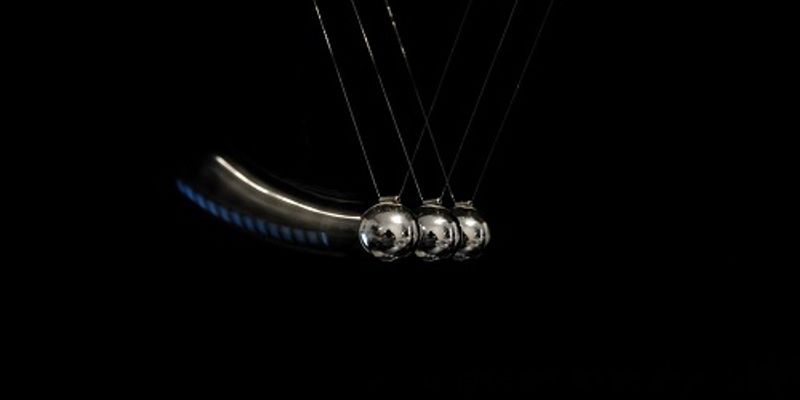
Mechanics: an area of science concerned with the behaviour of physical bodies when subjected to forces or displacements, and the subsequent effects of the bodies on their environment. During the early modern period, scientists such as Galileo, Kepler, and Newton, laid the foundation for what is now known as classical mechanics. It is a branch of classical physics that deals with particles that are either at rest or are moving with velocities significantly less than the speed of light. It can also be defined as a branch of science which deals with the motion of and forces on objects.
DATE: October 6, 2020 TIME: 10:00am (PDT) The enumeration and analysis of blood cells with automated haematology analysers have significantly improved in recent years due to advances in cell...
RNA plays important and diverse roles in biology, but molecular tools to manipulate and measure RNA are limited. We demonstrate that RNA-targeting CRISPR effector Cas13 can be engineered for...
The CRISPR/Cas genome editing system has revolutionized nearly every aspect of the life science industry. Until recently, the most used formats for this technology have been plasmids, mRNA,...
The adenosine analogue remdesivir has emerged as a front-line antiviral treatment for SARS-CoV-2, with preliminary evidence that it reduces the duration and severity of illness. Prior clinic...
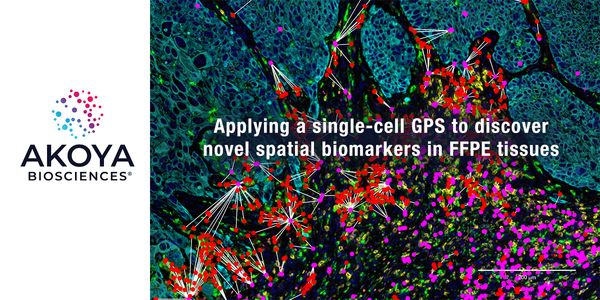
Date: September 28, 2020 Time: 5:00pm (PDT), 8:00am (HKT), 9:00am (JST) Although there have been dramatic advances in the field of single-cell sequencing, current methods cannot be applied t...
Extracellular ligands bind to receptors on the cell surface leading to receptor internalization. Once internalized into small vesicles, the vesicles fuse with an organelle known as the sorti...
Extracellular vesicles (EVs) are nanosized vesicles containing active proteins, lipids, and different types of genetic material such as non coding RNA species, related to the characteristics...
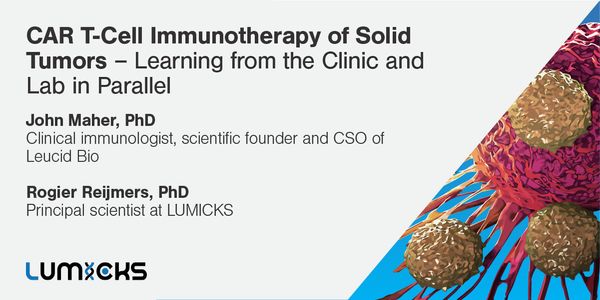
Date: Time: Over the last couple of years, it has become apparent that affinity-tuned CAR T cells display enhanced expansion and prolonged persistence in patients and that this strategy can...
Come join us for a live chat with Bernd Bodenmiller. When you enter the meeting room you can raise your hand to be unmuted by our moderator to ask your questions or just introduce yourself a...
Single-cell mass cytometry identifies mechanisms of resistance to immunotherapy in AML 6:30–7:00 am PDT Presented By: Shelley Herbrich, PhD Understanding CD19 negative relapse followin...
Extracellular vesicles (EV) from many cell types have demonstrated therapeutic potential against many different diseases. Inhibiting progress in this area is the capability to produce EVs in...
Chronic kidney disease (CKD) is a global health threat, affecting over 10% of the world population, including an estimated 37 million Americans. Importantly, glomerular diseases account for...
Learning Objectives: 1. Understand methods of isolating and enriching exosomes along with their pros/cons of the different techniques 2. What do we mean when we talk about subtyping, and wha...
Reactive oxygen species (ROS) are well-known for their detrimental effects leading to oxidative stress, cell death, aging, and degenerative disorders. However, there is increasing evidence t...
COVID-19 has developed into a crisis of global proportions. COVID-19 is caused by severe acute respiratory syndrome coronavirus 2 (SARS-CoV-2). Key to SARS-CoV-2 therapeutic development is u...
There are an urgent need for antivirals to treat the newly emerged SARS-CoV-2. We set out to develop cell-based screens to repurpose existing drugs for use against SARS-CoV-2. Our goal was t...
Infectious diseases, such as COVID-19, are challenging to study in animal models due to species differences, and conventional 2D cell-based systems lack the complexity to appropriately model...
Viruses and virally transmitted diseases have been impacting human health and well-being for hundreds of years. Some of our greatest scientific challenges and medical triumphs have involved...
The selective pressure placed on the resident microbiota by local changes in the host environment – DNA damage, chronic inflammation, metabolic shifts, barrier damage, reduced immunosu...
Coronavirus disease 2019 (COVID-19), caused by SARS-CoV-2, is spreading rapidly across the world and was announced as a “global pandemic” by the World Health Organization (WHO) o...
Focusing on the urgent clinical problem of increasing carbapenem resistance in Enterobacteriaceae we have been evaluating detection methods in clinical microbiology and molecular transmissio...
The transfer of antimicrobial resistance genes (ARG) to pathogenic microbes is a major concern in modern medicine. Antibiotic therapies are often rendered ineffective by horizontal acquisiti...
The microbiome has emerged as a major contributor to human health and disease. Numerous sources implicate shifts in the gut microbiome as potentially pathologic for a variety of autoimmune d...
The host response to infection is a critical determinant of virus pathogenicity. Emerging viruses require the host cellular machinery to replicate and successfully infect new hosts, and must...
DATE: October 6, 2020 TIME: 10:00am (PDT) The enumeration and analysis of blood cells with automated haematology analysers have significantly improved in recent years due to advances in cell...
RNA plays important and diverse roles in biology, but molecular tools to manipulate and measure RNA are limited. We demonstrate that RNA-targeting CRISPR effector Cas13 can be engineered for...
The CRISPR/Cas genome editing system has revolutionized nearly every aspect of the life science industry. Until recently, the most used formats for this technology have been plasmids, mRNA,...
The adenosine analogue remdesivir has emerged as a front-line antiviral treatment for SARS-CoV-2, with preliminary evidence that it reduces the duration and severity of illness. Prior clinic...
Date: September 28, 2020 Time: 5:00pm (PDT), 8:00am (HKT), 9:00am (JST) Although there have been dramatic advances in the field of single-cell sequencing, current methods cannot be applied t...
Extracellular ligands bind to receptors on the cell surface leading to receptor internalization. Once internalized into small vesicles, the vesicles fuse with an organelle known as the sorti...
Extracellular vesicles (EVs) are nanosized vesicles containing active proteins, lipids, and different types of genetic material such as non coding RNA species, related to the characteristics...
Date: Time: Over the last couple of years, it has become apparent that affinity-tuned CAR T cells display enhanced expansion and prolonged persistence in patients and that this strategy can...
Come join us for a live chat with Bernd Bodenmiller. When you enter the meeting room you can raise your hand to be unmuted by our moderator to ask your questions or just introduce yourself a...
Single-cell mass cytometry identifies mechanisms of resistance to immunotherapy in AML 6:30–7:00 am PDT Presented By: Shelley Herbrich, PhD Understanding CD19 negative relapse followin...
Extracellular vesicles (EV) from many cell types have demonstrated therapeutic potential against many different diseases. Inhibiting progress in this area is the capability to produce EVs in...
Chronic kidney disease (CKD) is a global health threat, affecting over 10% of the world population, including an estimated 37 million Americans. Importantly, glomerular diseases account for...
Learning Objectives: 1. Understand methods of isolating and enriching exosomes along with their pros/cons of the different techniques 2. What do we mean when we talk about subtyping, and wha...
Reactive oxygen species (ROS) are well-known for their detrimental effects leading to oxidative stress, cell death, aging, and degenerative disorders. However, there is increasing evidence t...
COVID-19 has developed into a crisis of global proportions. COVID-19 is caused by severe acute respiratory syndrome coronavirus 2 (SARS-CoV-2). Key to SARS-CoV-2 therapeutic development is u...
There are an urgent need for antivirals to treat the newly emerged SARS-CoV-2. We set out to develop cell-based screens to repurpose existing drugs for use against SARS-CoV-2. Our goal was t...
Infectious diseases, such as COVID-19, are challenging to study in animal models due to species differences, and conventional 2D cell-based systems lack the complexity to appropriately model...
Viruses and virally transmitted diseases have been impacting human health and well-being for hundreds of years. Some of our greatest scientific challenges and medical triumphs have involved...
The selective pressure placed on the resident microbiota by local changes in the host environment – DNA damage, chronic inflammation, metabolic shifts, barrier damage, reduced immunosu...
Coronavirus disease 2019 (COVID-19), caused by SARS-CoV-2, is spreading rapidly across the world and was announced as a “global pandemic” by the World Health Organization (WHO) o...
Focusing on the urgent clinical problem of increasing carbapenem resistance in Enterobacteriaceae we have been evaluating detection methods in clinical microbiology and molecular transmissio...
The transfer of antimicrobial resistance genes (ARG) to pathogenic microbes is a major concern in modern medicine. Antibiotic therapies are often rendered ineffective by horizontal acquisiti...
The microbiome has emerged as a major contributor to human health and disease. Numerous sources implicate shifts in the gut microbiome as potentially pathologic for a variety of autoimmune d...
The host response to infection is a critical determinant of virus pathogenicity. Emerging viruses require the host cellular machinery to replicate and successfully infect new hosts, and must...
 Follow