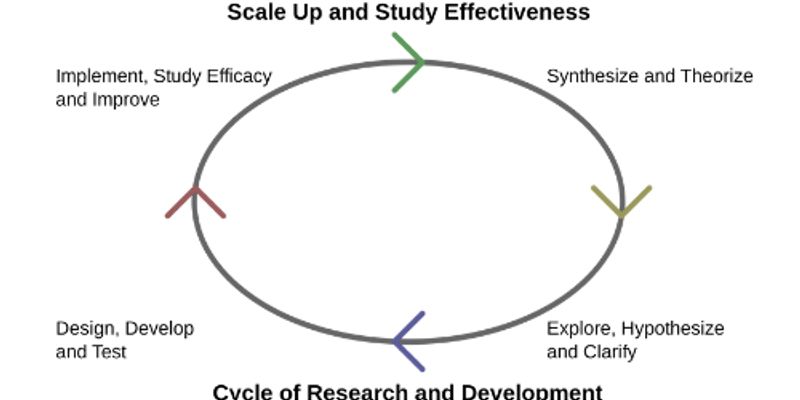
Research and Development: innovative activities performed by corporations or governments for the creation, discovery and advancement of services and products.
Genome sequencing technologies have enabled a rapid expansion into understanding cancer biology, drug development, and treatment resistance. Research in our laboratory has focused on the app...
Laboratory rats and mice are the most used animal species in scientific research, but still having a lot of information available about them, there are many places in Latin America where ther...
Informatics and internet are widely accepted tools in education and research. In the past decades new teaching and learning strategies have been developed and implemented. E-learning was def...
Intravascular catheterization access for injection and sampling is one of the most common experimental surgical procedures.Catheters and ports have been designed to reduce the problems of occ...
All trainers are people but not all people are trainers. Several factors beyond the trainer influence the effectiveness of a safety training programs. This program will discuss the critical...
The zebrafish, Danio rerio, is an ideal model organism to address a broad array of biomedical questions, and is now widely employed to answer questions about aging, behavior, cancer, growth,...
We all have to provide training; if our program is big or small, a germ-free mouse colony or field studies in Africa, centralized or not. Animal research programs, as varied as they are, have...
A problem facing the rapid growth of zebrafish as a model for human disease is a lack of qualified personnel that understand the benefits and limitations of fish culture. As this model gains...
The proper surgical techniques represent a key opportunity to improve the welfare of laboratory rodents, while meeting legal and ethical obligations. Use of inappropriate or poor surgical tec...
The new animal facility is designed to breed and house rodents with the best quality of macro and micro environment and house the maximum possible number of rodents per sf2. This new facilit...
The 2011 Guide for the Care and Use of Laboratory Animals has required that institutions place importance on assuring that staff working with animals are trained and competent to perform thei...
The question of pain in fish has been subject to much debate and, since fish are a popular experimental model globally and commercially important in fisheries, recreational angling and aquac...
The utility of dried blood spot (DBS) sampling technology for rodent colony health monitoring was investigated using a two-tiered approach. In the first approach, groups of mice and rats were...
The title of this presentation could have been Training within laboratory animal science - where we are and where we should be. While training has been the domain of facility managers for ma...
Although a growing body of evidence indicates that environmental enrichment (EE) facilitates normal development and behaviour in laboratory mice, few studies were conducted to demonstrate it...
It is increasingly recognized that the genetic background (i.e., all genomic sequences other than the gene(s) of interest) can have profound influences on the phenotype of an animal model. I...
With the growth and expansion of mouse and rat transgenic models in recent years, the demand for surgically altered models mimicking human diseases is growing at an amazing rate. Surgical pro...
Training for researchers using animals is a requirement in most European countries. However, somewhat surprisingly, the main actor in providing specific guidelines for such training is a scie...
It is commonly recognized that technicians are the backbone of a successful animal research program. Unfortunately, the invisible contributions that they make as well as the valuable high lev...
Non-surgical transfer techniques for mouse embryos and sperm provide animal welfare benefits for assisted reproduction of mice. While surgical embryo transfer (ET) is an effective method for...
All personnel involved in an animal care and use program are expected to have an appropriate level of education, training and/or qualifications to perform their duties as defined through laws...
Almost all discussion to date on the ethics of animal use in research has revolved around the balance of harms (to the animals) versus benefits (to us) associated with conducting the researc...
An anesthesia system designed to accommodate the physiological characteristics of small animals, including rats and mice, has the potential to provide great practical value to the life scien...
The city of Valdivia is located in Chile, South America, 841 km south of its capital city Santiago. I moved to Valdivia early in 2004 to participate in the development of a new animal facilit...
Genome sequencing technologies have enabled a rapid expansion into understanding cancer biology, drug development, and treatment resistance. Research in our laboratory has focused on the app...
Laboratory rats and mice are the most used animal species in scientific research, but still having a lot of information available about them, there are many places in Latin America where ther...
Informatics and internet are widely accepted tools in education and research. In the past decades new teaching and learning strategies have been developed and implemented. E-learning was def...
Intravascular catheterization access for injection and sampling is one of the most common experimental surgical procedures.Catheters and ports have been designed to reduce the problems of occ...
All trainers are people but not all people are trainers. Several factors beyond the trainer influence the effectiveness of a safety training programs. This program will discuss the critical...
The zebrafish, Danio rerio, is an ideal model organism to address a broad array of biomedical questions, and is now widely employed to answer questions about aging, behavior, cancer, growth,...
We all have to provide training; if our program is big or small, a germ-free mouse colony or field studies in Africa, centralized or not. Animal research programs, as varied as they are, have...
A problem facing the rapid growth of zebrafish as a model for human disease is a lack of qualified personnel that understand the benefits and limitations of fish culture. As this model gains...
The proper surgical techniques represent a key opportunity to improve the welfare of laboratory rodents, while meeting legal and ethical obligations. Use of inappropriate or poor surgical tec...
The new animal facility is designed to breed and house rodents with the best quality of macro and micro environment and house the maximum possible number of rodents per sf2. This new facilit...
The 2011 Guide for the Care and Use of Laboratory Animals has required that institutions place importance on assuring that staff working with animals are trained and competent to perform thei...
The question of pain in fish has been subject to much debate and, since fish are a popular experimental model globally and commercially important in fisheries, recreational angling and aquac...
The utility of dried blood spot (DBS) sampling technology for rodent colony health monitoring was investigated using a two-tiered approach. In the first approach, groups of mice and rats were...
The title of this presentation could have been Training within laboratory animal science - where we are and where we should be. While training has been the domain of facility managers for ma...
Although a growing body of evidence indicates that environmental enrichment (EE) facilitates normal development and behaviour in laboratory mice, few studies were conducted to demonstrate it...
It is increasingly recognized that the genetic background (i.e., all genomic sequences other than the gene(s) of interest) can have profound influences on the phenotype of an animal model. I...
With the growth and expansion of mouse and rat transgenic models in recent years, the demand for surgically altered models mimicking human diseases is growing at an amazing rate. Surgical pro...
Training for researchers using animals is a requirement in most European countries. However, somewhat surprisingly, the main actor in providing specific guidelines for such training is a scie...
It is commonly recognized that technicians are the backbone of a successful animal research program. Unfortunately, the invisible contributions that they make as well as the valuable high lev...
Non-surgical transfer techniques for mouse embryos and sperm provide animal welfare benefits for assisted reproduction of mice. While surgical embryo transfer (ET) is an effective method for...
All personnel involved in an animal care and use program are expected to have an appropriate level of education, training and/or qualifications to perform their duties as defined through laws...
Almost all discussion to date on the ethics of animal use in research has revolved around the balance of harms (to the animals) versus benefits (to us) associated with conducting the researc...
An anesthesia system designed to accommodate the physiological characteristics of small animals, including rats and mice, has the potential to provide great practical value to the life scien...
The city of Valdivia is located in Chile, South America, 841 km south of its capital city Santiago. I moved to Valdivia early in 2004 to participate in the development of a new animal facilit...
 Follow