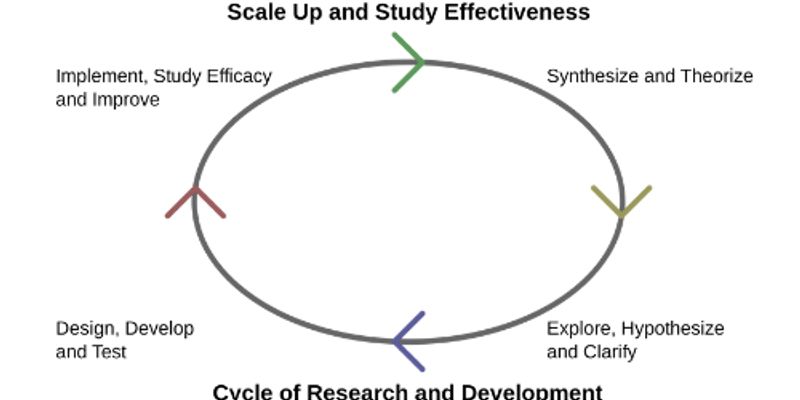
Research and Development: innovative activities performed by corporations or governments for the creation, discovery and advancement of services and products.
Speculations that some form DNA alteration might be utilized by the brain date to the 1960s [1] wherein hypotheses for genomic alterations of germline DNA were proposed for immunoglobulins an...
Real-time PCR, or quantitative qPCR, is a commonly used molecular biology lab technique to determine the actual amount of PCR product at a given cycle. For quantitative reverse transcription...
The advent of precision medicine largely depends on the creation of precise and accurate predictive tools. While most late-onset diseases are moderately to highly heritable, using genetic inf...
Recent technological advances as well as longitudinal monitoring not only have the potential to improve the treatment of disease (Precision Medicine) but also empower people to stay healthy (...
Variant interpretation presents a bottleneck for many labs, posing a challenge to the broader adoption of precision medicine. The ACMG/AMP variant classification framework has provided a foun...
Recent improvements in sequencing chemistry and instrument performance combine to create a new PacBio data type of highly accurate (HiFi), long insert reads. Increased read length and improve...
Next-generation transcriptome and miRNome sequencing are routinely performed on traditional cell or tissue samples, as well as more difficult samples such as FFPE samples and biofluids. Regar...
Arrayed gene knockout (KO) libraries represent a valuable resource for performing functional genomics screening. Current generation arrayed KO libraries for the whole human genome rely on eit...
CRISPR/Cas gene editing has become the gold standard for individual gene perturbations as well as high-throughput functional screenings, with a rapidly increasing demand for high-quality CRIS...
To interpret genome sequence from telomere to telomere, it is helpful end-to-end haplotypes with single-molecule epigenetics overlays, via in situ omics at sub-cellular (20 nm) resolution an...
In this webinar, we will discuss our most recent additions to our CRISPR protein portfolio, the GFP-SpCas9 and GFP-eCas9 fusion proteins. The two GFP-Cas9 fusion proteins offer great visualiz...
Genetic drivers of cancer can be dysregulated through epigenetic modifications of DNA. Although the critical role of DNA 5-methylcytosine (5mC) in the regulation of transcription is recognize...
DATE: May 8, 2019TIME: 12:00am PDT In 2017 the first national cervical screening programs using human papillomavirus (HPV-based) primary screening were implemented. As these progr...
DATE: April 30, 2019TIME: 8:00am PDTIumour-derived extracellular vesicles (EVs) are of increasing interest as a resource of diagnostic biomarkers. However, most EV assays require large...
Tuberculosis has killed more than one billion people in the last 200 years. It is the oldest and the deadliest human pathogen, recently surpassing HIV. Its adaptation to host and drug pressur...
Point-of-care testing (POCT) is diagnostic testing at the time and place of patient care in a physician’s office, an ambulance, a mobile clinic, at home or in hospital. Rapid POC testi...
Recent evidence indicates that the immunoglobulin (IG) gene loci reside within the most complex and variable regions of the human genome, characterized by elevated levels of single nucleotide...
“Emerging infections” are those that appear suddenly or are rapidly increasing in incidence or geographic range (e.g., HIV/AIDS, Ebola, SARS, Middle East Respiratory Syndrome [MER...
To reduce the global burden diseases causes by infectious disease, including parasites and bacteria, scientists need better information about mechanisms of virulence, immune evasion, and drug...
Despite over 60+ years of research, the etiology of bacterial vaginosis (BV), the most common vaginal infection, remains controversial. Epidemiological data strongly suggest that BV is acquir...
DATE: April 23, 2019TIME: 11:00am PDT, 2:00pm EDT Cataract, a clouding of the ocular lens, is the leading cause of blindness worldwide. Currently the only means of treatment i...
Speculations that some form DNA alteration might be utilized by the brain date to the 1960s [1] wherein hypotheses for genomic alterations of germline DNA were proposed for immunoglobulins an...
Real-time PCR, or quantitative qPCR, is a commonly used molecular biology lab technique to determine the actual amount of PCR product at a given cycle. For quantitative reverse transcription...
The advent of precision medicine largely depends on the creation of precise and accurate predictive tools. While most late-onset diseases are moderately to highly heritable, using genetic inf...
Recent technological advances as well as longitudinal monitoring not only have the potential to improve the treatment of disease (Precision Medicine) but also empower people to stay healthy (...
Variant interpretation presents a bottleneck for many labs, posing a challenge to the broader adoption of precision medicine. The ACMG/AMP variant classification framework has provided a foun...
Recent improvements in sequencing chemistry and instrument performance combine to create a new PacBio data type of highly accurate (HiFi), long insert reads. Increased read length and improve...
Next-generation transcriptome and miRNome sequencing are routinely performed on traditional cell or tissue samples, as well as more difficult samples such as FFPE samples and biofluids. Regar...
Arrayed gene knockout (KO) libraries represent a valuable resource for performing functional genomics screening. Current generation arrayed KO libraries for the whole human genome rely on eit...
CRISPR/Cas gene editing has become the gold standard for individual gene perturbations as well as high-throughput functional screenings, with a rapidly increasing demand for high-quality CRIS...
To interpret genome sequence from telomere to telomere, it is helpful end-to-end haplotypes with single-molecule epigenetics overlays, via in situ omics at sub-cellular (20 nm) resolution an...
In this webinar, we will discuss our most recent additions to our CRISPR protein portfolio, the GFP-SpCas9 and GFP-eCas9 fusion proteins. The two GFP-Cas9 fusion proteins offer great visualiz...
Genetic drivers of cancer can be dysregulated through epigenetic modifications of DNA. Although the critical role of DNA 5-methylcytosine (5mC) in the regulation of transcription is recognize...
DATE: May 8, 2019TIME: 12:00am PDT In 2017 the first national cervical screening programs using human papillomavirus (HPV-based) primary screening were implemented. As these progr...
DATE: April 30, 2019TIME: 8:00am PDTIumour-derived extracellular vesicles (EVs) are of increasing interest as a resource of diagnostic biomarkers. However, most EV assays require large...
Tuberculosis has killed more than one billion people in the last 200 years. It is the oldest and the deadliest human pathogen, recently surpassing HIV. Its adaptation to host and drug pressur...
Point-of-care testing (POCT) is diagnostic testing at the time and place of patient care in a physician’s office, an ambulance, a mobile clinic, at home or in hospital. Rapid POC testi...
Recent evidence indicates that the immunoglobulin (IG) gene loci reside within the most complex and variable regions of the human genome, characterized by elevated levels of single nucleotide...
“Emerging infections” are those that appear suddenly or are rapidly increasing in incidence or geographic range (e.g., HIV/AIDS, Ebola, SARS, Middle East Respiratory Syndrome [MER...
To reduce the global burden diseases causes by infectious disease, including parasites and bacteria, scientists need better information about mechanisms of virulence, immune evasion, and drug...
Despite over 60+ years of research, the etiology of bacterial vaginosis (BV), the most common vaginal infection, remains controversial. Epidemiological data strongly suggest that BV is acquir...
DATE: April 23, 2019TIME: 11:00am PDT, 2:00pm EDT Cataract, a clouding of the ocular lens, is the leading cause of blindness worldwide. Currently the only means of treatment i...
 Follow